Colorado attorney general weighs in on rail agency rule change critics say skirts environmental law

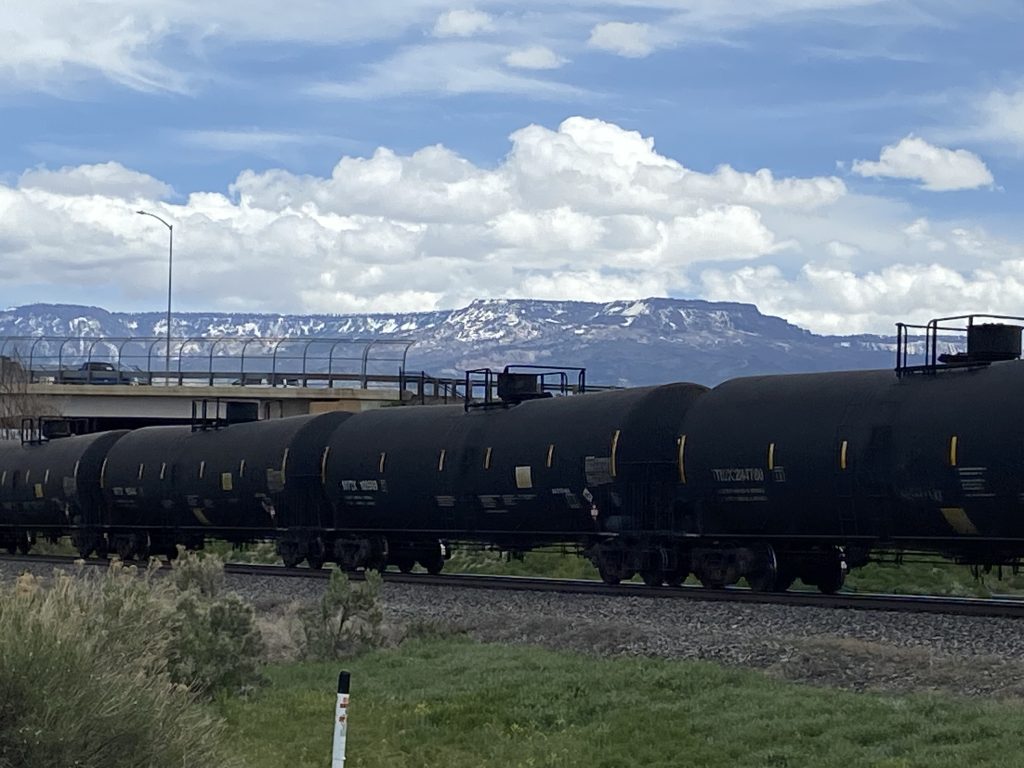
David Williams/Vail Daily
In filing a second lawsuit last month aimed at slowing the flow of fossil fuels along the banks of the endangered Colorado River in northwest Eagle County, attorneys for the county challenged the federal government’s allegedly illegal use of an expedited approval process.
Now Colorado’s attorney general and an environmental group are making the same allegations against a different federal agency looking to change its own rules to circumvent federal environmental laws and speed up the approval process for rail projects.
In last month’s lawsuit, Eagle County challenged the use of so-called “Alternative Arrangements” by the U.S. Department of Interior and U.S. Bureau of Land Management under the auspices of a Trump administration “energy emergency” to fast-track the expansion of the Wildcat Loadout Facility in Utah for getting more oil onto trains headed toward Colorado.
Now the U.S. Surface Transportation Board (STB), which overseas rail infrastructure in the United States, is “proposing a comprehensive rule (change) to modernize and reform its permitting process, accelerating the approval of rail infrastructure projects, cutting unnecessary burden, and lowering costs across the transportation network.”
The STB’s top tool for streamlining its permitting process? The expansion of so-called “Categorical Exclusions” for projects that may not require rigorous environmental review. If that process was used in its approval of Utah’s proposed Uinta Basin Railway project, an 88-mile stretch of new track from the Uinta Basin oil fields of northeast Utah to Union Pacific’s main rail line along the Colorado River, it would have essentially cut Colorado out of the review process.

Support Local Journalism
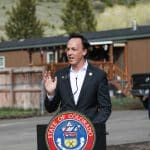
Colorado Attorney General Phil Weiser, who earlier this year joined a multi-state lawsuit challenging Trump’s “energy emergency” executive order, argued in a formal comment on the STB’s rule change that the use of Categorical Exclusions should be very clearly defined.
“Colorado’s experience with past Board proceedings shows that foreseeable risks may arise where hazardous cargo moves through sensitive corridors, where projects can increase ignition risks in wildfire-prone regions, and where the project area encompasses endangered species habitat and migration pathways,” Weiser wrote. “To ensure transparency, the Board should publish additional guidance or a screening memorandum to clarify when a categorical exclusion will or will not apply in such settings.”
Center for Biological Diversity attorney Ted Zukoski, in a phone interview, said the new rule would give the STB the ability to eliminate public comment on environmental review documents. His reading of the rule change for standards set by the STB 35 years ago is that comment periods for Environmental Assessments (EAs) would be discretionary and that there would be no draft Environmental Impact Statement (EIS), just a scoping period.
“That means that the public is shut out and that the agency doesn’t have a good idea what the key issues are because they don’t have the public’s eyes on them, which is really going to mean they’re going to do a crummier job of understanding what the impacts of these projects are,” said Zukoski, whose organization also submitted a formal comment on the rule change.
What matters in your community, delivered daily.
Sign up for our morning newsletter at VailDaily.com/newsletter
Eagle County spent more than $1 million challenging the STB’s original approval of the Uinta Basin Railway, winning in the D.C. Circuit Court of Appeals before the U.S. Supreme Court overturned that ruling and sent the case back to the STB.
Zukoski said SCOTUS did not touch the D.C. Circuit’s finding that the approval violated NEPA (National Environmental Policy Act) by not adequately addressing potential impacts of increased oil train traffic in remote Colorado River canyons to endangered fish and the potential for oil spills and wildfires.
“That ruling wasn’t an issue in the Supreme Court case,” Zukoski said. “But the Surface Transportation Board has taken it upon themselves to say, ‘We’ll look at downline impacts any way we want, including not looking at them at all.’ And so that’s a huge problem and a huge turning of a blind eye to impacts that we know are going to happen.”
That appears to be Weiser’s view of the STB’s rule change as well.
“The Supreme Court’s decision in Seven County Infrastructure Coalition v. Eagle County … affirms that agencies have discretion in scoping the impacts they study as part of their environmental reviews, but does not alter NEPA’s requirement to analyze reasonably foreseeable effects that bear a reasonably close causal relationship to the federal action under review,” Weiser writes.
Seven County Infrastructure Coalition is the group of counties in Utah seeking to build the Uinta Basin Railway. A spokesperson for the group did not return multiple emails seeking comment on the STB rule change.
Weiser, a former U.S. Supreme Court clerk running for Colorado governor, goes on to quote SCOTUS in the Eagle County case, asserting “the environmental effects of the project at issue may fall within NEPA even if those effects might extend outside the geographical territory of the project or might materialize later in time.”
Weiser, in his comments on the STB rule change, argues strongly against the skirting NEPA by the STB.
“Where indirect effects are foreseeable and informative to the agency’s decision-making, they are squarely within NEPA’s mandate,” Weiser wrote. “To ensure consistent application, the final rule should clarify … that such indirect effects remain part of the required analysis, even where other sovereigns or agencies regulate aspects of those effects.”