A state grant program aims to help Colorado communities rein in human-bear conflicts
Plus, a look at where human-bear conflict was on the rise in 2025

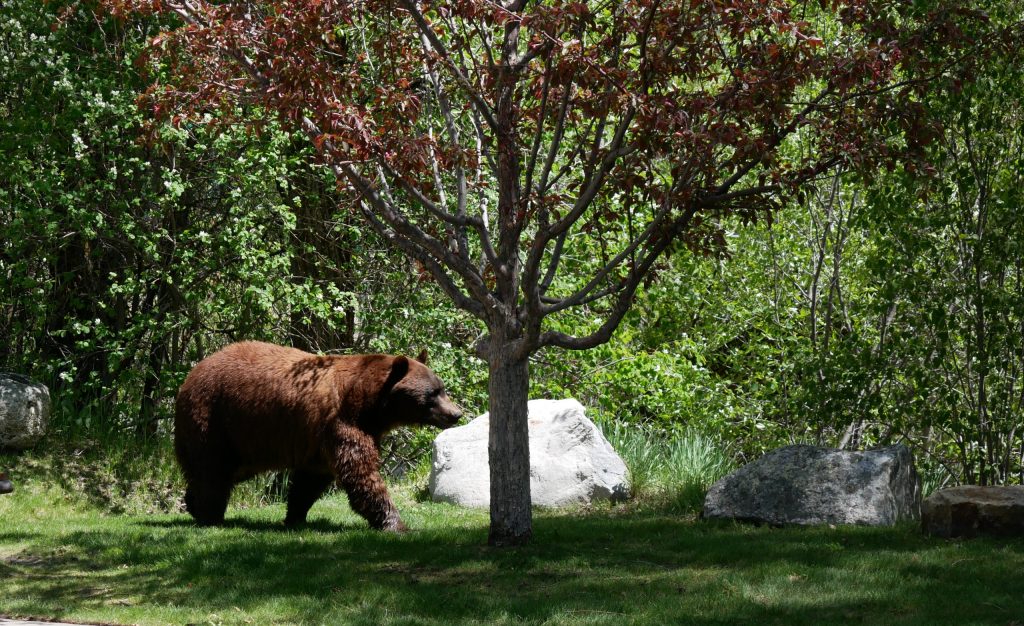
John Camponeschi/Craig Daily Press archive
As clashes between people and black bears continue to escalate, Colorado is calling on communities to help fix the problem.
Colorado Parks and Wildlife will award $1 million to local governments, nonprofits, HOAs, tribes, schools and businesses for programs that aim to curb human-bear conflict. Grants between $50,000 and $500,000 will be awarded to projects that reduce black bear attractants — of which the No. 1 is trash — that have community support, are cost-effective investments and use proven techniques to reduce conflicts.
The grant program was created by state law in 2021 and is now funded by Parks and Wildlife in collaboration with the U.S. Fish and Wildlife Service. In this time, according to the bear reporting system launched by the wildlife agency in 2019, reports of conflicts between humans and bears have been trending up.
Colorado bear conflict ticks up in 2025
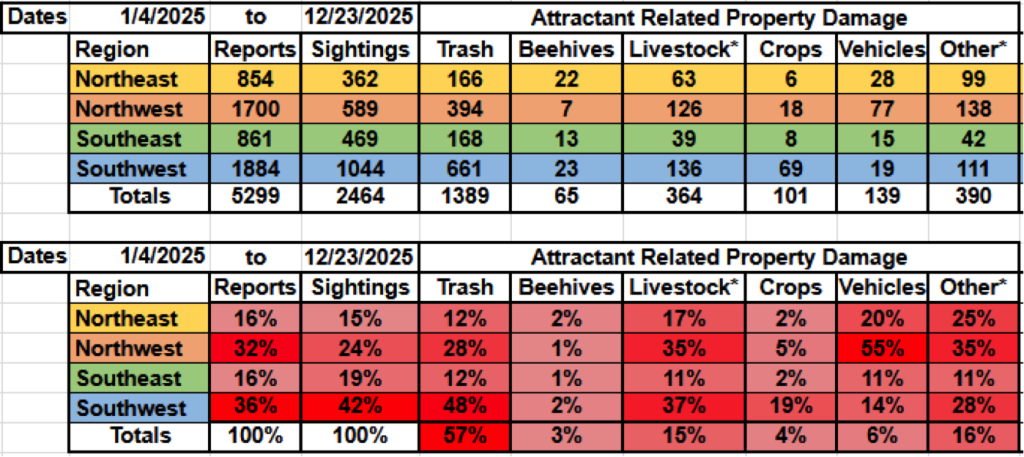
While there was some variation by region, statewide reports of bear conflict in 2025 were at an all-time high, exceeding the seven-year average since Parks and Wildlife began tracking conflict. The agency recorded 5,299 reports of bear sightings of incidents relating to property damage with trash, livestock, beehives and more.
Colorado is home to a population of between 17,000 and 20,000 black bears. Each year, conflicts between humans and bears are driven by the availability of natural food sources — berries, fruits, nuts, plants and grasses — as bears will seek human food sources when it’s readily available and these natural foods are limited due to the climate or food failure.

Support Local Journalism
Trash is consistently the No. 1 cause of conflict between humans and bears, accounting for around 67% of all reports in 2025.
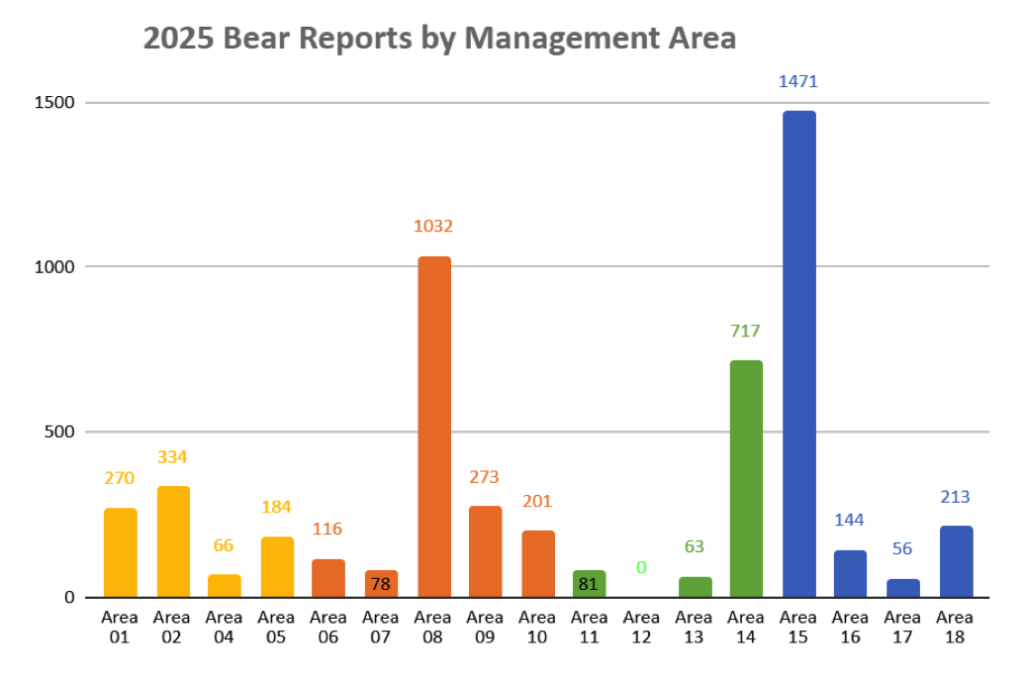
Reports are consistently the highest on Colorado’s Western Slope, where humans overlap with much of the state’s quality bear habitat.
In 2025, Parks and Wildlife’s southwest region saw the most reports, with just over 1,800 reports, driven predominantly by reports in the region surrounding Durango, which accounted for 1,471 of these reports. With 1,128 reports, La Plata County had the most reports of any county in the state.
Reports were the second-highest in the agency’s northwest region, which saw 1,700 reports. The majority of these, just over 1,000, came from the area including Pitkin and Eagle counties as well as the western portion of Garfield County that includes Glenwood Springs. Pitkin County had the second-highest number of reports in the state with 592 reports.
The reports of human-bear conflict were high in many of Colorado’s northwest counties, with just under 300 in Garfield County, over 230 in Routt County, 169 in Eagle County, 156 in Grand County and 115 in Summit County.
Reports in the northwest were slightly down from what the region experienced in 2024, specifically in Pitkin and Garfield counties, which had more than 800 and 450 reports, respectively, during the year.
In 2025, activity picked up in May across the state and peaked in July and August when daylight hours are the longest and food sources are the most abundant. This continued with a high number of reports through October, when bears are packing on over 20,000 calories a day to prepare for the winter.
Regional wildlife managers reported that they were anticipating the dry and hot end of spring and early summer — when bears begin to wake up and be more active — would negatively impact the early availability of bears’ natural food sources and drive them toward human food sources. However, the late summer and early fall brought about a healthy production of natural fruits and nuts in the northwest region, with wildlife managers from the region referring to the food year as “productive” and “abundant” in a December news release.
Matt Yamashita, Parks and Wildlife’s regional wildlife manager for the Roaring Fork and Eagle valleys, including Glenwood Springs, reported that the area saw “remarkably low levels of human bear conflicts” in 2025, owing to healthy production of fruit-bearing plants that “kept bears out of trouble.”
In a February news release, Parks and Wildlife said that it is aware of a growing reluctance from members of the public to report bear activity, with the fear that it will lead to bears being euthanized. However, it noted that this only occurs in a small percentage of cases.
In 2025, out of the statewide 5,229 bear reports, 78 were killed and 52 relocated. The majority of these were in the southwest wildlife area that includes Durango, where 26 bears were euthanized and 29 relocated. Seventeen bears in the northwest were killed, and six were relocated due to conflict in 2025.
“The vast majority (of reports) led to wildlife officers getting involved early enough to prevent the need to euthanize a bear,” the agency said. “When CPW is made aware, especially when conflicts first begin, wildlife officers can educate the community, make site visits to homes to help them secure attractants and can haze bears in an attempt to reinforce their natural fear of humans.”
Parks and Wildlife is expected to introduce a bill during the 2026 legislative session that will enhance the wildlife agency’s enforcement capability when it comes to human-related bear attractants.
Reducing ‘unnecessary’ conflict
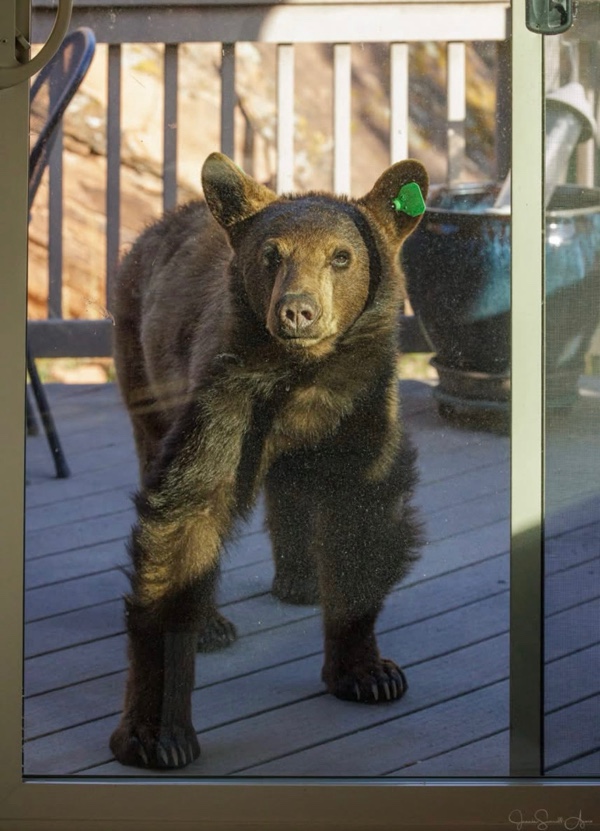
With the majority of these reports being connected to human-related attractants, most of the trouble with black bears is avoidable, according to wildlife managers.
Jeromy Huntington, Parks and Wildlife’s wildlife manager for Grand and Summit counties, said in December that the area continued to see “unnecessary” conflicts with humans and bears. Specifically, Huntington said there was a significant increase in bears entering homes in both counties this year.
“This is primarily a result of poor trash management and unlocked or open doors and windows,” Huntington said.
This is where Colorado Parks and Wildlife’s human-bear grant program comes in, helping counties, towns and groups make investments where they matter in their communities. Travis Long, the agency’s grant manager, called the program a catalyst for reducing conflict.
“We are seeing a real shift in how communities are minimizing bear interactions, using these funds to implement practical, high-impact projects that result in substantial strides for public safety and wildlife conservation alike,” Long said.
The 2025 grant cycle saw 22 communities across the state receive funding between $7,000 and $110,000 for projects that all aimed to reduce the allure of trash for bears in some way. This included grants to build trash enclosures in Routt County, build storage lockers at a private Granby campground and install bear-resistant trash cans at schools in Eagle County.
Interested applicants can apply on the wildlife agency’s website at cpw.state.co.us until 5 p.m. on May 29.