Colorado’s mountains summers are getting warmer, exacerbating drought and wildfire risk
From Aspen to Steamboat Springs, temperatures this weekend are expected to be between 5 and 10 degrees above-average for this time of year

Ryan Spencer/Vail Daily
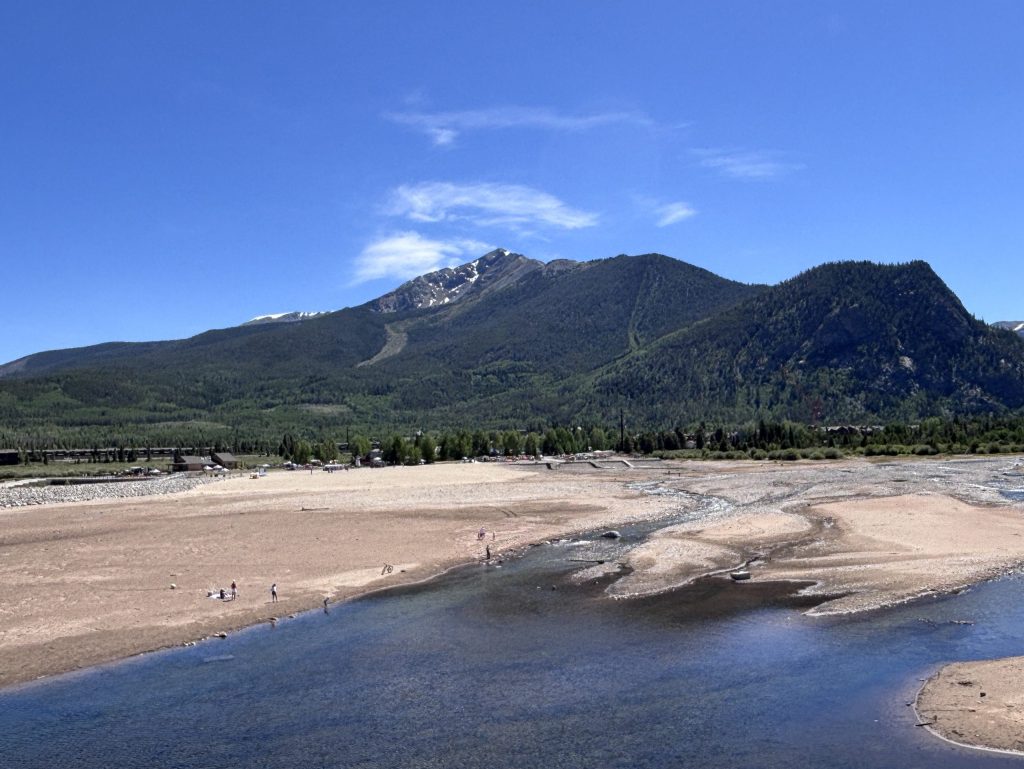
Summer is off to a hot start in the Colorado mountains as soaring temperatures, a lack of precipitation and wind are worsening already severe drought conditions and exacerbating wildfire concerns.
Across most of the mountain region, June has featured near-record temperatures and little — if any — precipitation, according to Colorado State Climatologist Russ Schumacher. One weather station in Dillon with 130 years of temperature data recorded the second-hottest first half of June ever, and just 0.01 inch of rain so far this month.
“On the one hand, June tends to be the driest month on the Western Slope before the monsoon season starts, but the average is not zero — we usually get some rain in June,” Schumacher said. “It’s been warm and dry up to this point in the month and at least for the next several days to a week, it looks like that is going to continue.”
Colorado is facing widespread and severe drought conditions after experiencing the worst snowpack on record this past winter. The winter was also the hottest in the state’s history, with a March heat wave that brought summerlike warmth to the mountains and rapidly melted the snowpack.
After the exceptionally hot and dry winter, May offered temperatures and precipitation levels that were closer to normal for most parts of the mountains. Some parts of northwestern Colorado saw above-average precipitation, offering a slight reduction in the drought conditions.

Support Local Journalism
“Having a month like May was good news,” Schumacher said. “The mountains got some snow, which slowed down the rapid melt-out that had started in the March heat wave. It wasn’t nearly as warm. I think we’d be in worse shape now had it not been like that in May.”
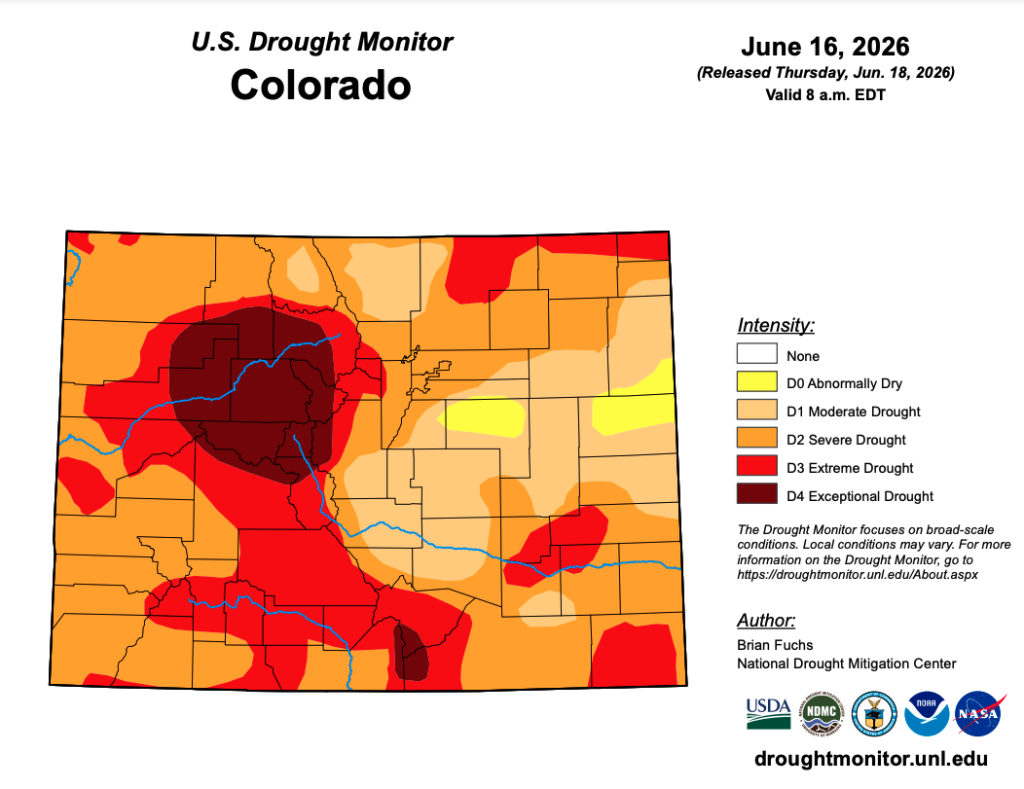
Still, exceptional drought — the highest level — continues to impact vast swathes of Summit, Grand, Eagle, Pitkin, Garfield, Rio Blanco and Moffat counties, according to the U.S. Drought Monitor report published Thursday.
Schumacher noted that the drought conditions on the Western Slope didn’t begin this past winter but carried over from last summer, when above-average temperatures and dry weather also dominated. He said the hot weather that Colorado has seen is a symptom of climate change and the amount of heat-trapping gases, like carbon dioxide, that humans have pumped into the atmosphere by burning fossil fuels.
From Aspen to Steamboat Springs, temperatures across the mountains this weekend are expected to be between 5 and 10 degrees above average for this time of year, according to the National Weather Service.
“Summer is when it’s the hottest naturally, and then we’re adding additional heat to that to warm up summers even further,” Schumacher said. “It’s really apparent in June that, especially in the mountains and in western Colorado, we’ve seen June getting a lot warmer.”
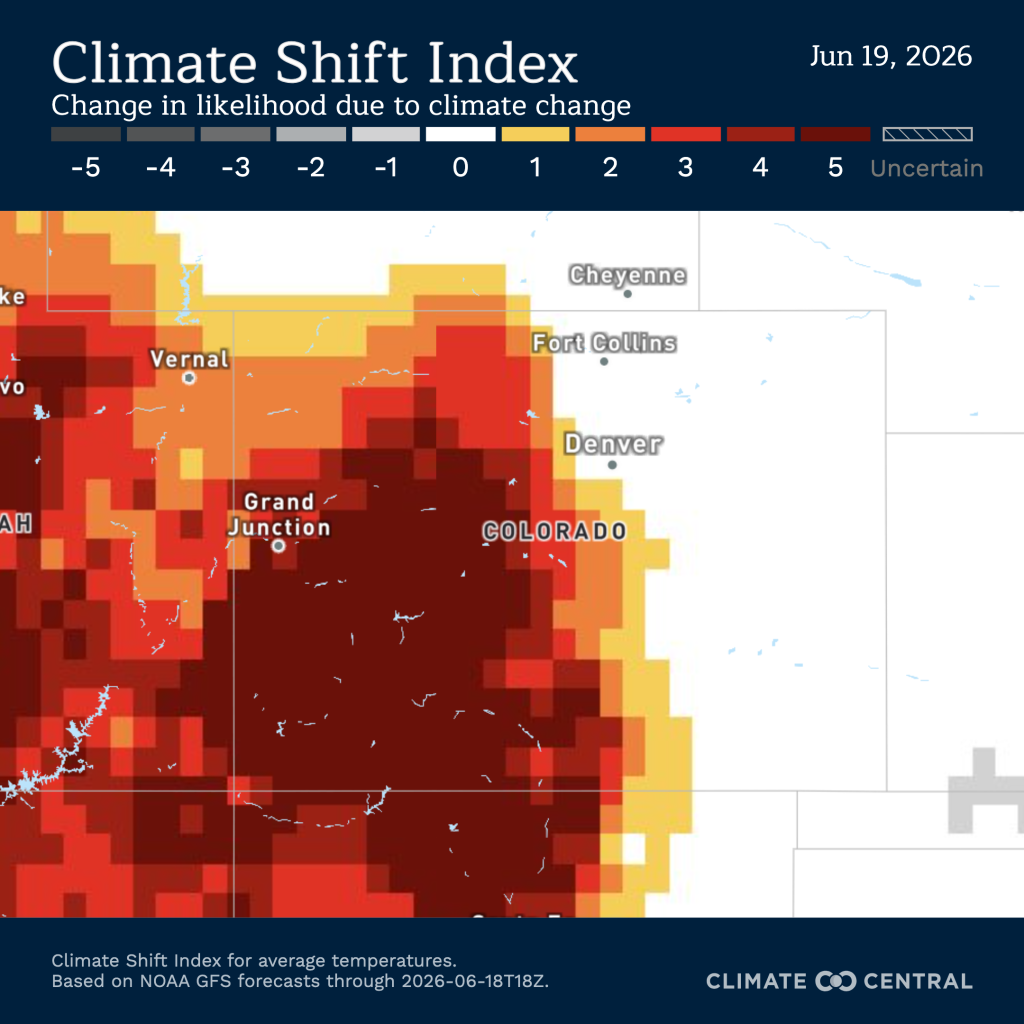
On average, temperatures in Colorado have risen by about 3 degrees since 1970, reflecting an overall warming trend that is also occurring on a global scale, according to Climate Central. The nonprofit’s Climate Shift Index shows that temperatures on much of the Western Slope over the past week were made three to five times more likely by climate change.
As summers get warmer, Colorado is also seeing more periods where hot, dry and windy weather combine to create dangerous fire conditions. An analysis by Climate Central found that the Western Slope is experiencing between 32 and 48 more fire weather days with hot, dry and windy conditions compared to the 1970s.
With winds expected in addition to hot weather this weekend, the National Weather Service has issued a “red flag” warning for most of the Western Slope, advising of “critical fire weather conditions” Saturday afternoon. Most mountain communities have implemented Stage 1 fire restrictions that prohibit most campfires as the fire danger increases.
“Our mountains in Colorado are windy places. Most people are familiar with that,” Schumacher said. “That combination of conditions — hot, dry and windy — that’s what you don’t want if there is a fire going, but those are also the conditions that dry out the vegetation.”
Looking ahead, forecasters expect the above-average temperatures to continue through the remainder of the summer. However, the start of monsoon season could offer some relief from drought, with long-term forecasts showing increased chances of above-average precipitation later in the summer.
Schumacher said that models are showing indications that the monsoon will be active, but the wetter weather pattern typically doesn’t kick in until mid-July or early August. Still, with signs of a strong El Nino pattern developing over the Pacific Ocean, he said he’s hopeful that there will be plenty of rain in the latter half of the summer.
“El Niño tends to bring wet conditions to Colorado in the fall, so I think there’s some reason for optimism further out on the horizon,” Schumacher said. “But in the near term, it’s warm and dry, and it’s looking like it’s going to continue for at least the next week or two.”