After 23 years, dog sled race returns to Camp Hale
30 competitors participated in 12 categories of events, including dog sledding and skijoring, on Feb. 10 and 11


Claudia Vadillo/Courtesy photo
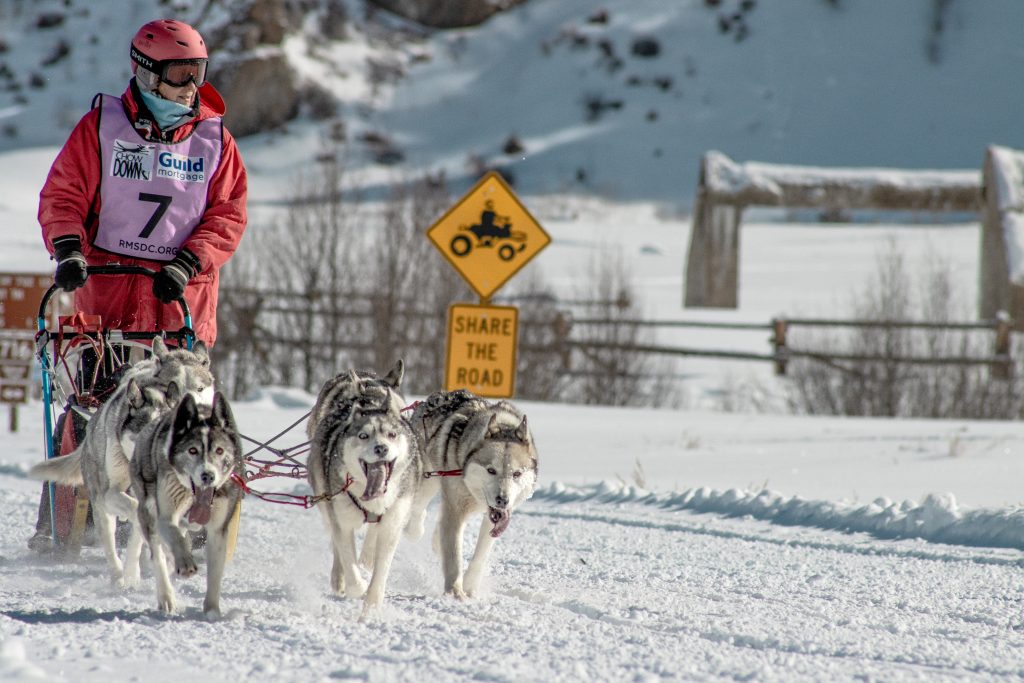
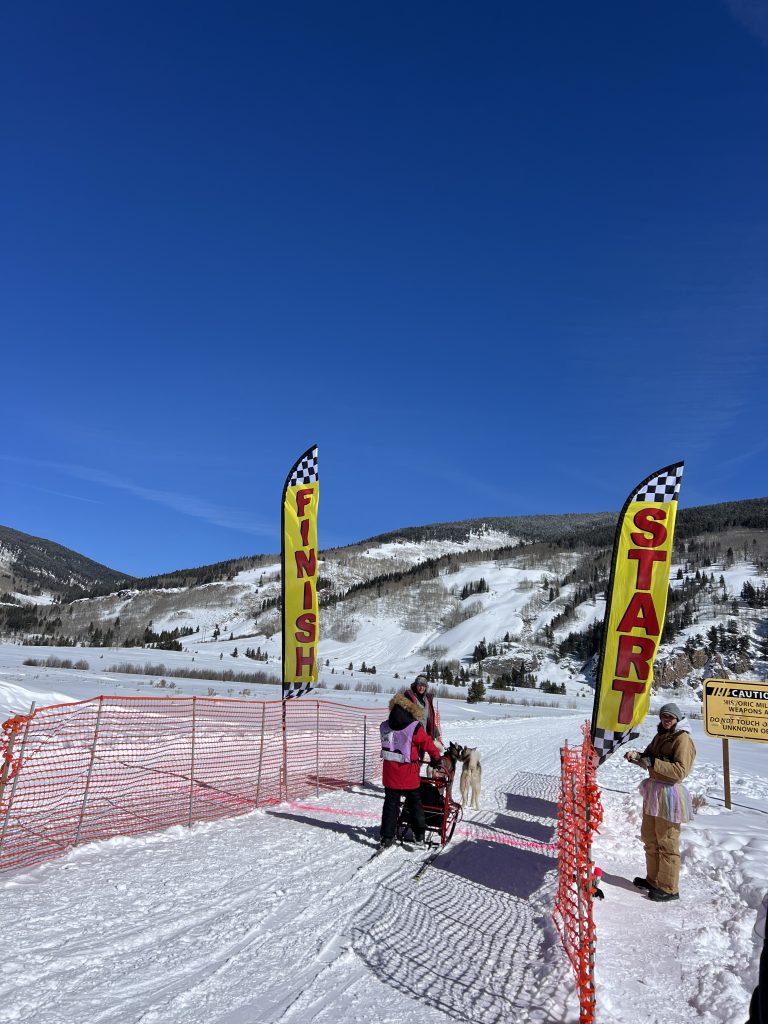
It may have been cold and windy on Sunday at Camp Hale, but that did not stop the Rocky Mountain Sled Dog Club members and affiliates from spending hours outside, having fun and competing in dog sledding and skijoring races. Race officials and emcees decked out in tutus cheered on competitors, human and dog alike, racing their hearts out on the wide-open course at the former U.S Army training site while dodging the occasional snowmobiler.
Full of energy, some of the dogs let out the occasional bark or howl as they prepared to begin their race. On the course, shouts could be heard — “gee” for “go right,” “haw” for “go left,” “hike” and “let’s go” for “move forward,” “on by” for “leave it,” and “whoa” for “stop.”
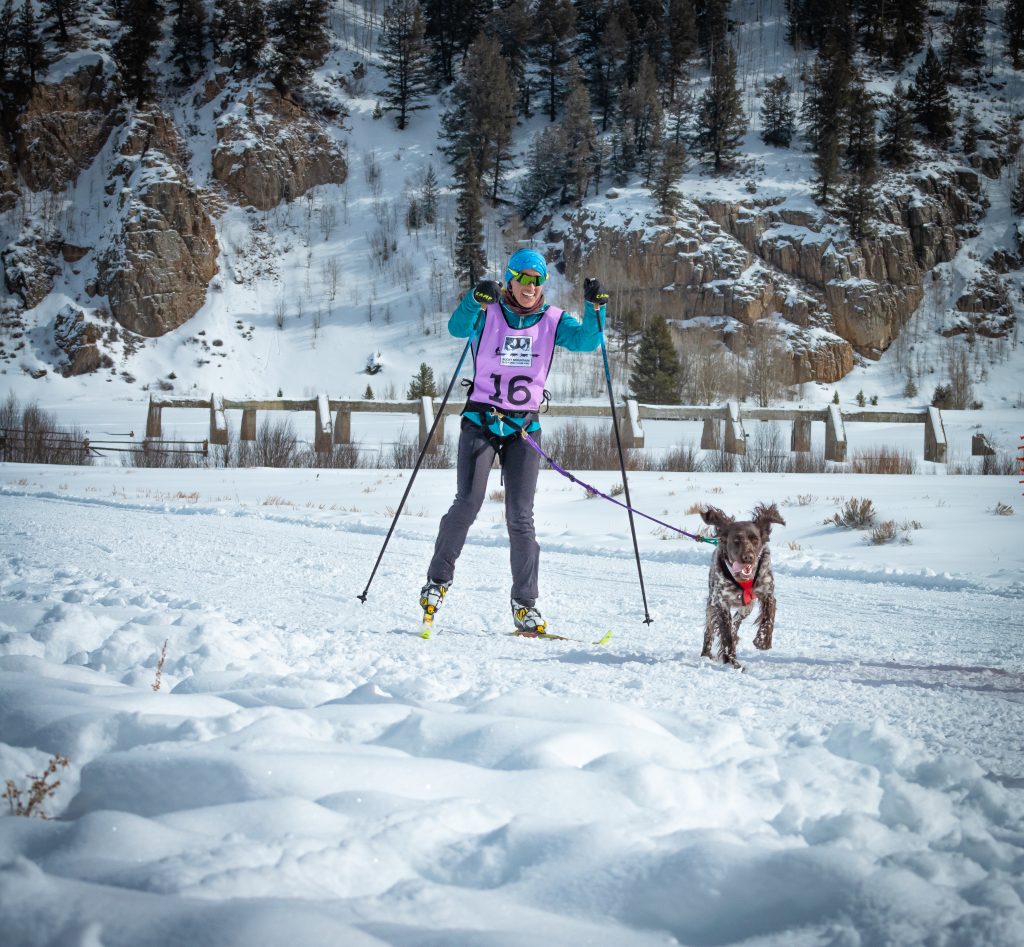
30 competitors participated in 12 events throughout the weekend, which marked the club’s first race at Camp Hale in 23 years. There were two-, four-, and six-dog sled races, which lasted two, four, and six miles, respectively. There were also one-dog and two-dog skijor events, in which competitors attached harnessed themselves and one or two dogs to each end of a specialized bungee line, and then Nordic skate skied the course. Each day wrapped up with a fun run, or “fun mush,” for racers to try out new activities.
‘Positive dog sports’
“Very few American dogs get enough exercise,” said Jean Stokes, a club member and Leadville resident. “Our pups do.”
Stokes rescues huskies, or “fluffy butts,” as club president Lynn Whipple calls them, from pounds and dog shelters, and channels their energy into a positive outlet by training them to run in dog sled races.

Support Local Journalism
“Huskies that don’t have a lot of exercise, they can get into trouble,” Whipple said. “If people get them because they’re cute, but then they’re not out working them, meaning getting exercise, they get into trouble.”
“Our mission is really about positive dog sports,” Whipple said. “In Colorado, we have so many outdoor enthusiasts that have a dog, have either skis or a mountain bike, you hook them together, and what could be better?”
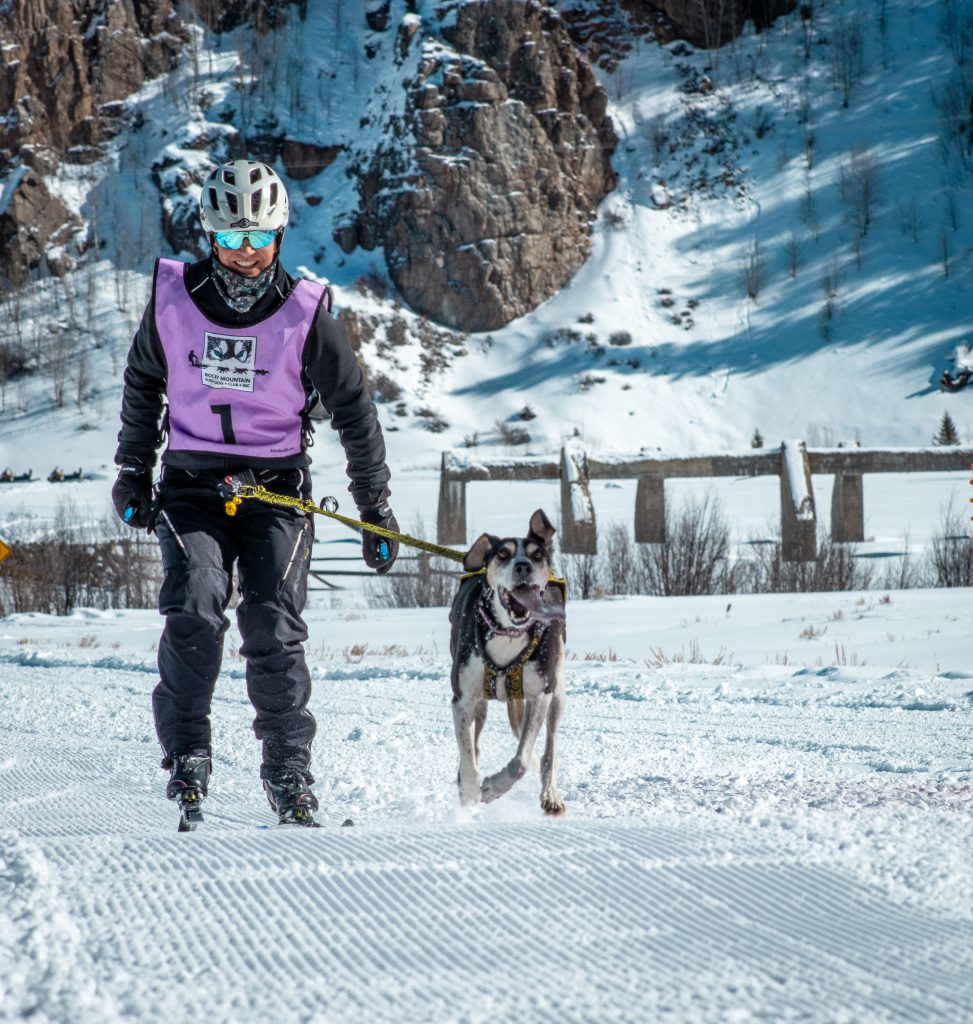
Positive dog sports include dog sledding, skijoring (Nordic skiing while attached to a dog on a harness), bikejoring (the same but on a bike), and cainacross (the same but trail running). Positive dog sports promote bonding between dog and owner and within teams of dogs, as well as being a fun way to participate in outdoor recreation and get exercise. “It’s a win-win for both the dog and the human,” she said.
All breeds of dogs are welcome at Rocky Mountain Sled Dog Club events. Whipple recalled a pitbull mix that used to participate, and a Great Pyrenees took part over the weekend. Whipple runs a six-dog team of hound crosses, including German shorthair and pointer hounds.
“Mine are leggy and houndy,” she said.
Whipple’s team has two leaders, two points, and two wheelers, who have been trained to work together, capitalizing on the dogs’ “pack-oriented” nature. Whipple serves as the alpha dog of the pack. “As we’re getting ready to go out of the start, they’re lunging together,” Whipple said.
The club runs “dryland” trainings in the fall and spring, including bikejoring, and cainacross, to prepare dogs and humans for the winter season. In the fall, Whipple also runs fun training events, which she calls “little league,” introducing dogs to the concept of working together toward a common goal.
Getting into positive dog sports, Whipple said, can be easy. The only necessary gear to start skijoring, bikejoring, or cainacross is a skijor belt or rock-climbing harness for the human, and a skijor line and harness for the dog. The “fun mushes” round of racing is often a chance for new racers to try their hand at dog sledding, skijoring, or bikejoring with a fat bike.
What matters in your community, delivered daily.
Sign up for our morning newsletter at VailDaily.com/newsletter
“Whatever level that people want to do this, whether it’s just on the weekend, weekend warrior, or if they want to really get into it,” they are welcome to join the club, Whipple said.
Once people start, however, Whipple said, they often become enthralled with positive dog sports.
“I’ve been doing this for almost 40 years,” Whipple said. “It gets in your blood, and it becomes a passion and a lifestyle.”
Exemplifying the inclusive nature of the club, Whipple encouraged event sponsor Claudia Vadillo, of Leadville, to try skijoring with her husky, Mazikeen. Within just a couple of hours, Vadillo, a snowboarder, donned a harness and skis, was taught how to skate ski, and was connected to two dogs, including Mazikeen, to head out for a lap during the fun mush.
A family affair
The weekend was a family affair all around, likely owing to the culture surrounding positive dog sports, which are “about positive, excellent dog care,” Whipple said.
The event felt, in a way, like one big family reunion — racers and volunteers came from all over the state, and many only see each other at dog races. Those watching the races cheered for every team that crossed the finish line, regardless of who won.
For many of the racers, the dogs are members of their families — as racers finished their loops, they would encourage their dogs to go to their partners, calling them “mom” or “dad.”
Whipple confirmed this: “They’re our family,” she said of the dogs.
“We love them,” Stokes agreed.
The event was filled with human family members, too. The race manager, Tim Koepke, traveled from Winter Park with his two adult daughters and wife to help set up, take down, emcee, and time the races.
Two racing families brought their babies, who calmly napped in sleds and their parents’ arms or watched the races, eagerly pointing out the dogs.
At 10 a.m. on Sunday, 9-year-old Raicheal Green-Cockriel, stood by the race tent, anxiously watching for her mom, Shannon Greene, who was out running their team of six dogs on the six-mile course. As Shannon rode into the finish, Raicheal cheered loudly from under layers of jackets and a face mask.
An illustrious career begins
Raicheal competed in her very first dog sled race over the weekend. The youngest competitor by far, Raicheal said she has been wanting to dog race for years.
A couple of years ago, 7-year-old Raicheal watched the movie, “Togo,” which is based on the true story of a dog sled trainer and his dog, Togo. She was instantly hooked.
“Raicheal, she hadn’t at that point landed into a sport with passion,” Shannon said. “So she goes, ‘Mom, can we go dog sledding?’ And I was like, ‘Sure.'”
“‘This is a no kidding, all-commitment sport,'” Shannon recalled saying to Raicheal.
To ensure they knew what they were getting into, Raicheal and Shannon went dog-sledding. That very night, they adopted Nanook, their first sled dog, a striking black-and-white husky with piercing eyes. “(His name) means polar bear,” Raicheal said.
The experience of training Nanook, Shannon said, has been “lucky.” “He’s just brilliant,” she said.
Raicheal and Shannon learned to train their dogs, to run a sled, and to pick out the right gear through “a lot of reading, listening to people, watching people, watching videos, Iditarod, paying attention to gear, asking questions,” Shannon said.
As they trained the dogs, Raicheal underwent some training, herself. “The deal was, she had to make it through dryland,” Shannon said. “That was a feat because it was with a bike, so she had to balance. My dogs, when they’re running on a road with a bike, we’re going 25 miles an hour,” Shannon said.
This fall, Raicheal successfully bikejored with her dogs. At Christmas this year, Shannon presented Raicheal with her reward: A sled. She spent the next month-and-a-half preparing for this weekend, her very first race.
“She was really nervous yesterday, and then today, she took off,” Shannon said.
The race, Raicheal said, was “epic.” Her favorite part? “The finish,” she said. And Nanook agreed, Raicheal said, operating as his voice.
Raicheal is already preparing for her next race, which is in a couple of weeks. Someday, Raicheal said, she plans to race in the Iditarod.