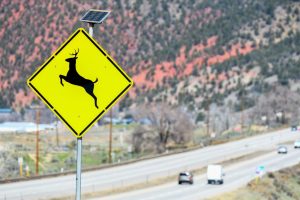
With autumn in full swing, Colorado officials warn of increased wildlife near busy highways
October, November and December consistently rank among the highest months for roadkill reports in Colorado as animals begin to migrate, mate

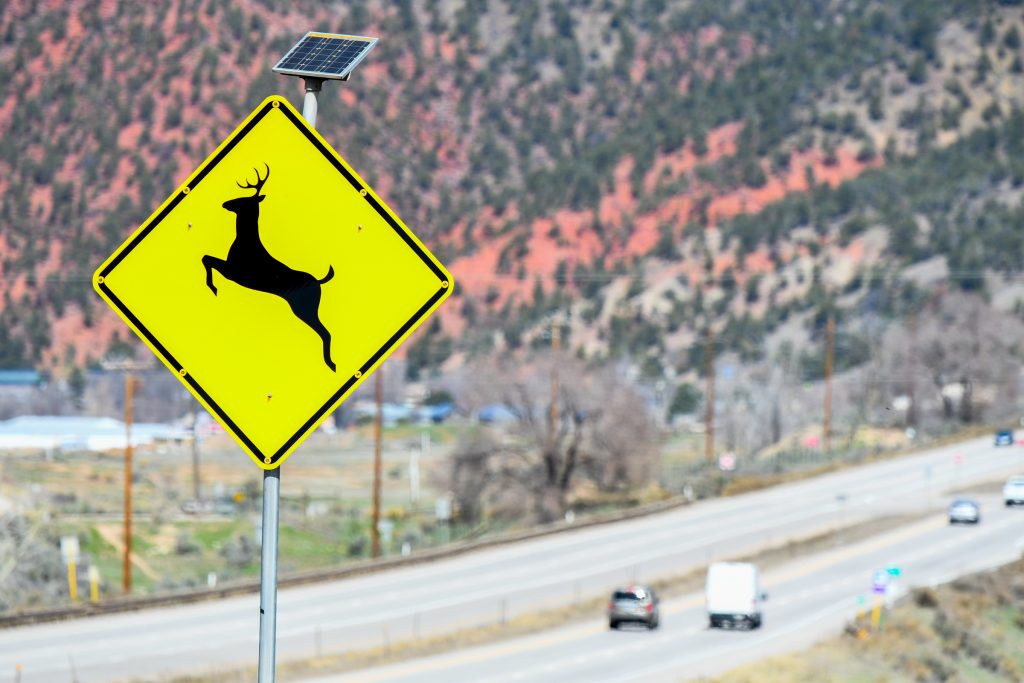
Chelsea Self/Post Independent archive
With fall in full swing, Colorado officials are warning drivers that there will be increased wildlife activity near roads and highways as many species begin to move to lower elevations for winter.
“Last year troopers responded to over 3,900 crashes involving wildlife, with autumn as the most active months,” said Matthew Packard, chief of the Colorado State Patrol, in a news release.
This represents a steady increase in the number of wildlife-related crashes the agency has investigated over the past five years, rising from 2,296 animal-related crashes in 2021.
In addition to animals migrating during the fall, Colorado State Patrol reported that many wildlife species are also in peak mating season, making them “highly vulnerable to being struck” as they are “more mobile, easily distracted, and more likely to be crossing roadways.”
“While white-tailed deer and elk are the most frequently struck wildlife, we have other species such as pronghorn, bear and marmots that ensure every region of our state is susceptible to wildlife encounters,” Packard said. “It is up to all of us to remove distractions and watch out for these beautiful animals.”

Support Local Journalism
October, November and December consistently rank among the highest months for roadkill reports in Colorado, according to annual data from the Colorado Department of Transportation. In 2025, November saw the highest number of reports, with 976 incidents noted by the department’s dataset. This is followed by October with 882, March with 717 and December with 708.
This dataset relies on reports from CDOT road maintenance crews, on its roadkill app and on a Colorado Parks and Wildlife app.
No matter the time of year, mule deer are the No. 1 animal reported as roadkill in Colorado. In 2025, 61% of the 7,770 roadkill reports were of deer being struck. Of the deer reports, 73% occurred on the Western Slope.
In the late summer and fall, however, reports of black bears being struck tend to climb as bear activity ramps up. September saw the highest numbers in 2025, accounting for a third of all northwest bear roadkill reports. This was followed by August, July and October.
This year, with bear activity at an all-time high following widespread food failure due to the drought, bear roadkill was already increasing in certain northwest regions. In Garfield County, 39 bears had died in vehicle collisions as of Aug. 31, compared to one in 2025.
The vast majority of roadkill — 68% in 2025, according to CDOT’s dataset — takes place on Colorado’s Western Slope where wildlife populations are typically more abundant. Colorado State Patrol reported that from 2021-2025, the following roadways were at the highest risk for wildlife-vehicle collisions:
- U.S. Route 160 from Durango to Pagosa Springs and from Durango to Mancos
- U.S. Highway 50 from Pueblo to the eastern state line and from Blue Mesa Reservoir to Parlin
- Interstate 70 near Floyd Hill, Mt. Vernon Canyon and Eagle
- Interstate 25 from Castle Rock to Larkspur
- U.S. Highway 285 near Morrison
- U.S. Highway 40 from Craig to Steamboat, near Tabernash and on Berthoud Pass
- U.S. Highway 24 from Riverside to Buena Vista and from Newett to Johnson Village
- U.S. Highway 550 north of Durango and from Montrose to Ouray
To avoid a crash with wildlife, Colorado State Patrol recommends drivers drive the speed limit, scan roads and shoulders for movement and eyeshine and use bright lights at night when it’s safe to do so.
If drivers see wildlife on the road and have time and space behind them, the agency recommends stopping for the animal or animals and using hazard lights. If drivers do not have time to safely brake in a straight line, Colorado State Patrol said to drive through and stay in the lane.
“If you are traveling in an outside lane with the white stripe to your right or a single lane, angle slightly to hit the butt of the animal. Never swerve or jerk your vehicle’s wheel,” it said.
Drivers involved in a crash with an animal should call 911, like any other emergency. In addition, if individuals witness wildlife in distress from possibly being struck on or near the side of the road, state patrol asks that they call *CSP for the proper resource to be notified and sent to the scene.