Colorado water managers stress water conservation as the mountains sit in the ‘nasty bullseye’ of widespread drought
The water managers from Summit County, the Yampa River region and Lake and Park counties presented during a virtual webinar

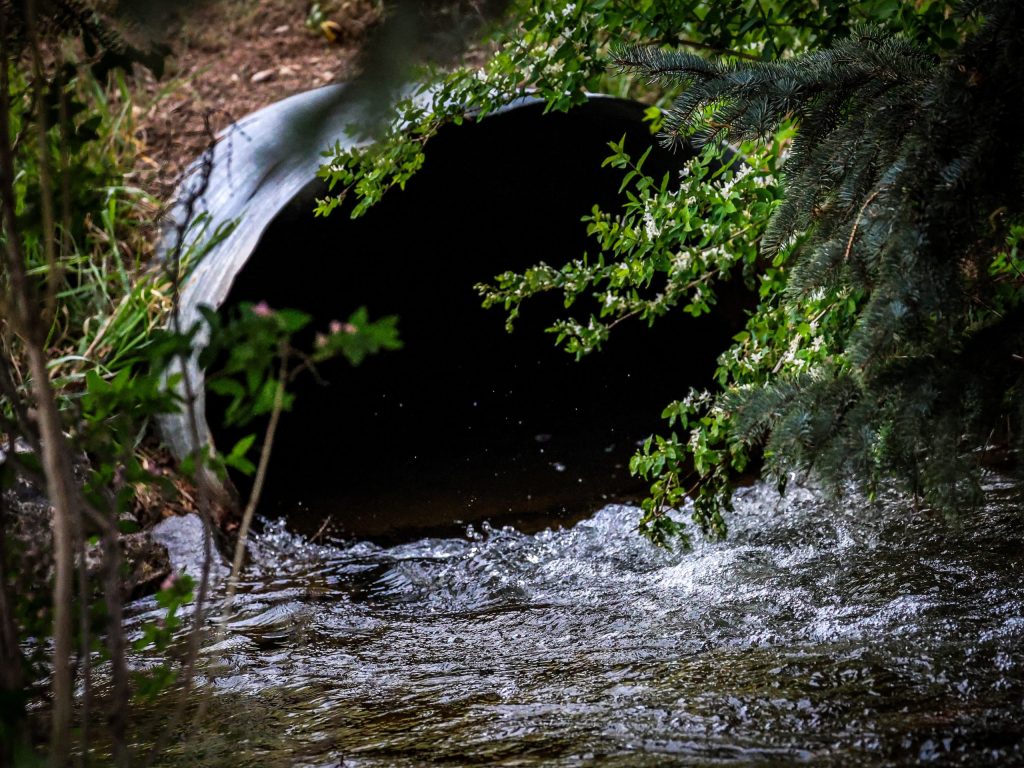
Austin Colbert/The Aspen Times
Colorado water managers stressed the importance of water conservation during a talk last week about what homeowners should know as the state faces widespread drought following a winter with a record-low snowpack.
Water managers representing Summit County, the Yampa River region, the Fairplay area and Lake and Park counties presented during the meeting hosted on Thursday, May 8, by Altitude Realtors.
“The take-home message is we just experienced the warmest winter on record,” Summit County Water Commissioner Troy Wineland said.
Almost the entire Colorado River Basin, which spans seven states and two countries, just had one of the hottest and driest winters on record, Wineland said. Precipitation throughout the basin was well-below average and the hot winter weather melted off the snowpack rapidly, especially during a heatwave in March, he said.
Throughout much of the Colorado mountains, the snowpack peaked about a month earlier than normal and the snow-water equivalent, or the amount of water in the snowpack, was roughly 8 inches lower than normal in places, Wineland said. He noted that the low snowpack means there is less water to melt off into streams and reservoirs, with roughly 15-40% of the average amount of water expected to flow through most streams.

Support Local Journalism
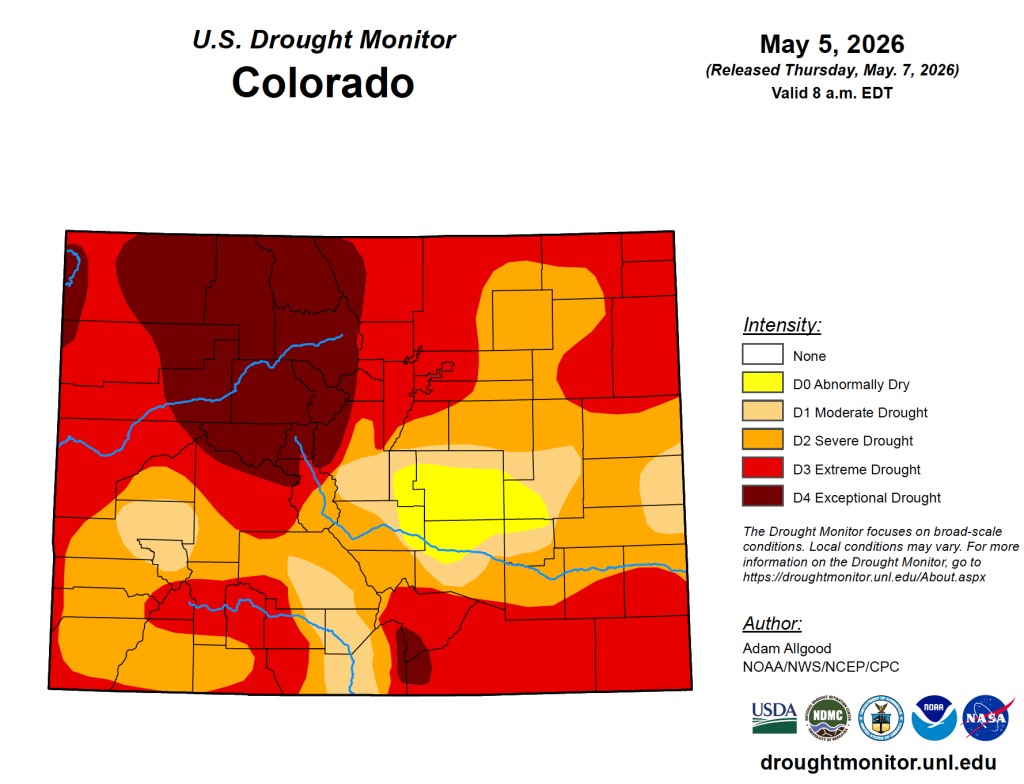
While almost the entire Colorado River Basin is facing drought conditions, Wineland noted that northwestern Colorado is in the “nasty bullseye” where drought conditions are the worst. Most of northwest Colorado is under exceptional drought, or level 4 of 4, according to the latest U.S. Drought Monitor report. He noted that by June, all of the Western Slope is expected to be at an elevated risk for wildfires.
For the Colorado River Basin, Wineland said the drought conditions mean the river is expected to deliver less water than ever before to Lake Powell, which is the nation’s second-largest reservoir.
In Summit County, Wineland said the low streamflows mean that the Dillon Reservoir, which is part of the water supply for Denver, isn’t expected to fill this year since it will be diverting water under the Continental Divide for use on the Front Range. Meanwhile, the Green Mountain Reservoir, downstream of the Dillon Reservoir, is at about one-third of its total capacity, and water levels are expected to continue to drop, he said.
With the widespread drought conditions, Wineland noted that governments across the state have started implementing “tight and severe” watering restrictions and other conservation measures.
“What I would encourage is for you to share what you learned here today with your neighbors, your community, your friends, your (homeowners association),” Wineland said. “If they have not implemented watering restrictions yet, I would encourage everyone to do that yesterday. For perspective, do you want to have green grass or do you want to have water in the rivers and water for the fish?”
Brian Romig, the Yampa River Operations coordinator, explained that water throughout most of the Yampa River Basin this year has been overappropriated, meaning the total volume of the water legally decreed to users exceeds the actual physical amount of water available.
Romig explained that that could impact the permitting of wells, although there are still water rights that can be granted in the Yampa River Basin, since the river’s water is only sometimes over appropriated, such as in drought years like this.
The Yampa River has also seen more “calls” so far this year than ever before, Romig said. He explained that a call is a mechanism in water law that allows senior water right holders to demand that junior users upstream stop diverting when there is not enough water to satisfy the senior users’ rights.
Rachel Zancanella, the division engineer for the Arkansas River Valley, said that water rights in that river basin are so over appropriated that it can create difficulties for those who are trying to permit new wells.
In Summit County, Wineland said he is aware of a handful of wells that have already run dry. He recommended that homeowners whose wells are running dry consider purchasing on-property storage to connect to their well. He also said that homeowners can look into having water hauled to their property.
Wineland noted that anyone with questions about well permits can contact the Colorado Division of Water Resources through the “Ask DWR” form available at dwr.state.co.us/portal/dwr/askdwr.
To view the full presentation, visit tinyurl.com/coloradowatermanagers and use the access code “d#Q89W38”.