Why Colorado wilderness won’t be included in the USDA’s roadless rule repeal
A special carve-out to the federal policy means Colorado’s backcountry areas will likely stay protected, while millions of acres of neighboring Forest Service land could be opened to road construction and logging

Robert Tann Follow
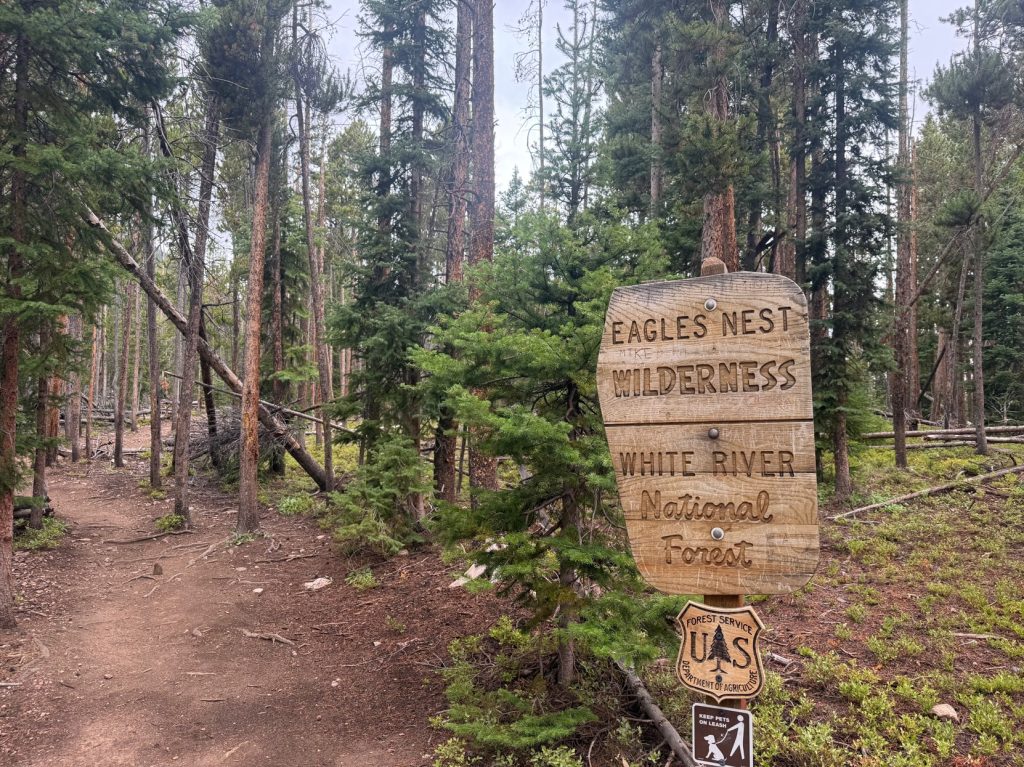
Ali Longwell/The Aspen Times
Nearly 45 million acres of U.S. Forest Service land across 38 states could be opened to road construction, logging and other development under a plan being advanced by the Trump administration.
Colorado is one of just two states not on the list.
On Tuesday, U.S. Agriculture Secretary Brooke Rollins said the agency took formal action to rescind the roadless rule, a 2001 policy established under former President Bill Clinton that preserves about one-third of the nation’s Forest Service land as backcountry wilderness areas. The move had been expected since last year, and the Agriculture Department will now accept public comments on both the proposal and a draft environmental impact statement through Sept. 21 at regulations.gov.
Rollins, in a statement calling the rule an outdated policy that has tied the hands of local land managers, said, “It’s time to turn the page on the failed roadless rule and return our forests to health and productivity.”
The proposed rollback drew widespread condemnation from conservation groups, who fear the lack of protection will open more wilderness areas to logging, construction and other human activity that could wreak havoc on local ecosystems. Yet millions of acres of backcountry in Colorado and Idaho will be spared under a longstanding agreement both states have with the federal government.

Support Local Journalism
Why Colorado’s backcountry won’t be affected
A 2005 amendment to the original Clinton-era rule gave states the ability to petition for their own roadless rules. Former Colorado Gov. Bill Owens kicked off the petition process that year, and it took until 2012 before the state was able to break away from federal policy and adopt its own roadless boundaries. Idaho adopted its boundaries in 2008.
Both states’ boundaries largely mirror what was designated under the federal roadless rule, with some exceptions — Colorado’s rule allows for ski area expansions that would otherwise be banned under the national rule.
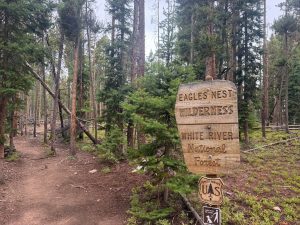
Colorado’s roadless rule applies to just under one-third of the state’s Forest Service land, which spans about 14.5 million acres. Popular areas that are currently protected under Colorado’s roadless rule include the Maroon East Roadless Area at the base of the Maroon Bells and the Tenmile Roadless Area, which is traversed by both the Continental Divide National Scenic Trail and the Wheeler National Recreation Trail near Breckenridge and Copper mountains.
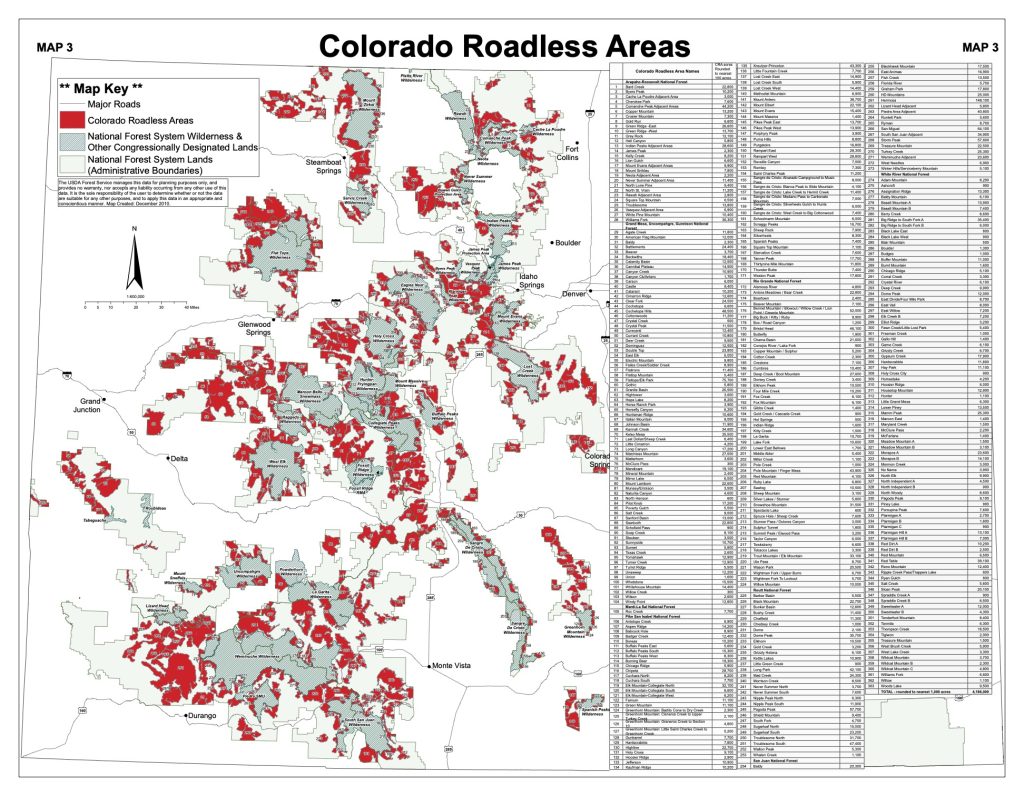
When Rollins announced efforts to end the federal roadless rule last year, she did so with the caveat that it would not change protections for Colorado and Idaho.
An unnamed spokesperson for the Forest Service confirmed that would still be the case in an email on Tuesday, writing, “Colorado is not affected by today’s proposal because it already has its own state‑specific roadless rules, tailored to the landscapes, risks and priorities within each state. Those rules are exactly the kind of local, flexible solutions we want to enable nationally by rescinding the one‑size‑fits‑all 2001 roadless rule.”
Still, conservationists are warning that if the roadless rule is repealed at the national level, it would open up millions of acres of national forests in neighboring states, which will have ripple effects in Colorado.
Mike Anderson, senior policy analyst for The Wilderness Society, said the roadless rule’s protection of watersheds and wildlife habitats from development has benefits across state boundaries.
“Those areas are often indistinguishable from the adjacent wilderness and (national) park lands,” Anderson said. “They are really key to protecting a lot of the region’s water supplies and cold water fisheries and big game habitat.”
He added that the repeal of the roadless rule is “going to be a threat to the enjoyment of the national forests that are all around Colorado.”
Research disputes claims that roadless rule makes wildfires worse
The Agriculture Department has built its argument for why the roadless rule should be repealed on the premise that it exacerbates wildfire danger by preventing forest management.
“Across the country, we’ve watched preventable conditions — overgrown stands, insect outbreaks and disease — turn healthy landscapes into tinderboxes,” Rollins said in her statement. “For too long, outdated restrictions have kept tens of millions of forested acres off-limits to the very treatments that improve forest health and reduce wildfire risk to our communities.”
Anderson said repealing the roadless rule could actually make wildfire danger worse.
The overwhelming majority of wildfires in the U.S. — upwards of 88% — are caused by human activity. Anderson said more road construction in national forests will increase human activity in backcountry areas.
A study published in January by researchers with The Wilderness Society found that, from 1992 to 2024, wildfire ignitions in national forests were more concentrated in areas that were within 50 meters of roads, and less concentrated in wilderness areas.
“Our results suggest that building roads into roadless areas is likely to result in more fires,” the study states. “These fires will, on average, be smaller than fires farther from roads, but there will be more of them, and some of them will grow to become large fires. Nevertheless, both roads and roadless areas can contribute to strategic, landscape-scale fire management.”
Anderson said there are other motivators for why the federal government wants to rescind the roadless rule, pointing to the Trump administration’s directives to boost domestic logging.
“That would be a more honest statement of the administration’s rationale for their decision,” Anderson said.
Conservation groups maintain that the roadless rule is broadly popular with Americans, and Anderson said its repeal would amount to the “largest rollback of public land conservation in history.”
The Forest Service held a preliminary public comment period when it first proposed rescinding the rule last year, with more than 625,000 comments submitted. An analysis by the Center for Western Priorities, a Denver-based advocacy group, found that nearly all comments were in support of keeping the roadless rule.
“Now (the Agriculture Department) is back with the same idea, dressed up as a move to reduce wildfire risk even though it will degrade drinking water, fragment wildlife habitat, and increase the Forest Service’s $10 billion road maintenance backlog,” Center for Western Priorities spokesperson Kate Groetzinger said in a statement. “This is a giveaway to the timber industry that the public has already rejected once and will reject again.”