King Mountain wolf pack patriarch dies during collar operations in Routt County
The 3-year-old was among the wolves brought from Oregon in December 2023

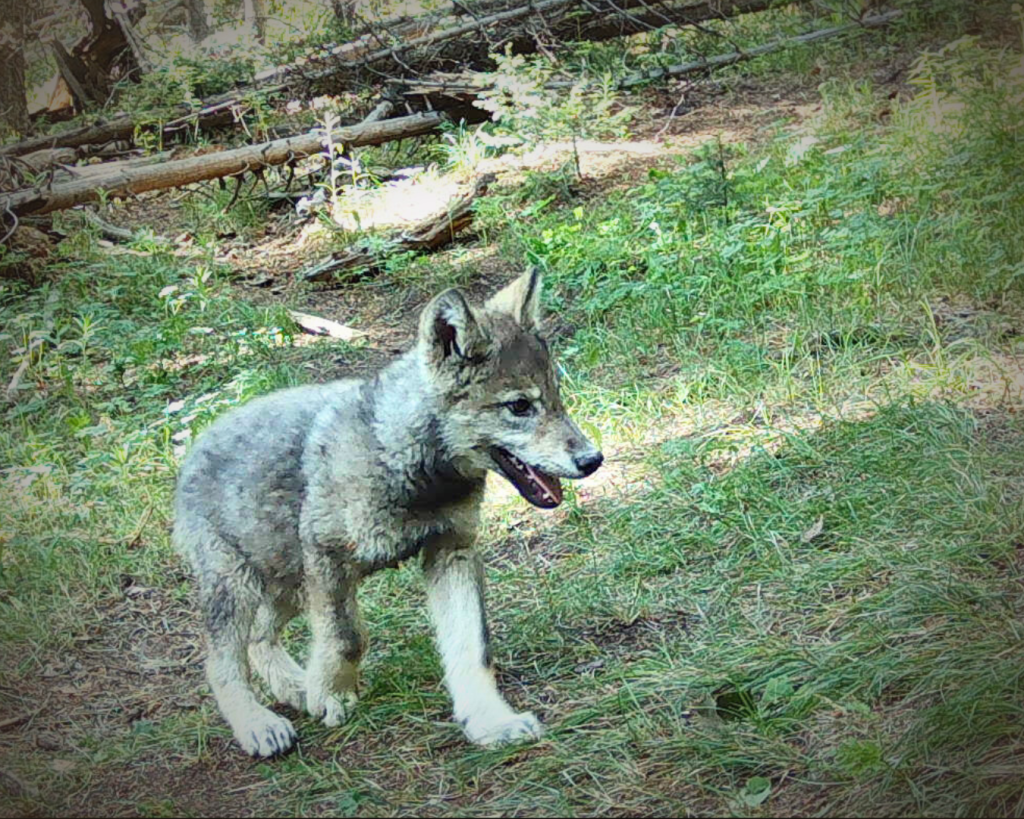
Colorado Parks and Wildlife/Courtesy Photo
The patriarch of the King Mountain wolf pack died during a collaring operation in Routt County on Jan. 28, Colorado Parks and Wildlife announced on Feb. 3.
The male wolf, tagged 2305, was around 3 years old and among those translocated from Oregon in December 2023. The wolf’s death marks the second this year and the 12th of the 25 wolves Colorado has translocated as part of its gray wolf reintroduction effort.
Parks and Wildlife reported that the death occurred during “routine collaring operations” to replace the batteries of the GPS collars on the King Mountain Pack’s breeding adults.
“When the animal was delivered to (Parks and Wildlife) staff in the field from the initial capture site, it was unresponsive. Our team initiated resuscitation efforts but determined the animal had died,” said Laura Clellan, acting director of Parks and Wildlife in the news release. “These sorts of capture efforts are a routine part of (Parks and Wildlife’s) wolf monitoring efforts, and the program has had very successful capture operations up to this point.”
During the operation, Parks and Wildlife also captured the King Mountain Pack’s breeding female and one pup, collaring the pup and replacing the batteries on the matriarch’s collar.

Support Local Journalism
Clellan reported that, while the state is not required to pause capture operations following a death, Parks and Wildlife has “decided to cease capture operations for the time being while we evaluate the circumstances around this mortality.”
The King Mountain Pack was established last spring in Routt County. Parks and Wildlife observed four pups, including the one that is now collared, during the operation. The pack was one of three new packs established in 2025.
“It’s not yet possible to understand the long-term implications to the King Mountain Pack as a result of this mortality,” said Eric Odell, Parks and Wildlife’s wolf conservation program manager, in a news release. “We will continue to monitor this pack to evaluate their status and how they are contributing to the establishment of a self-sustaining wolf population in Colorado.”
As gray wolves are listed as endangered under the federal Endangered Species Act, the U.S. Fish and Wildlife Service typically performs necropsies on the wolves that die in Colorado. In this instance, however, Parks and Wildlife reported that it received permission from the federal agency to conduct the investigation itself. This was allowed because the death occurred during an internal operation and there was no potential law enforcement investigation.
According to a news release, Parks and Wildlife performed the necropsy at its Health Lab in Fort Collins. Final results and lab tests from the necropsy are still pending and will determine whether other underlying conditions contributed to the wolf’s death. An independent third-party veterinary pathologist attended the necropsy and will confirm results.
With Colorado Parks and Wildlife’s recent announcement that it would not release additional wolves this winter, each new mortality could have greater implications for Parks and Wildlife successfully restoring the species in the state. In January, Odell said that when populations of wolves are small, “the contributions of each individual is especially significant.”
“If mortality remains high, as observed in 2025,” he said, “the risk of failing to achieve a self-sustaining wolf population in Colorado increases, potentially requiring additional resources to address.”