Colorado’s snowpack hits record low, with snowstorms expected to hit mountains during Thanksgiving weekend
A two-part storm stretching from Friday night into Monday afternoon could create snowy conditions for Thanksgiving weekend skiers and travelers, but it won’t do much for Colorado’s record-low snowpack

Chris Dillmann/Vail Daily
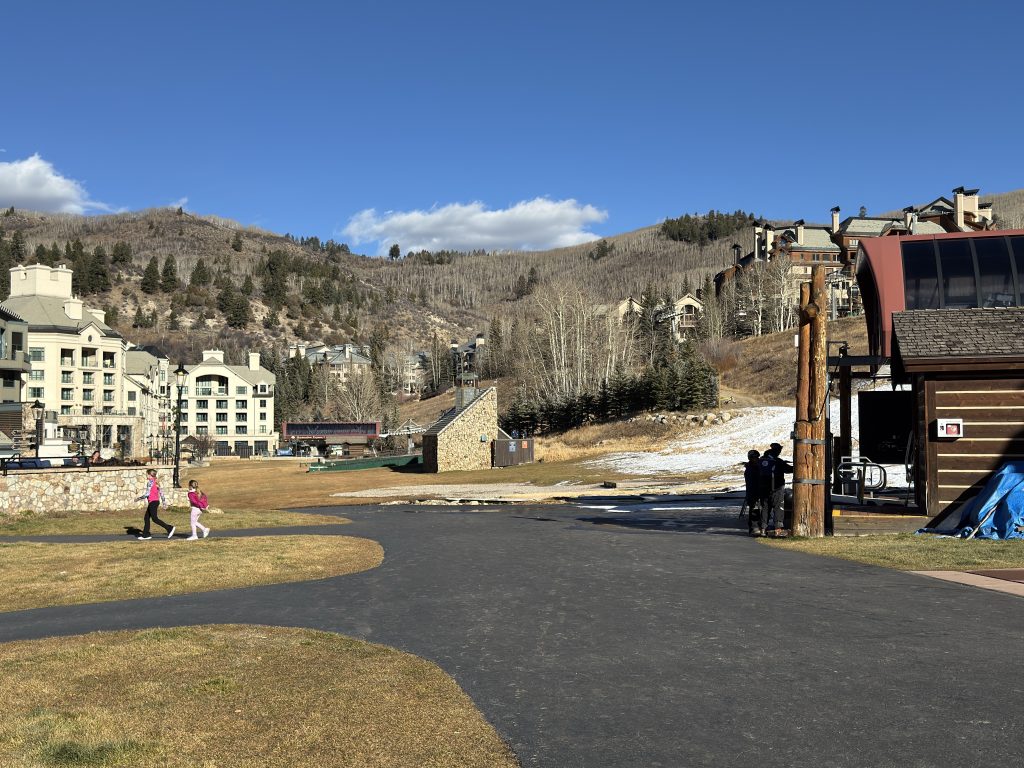
After a lackluster start to the winter season in which Colorado’s snowpack hit its lowest level in three decades, a Thanksgiving weekend storm could bring some much-awaited snow to Colorado’s northern and central mountains.
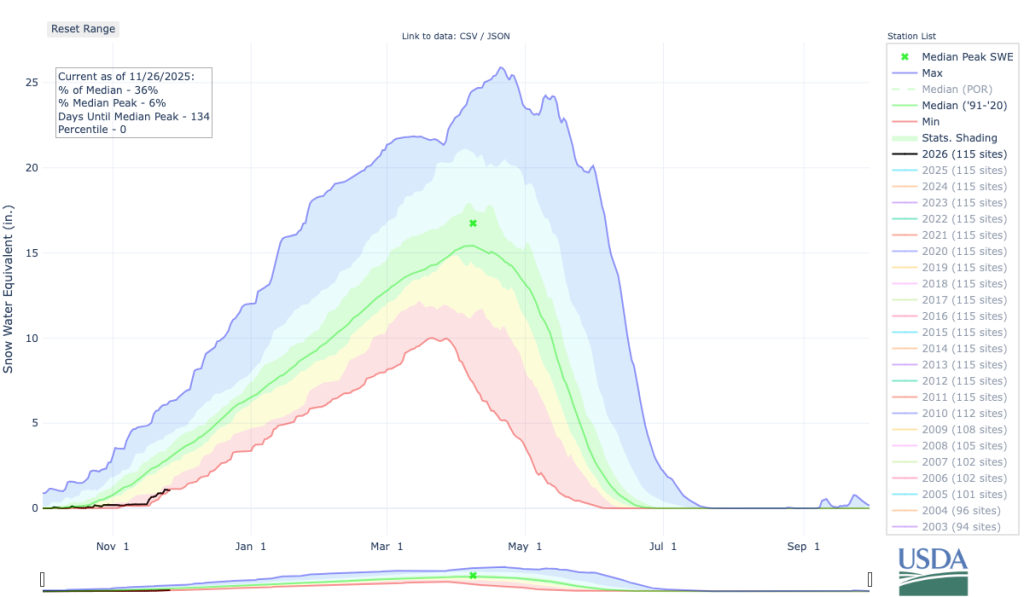
Colorado’s snowpack is currently at the 0th percentile. The snow water equivalent is the lowest on record for Nov. 26 since 1987. Several basins in Northwest Colorado are at 23% of normal, while snowpack levels along the I-70 corridor are closer to 24% of normal, according to National Weather Service Forecaster David Byers.
The state’s end-of-month forecast doesn’t promise much in terms of notable changes to the snowpack.
“We are looking at getting a little bit of snow, but not really any significant amount, so it probably won’t change much,” Byers said. “There’s just not a lot of moisture being able to make it in for the Western Slope.”
However, snowpack levels could shift as colder systems spread across the state in December, with forecasters saying it’s too early in the season to predict long-term impacts. The state still has 5-6 months of potential snowfall.

Support Local Journalism
“It’s way too early to tell,” Byers said. “It does look like next week we’re kind of moving into a wetter, more unsettled weather pattern. But what we’re really looking for is a good atmospheric river coming in off the ocean.”
After some flakes to the northern mountains on Wednesday, Thursday’s weather will be dry and partly-to-mostly sunny for all mountains with temperatures in the low 30s — roughly 10 degrees warmer than usual for late November in Colorado, according to Byers. Friday will be a mixed day with dry weather and temperatures in the 30s and 40s.
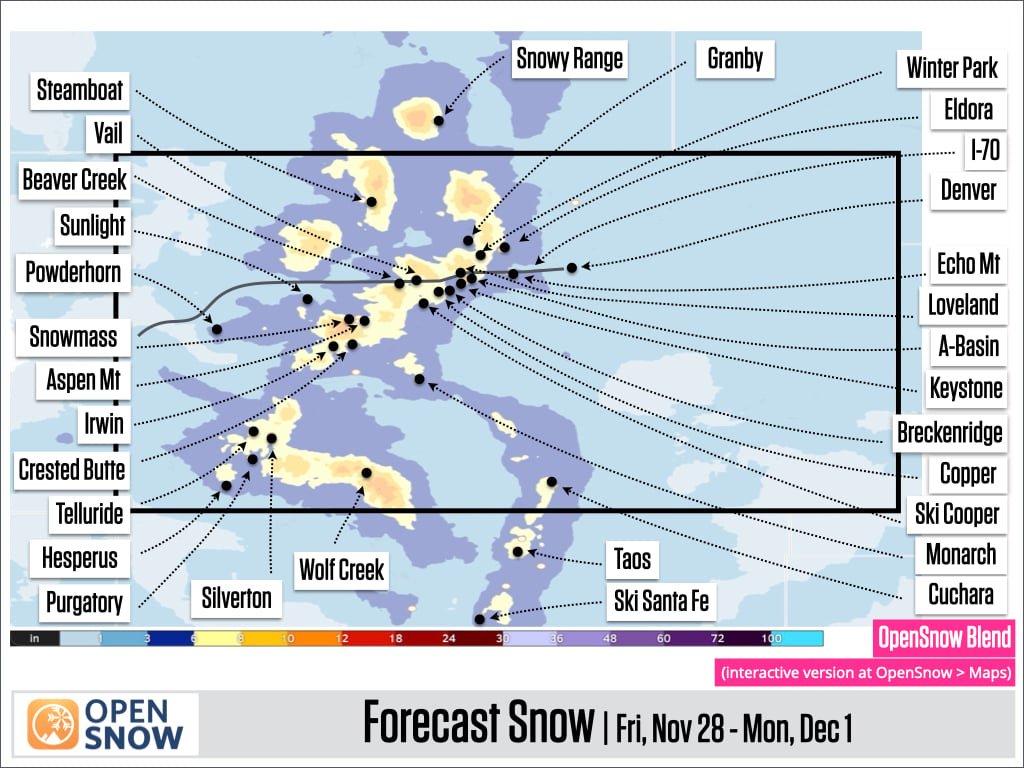
What follows next is a two-part weekend storm expected to bring up to 8 inches of snow to Colorado’s northern and central mountains, according to a Wednesday report by OpenSnow.
The first part is set to begin Friday night with 3-6 inches of snow in the northern mountains and 0-4 inches in the central mountains.
The best chance to catch softer snow on the slopes during the weekend would likely be on Saturday, according to OpenSnow, though there is still little terrain open in the northern mountains. Temperatures will also drop into the lower 30s and mid-20s throughout the weekend.
The second part of the storm is forecast to stretch from Sunday afternoon into Monday, sprinkling 3-6 inches of snow across all northern and central mountains. Colorado’s southern mountains would likely see little to no snow.
Grand and Summit counties are currently included in the National Weather Service’s hazardous weather outlook for Thursday through Tuesday, which warns of possible slippery roads due to cold temperatures and moderate snowfall.
“If traveling to or from the mountains on Sunday, expect travel conditions to become more difficult through the day,” the alert states.
Currently, the forecast yields a notable 4-8 inch snowfall for most mountains as a total of both storms, according to OpenSnow, though the forecast could see some changes in the next couple days.
“Each storm helps, even if snowfall is just a few inches,” Gratz wrote. “The sun angle is low, and any snow that falls will mostly stick around.”
More snow is likely from the middle of next week through Dec. 10.