‘Common’ juniper too rare here
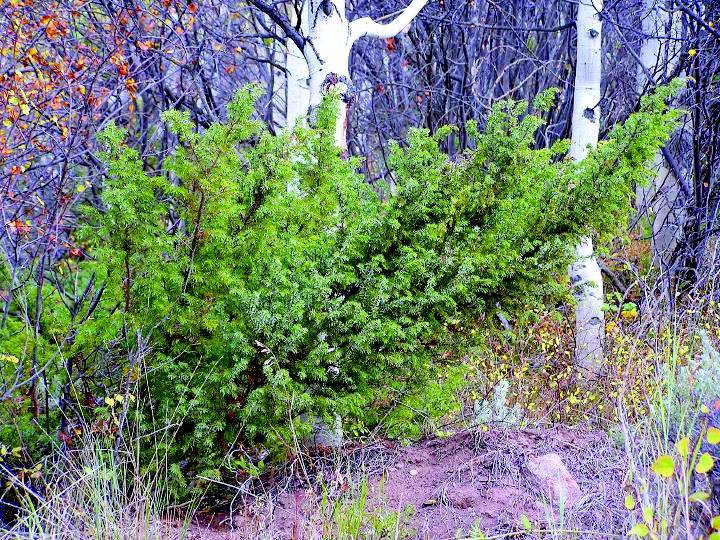
EAGLE COUNTY – We often associate junipers as being trees and shrubs that are used for hot, dry areas. Rocky Mountain juniper, the tree, dots the landscape from one end of the county to the other. Shrub junipers are used in low-maintenance beds to the point that they are certainly cliche.Yet there is another juniper gem that is overlooked and underused. It also helps fill a niche that the other shrub junipers don’t – cooler, somewhat shadier locations.Common juniper, Juniperus communis (var. depressa), is not nearly common enough in gardens here. It is attractive, and more graceful than most of the more commonly used shrub junipers on the market.Common juniper isn’t really a shade plant, but it is found in part-shade to full sun locations in wooded areas and also open areas that don’t face due south. This isn’t a hard and fast rule. It’s just that common juniper isn’t as heat tolerant as other types. Its advantage is that it tolerates cooler spots that the heat-loving junipers would languish in.
I guess I like it because I consider it to be more attractive than the other shrub junipers. In fact, those other junipers are more used as fill than a treat for the eye.Common juniper’s needles lend it a nice up-close effect. They often are bluish green, and are more delicate in shape than many other types. They are especially pretty when laden with their characteristic blue juniper berries.The branches tend to grow outward at approximately a 45 degree angle and can have a kind of arching effect. In observation, plants in part-shade areas tend to stay smaller, and in full sun larger. Many of the specimens I have seen growing in the hills above Avon tend to range from 1 foot to around 4 feet in height. There is a larger plant down in Avon that is over 5 feet tall, and 8 feet in spread.Common juniper exists throughout the world, and basically exists in different varieties. Here in North America, the native plant variety is named “depressa” as it is a lower growing, shrub type, whereas in other parts of the world, some varieties are tree forms.
It has also been hybridized, so you can find named varieties in different shapes at some nurseries. I prefer the good old native myself.A minor downside, like many juniper species, is that the needles lose some color during the winter. They turn more yellowish or brownish. This is usually not an issue, as they are often snow covered. It isn’t really tall enough to be considered a winter feature plant, anyway.In nature, it often grows right where Colorado columbine exists, and the two go together wonderfully. The blues in the columbines combine very well with the bluish highlights of common juniper.It also thrives in the same conditions as creeping grape holly, which makes a good ground cover to use as a companion plant.
I haven’t seen it in nurseries as much as I would like, but this largely has to do with demand. It is stocked at wholesale nurseries, so you can have a local nursery order it for you, or you can order via catalog and the internet.It isn’t a difficult plant to grow, and it is a fairly waterwise plant. After all, it grows native throughout much of this area. In hotter areas, it needs a little supplemental water.It is a slow grower, so be patient. Occasionally, like any plant, a limb may die. Simply prune it out.Yes, I haven’t neglected to notice what a fantastic fall color change we are having. Enjoy.M.G. Gallagher writes a column on gardening and landscaping for the Daily.