Core Transit unionization effort still waiting for state to set election date
Union advocates take a win in makeup of bargaining unit, which includes all frontline workers

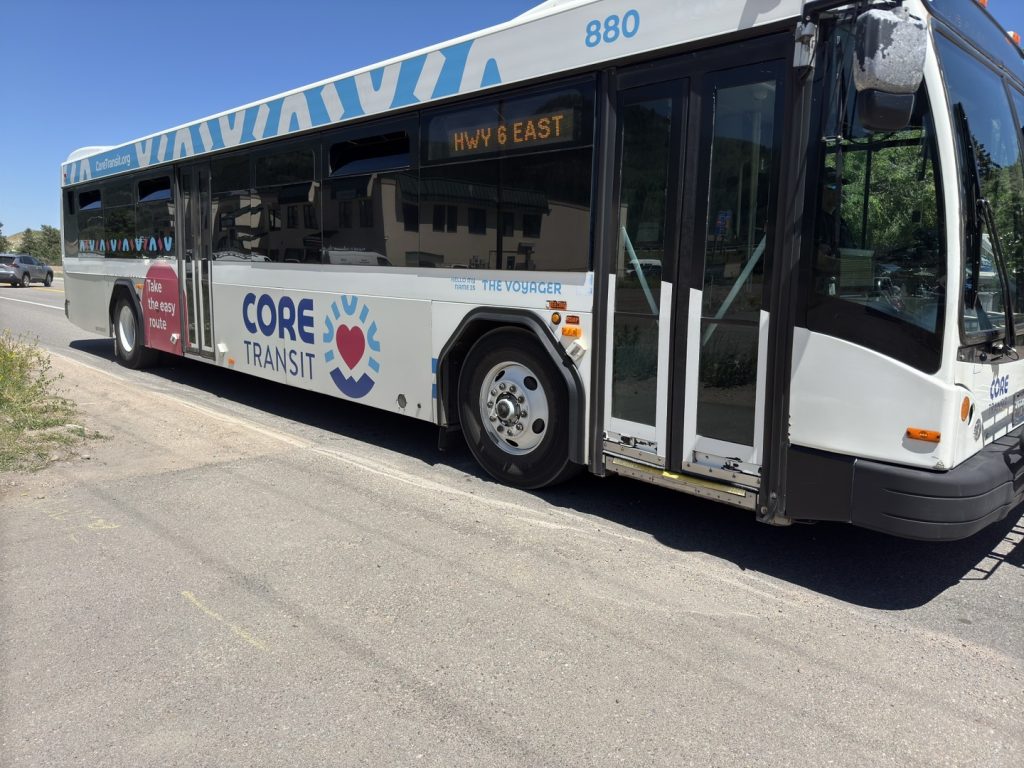
Chris Dillmann/Vail Daily archive
The Core Transit unionization process is heading to a vote after disagreements between management and union advocates forced the Colorado Department of Labor to intervene. But the state has yet to set a date for the election that will determine whether the transit authority’s frontline workers unionize.
In August, the state issued a decision approving a collective bargaining unit that includes operators (drivers), customer service representatives and fleet maintenance technicians, the group union advocates requested.
On Sept. 3, the state held a meeting with Core Transit management and Amalgamated Transit Union representatives to discuss the details of the election. The state is currently deciding between having a mail ballot election and an in-person election. Once that decision is made, the election date will be set.
Background of Core Transit’s unionization effort
The first version of Core Transit came to be with the approval of the Eagle Valley Transportation Authority in November 2022. The organization grew and was renamed Core Transit when ECO Transit and the Eagle Valley Transportation Authority merged in August 2024.
ECO Transit never had a union. Both RFTA and Summit Stage, Core Transit’s neighboring transit agencies, are unionized.

Support Local Journalism
Core Transit’s unionization process began in April, when Core Transit employees brought in Mike Harms, representative from the Amalgamated Transit Union. Harms and Core Transit’s union advocates were able to get the required 50% of frontline workers to sign cards indicating they were interested in a unionization vote.
But before a vote could take place, Core Transit management and union organizers needed to agree on a proposed collective bargaining unit — the members that would make up the union.
Union advocates argued that the groups of employees represented within the collective bargaining unit should include bus drivers (operators), customer service representatives and fleet maintenance technicians.
Core Transit management initially argued that the collective bargaining unit should solely consist of operators. In July, Core Transit management agreed to include fleet maintenance technicians and operators in the same unit, but continued to pitch customer service representatives as a separate category, as they have different working conditions from operators.
Amalgamated Transit Union representatives declined this offer, refusing to accept a bargaining unit that did not include customer service representatives, of which Core Transit had three at the time.
Core Transit management and union proponents also disagreed on proposed election dates.
After negotiations reached an impasse in July, the state stepped in to make the final decision about the collective bargaining unit and the election date.
On Aug. 7, the state issued a decision approving a collective bargaining unit that includes all full-time, regular part-time and regular recurring seasonal non-management employees.
What Core Transit’s union election will look like is still up in the air
Following the Sept. 3 meeting, Core Transit and the Amalgamated Transit Union are waiting on official notification from the state on whether the election will take place via mailed ballots or in-person.
For the union to pass, more than half of participating voters must vote in favor of the union.
While Core Transit and union organizers initially proposed election dates in mid-July, the election will take place no sooner than October after state intervention.
“We let the state know that we strongly prefer an in-person election,” said Scott Robinson, deputy director of Core Transit, at Wednesday’s Core Transit board meeting.
An in-person election would be much faster than a mailed ballot intervention, which could take six or seven weeks, Robinson said.
The mail system in Eagle County may also pose additional challenges to the efficiency of the election.
“We also know that mail delivery up here in Eagle County is not the most reliable, and so we think that could cause quite a bit of problems,” Robinson said. “We also have a large amount of staff on our operations team that share a P.O. box in Gypsum … it’s not best practice for one employee to go check the P.O. box and walk out of there with 20 to 30 other employees’ ballots and then have to figure out how to get it there.”
Core Transit management was also in favor of an in-person election because there could be voting opportunities on two days in two locations, with employees able to vote at either Core Transit’s Maintenance Service Center in Gypsum or in Avon.
If the state opts for an in-person election, it might be scheduled for early October, Robinson said.
“The ATU is committed to helping workers secure strong wages, benefits and working conditions and to ensure a safe, accommodating, inclusive workplace where workers are respected,” wrote Harms in a message to the Vail Daily.
“While the state decides on an election, we will continue to organize,” Harms wrote. “We work forward to representing all workers at Core Transit.”