Eagle County working on ‘resiliency’ planning
From disaster response to child care, economic development plays a role


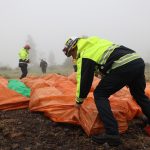
Anna Stonehouse/Daily archive photo
Eagle County has a new department focused on everything from disaster response to succession planning for small businesses.
Tori Franks, the new resiliency department director, and Erin McCuskey of the local Small Business Development Center, recently presented an overview of what it’s doing so far to the Eagle County Board of Commissioners.
Planning in Eagle County’s new resiliency department includes:
- Disaster response and readiness planning
- Business retention and expansion
- Workforce development
- Entrepreneurial and business support
- Centralized economic data and resources
There’s plenty of public interest in resiliency, McCuskey said, adding there are a number of opportunities for grants and other funding.
Commissioner Matt Scherr said it makes sense for Eagle County to be a starting place for people to learn about available programs.
Ultimately, resiliency ends up as economic development, McCuskey said.

Support Local Journalism
Even disaster response and readiness have an economic development component, she said.
Beyond information, McCuskey said the county can work on public-private partnerships for child care, housing, transit and other topics. McCuskey said the county can be a better partner when it comes to workforce retention and recruitment.
That extends to helping create career development, from youth to those seeking new opportunities.
“This is an opportunity to define what is our role,” McCuskey said. She added that the county is already playing a lead role on a number of topics. The resiliency efforts aren’t about creating new programs, but refining and coordinating current efforts.
Those efforts need continued work, McCuskey said, particularly regarding the county’s workforce shortage.
Workforce shortages span many of the county’s population and pay ranges, McCuskey said.
Franks said efforts are essential to help the “missing middle” of workers in the county — those in professional or management jobs who move out of the county instead of staying.
In addition to coordinating work already being done and creating an easy-to-reach place on the county’s website, the county’s landing page should also include centralized economic data, McCuskey said.
McCuskey noted that there isn’t currently that kind of presence on the county’s website, adding “We need to have a repository of that information” so people can access consistent data.
Succession planning for existing businesses also has an economic development component, McCuskey said. Making resources available through the Small Business Development Center more readily available can help keep businesses running after their founders have decided to retire or move on.
Commissioner Kathy Chandler-Henry noted that the county is in a good place to start these efforts.
“It feels like Eagle County emerged a little stronger than other places” after the COVID-19 pandemic, Chandler-Henry said.
McCuskey noted that some economic sectors have done well, but others haven’t. Pulling together information on the sectors that have done well can be helpful.
Franks said the “level of trust” built with local businesses during the pandemic “gives us a platform” for continued work.
But that work is going to require data. McCuskey said the resiliency department is working on a business survey that will go out instead of the one usually distributed by the Vail Valley Partnership.
That will help build a stronger information base, Franks said.
“We have a lot of data, but not enough data,” she added.