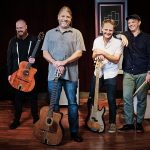
Grammy-nominated progressive Americana trio The Wood Brothers play in Beaver Creek Wednesday
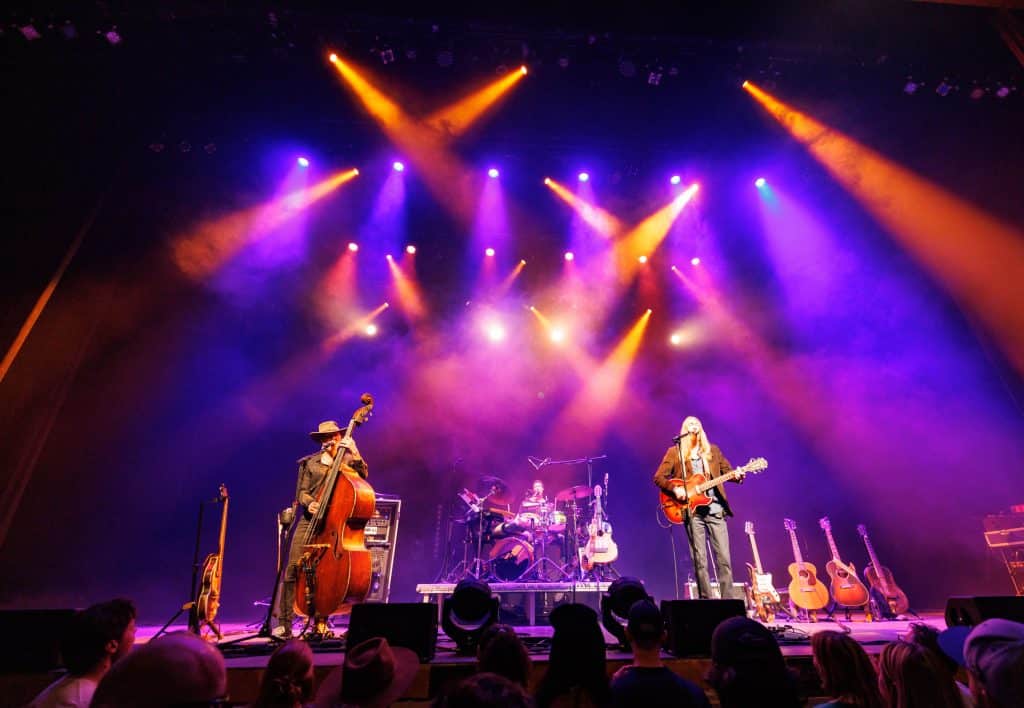
John Lockman/Courtesy Vilar Performing Arts Center
- What: The Wood Brothers with Margo Cilker
- When: 7 p.m. April 1
- Where: Vilar Performing Arts Center
- Tickets: $57.63-$74.58
- More info: vilarpac.org
Bassist and vocalist Chris Wood played in Medeski, Martin & Wood when the band formed in 1991. But the first time his brother, Oliver Wood, sat in on that lineup, performing a double bill with his band, King Johnson, they knew they had something special.
“We felt our connection. We felt our history. We felt our shared influences, all these things — our shared childhood,” Chris Wood said, adding, “I think that comes out on stage.”
While he notes that every longstanding band is akin to a brilliant social experiment, which creates its own musical language and way of being together, siblings add to the rich dynamics.
“Because you genetically have very similar voices, there’s something that blends right out of the gate without trying too hard. Oliver became a much more developed singer than I did, and I’ve been playing catch-up all these years, but regardless of my lack of skill in that department, it blended naturally,” he said. “And then when you add a third voice that’s not genetically related, we’ve read that that’s actually the best thing — to have people who are actually related and then another voice to come in there and complement that. That makes for a nice blend.”
It’s multi-instrumentalist Jano Rix who rounds out the trio.

Support Local Journalism
“Jano is so foolishly talented. He’s an incredible salsa dancer, very influenced by all kinds of Latin music, African music and rock ‘n’ roll and funk — and he’s an amazing keyboard player and a great jazz pianist,” he said.
Their songs and albums emerge from touring and writing together, but they’re heavily based on a subconscious process.
“We have a conscious idea of what it’s going to be beforehand, but we always find that, as the songs start to materialize, almost without fail, there arise these themes that just seem to be in the air for whatever reason during that period where we’re writing stuff,” he said. “Your subconscious is the most true, authentic piece of you. You’re not judging yourself when your subconscious is speaking. That’s how the best art comes about.”
That’s true of the band’s ninth studio album, released last August, “Puff of Smoke.” The collection of eclectic tunes revolves around how life can suddenly change, and yet, you can still remain joyful in the face of challenges.
“Somehow we kept writing about themes of impermanence,” he said.
As guitarist and vocalist Oliver points out: “We’re not in control, and that can be good news.”
The record breaks the so-called Americana mold the trio has been slotted into, pulling inspiration from all kinds of genres, ranging from Latin Caribbean to straight-up rock.
“We’re having fun drawing from any influences that we have, which are a lot, and some of that doesn’t fit into the so-called Americana genre,” Chris Wood said. “I think we’ve always had a lot of free range with the genres that we draw from and supposedly fit into, but I think with this one more than ever.”
They experimented with new sounds, such as Rix playing the congas or finding new expression through the keyboards. For example, the opening track, “Witness,” highlights blasts of New Orleans brass, while “The Trick” features Rix’s overdriven synthesizer. “Above All Others” manipulates an analog synthesizer to mimic what could be calliope sounds found underwater. And, on “Pray God Listens,” he played the keys with one hand and reached inside the piano with the other hand to mute the strings.
“It’s just playful, and we’re having fun experimenting with things. That’s when we stumble on something that maybe was interesting or unexpected,” Chris Wood said. “We make a whole bunch of weird choices that maybe no other band would make, which makes us sound like the Wood Brothers.”
When they began as a brotherly duo, they were a bit more rootsy or folksy, due to the nature of their instrumentation. But as the audiences and venues grew and they added a third player, they began to consider how their sound would translate to louder, perhaps more rowdier clubs.
“It’s like an arranger who’s arranging for an orchestra. You have more choices,” he said. “So there’s a big palette. You have all these choices. It’s like having a lot more colors on your palate. Over time, you start experimenting with all those new colors, and the music develops and changes organically through trial and error.”
They support their present-moment approach with meditation and mindfulness, which they practice both on and off stage.
“It’s just the idea that ultimately, we’re not in control, at least not as something separate from our environment, but the best way to dance with what’s happening is to pay attention 100% and be open to anything that could happen,” he said. “But that takes a lot of trust. You have to trust your environment. You have to trust yourself and surrender to what happens even though the part of your brain that likes to have these preconceived notions of the way things turn out. It might not be that, so you have to be okay with that. And maybe it’s not until much later that you realize that what happened by accident is better than the way you thought it should be. So we try to honor that as much as we can — the fact that we actually don’t know what the best thing is. We trust paying attention is the path towards hopefully stumbling upon it.”
And that’s partially how the musicians stay fresh. No one knows exactly what makes a hit — plenty of songs seem destined to be No. 1, only to reach mediocrity, while other doubtful songs soar to the charts, and still others recorded spontaneously click immediately, becoming classics.
“I don’t think anybody has that figured out, which is why music never gets boring. It’s this constant experiment of playfulness of what you think you know versus all the other stuff like accepting that, actually, you’re not in control. You have to balance those things back and forth constantly, and hopefully somewhere in there something good happens,” he said. “That’s why musicians hire producers, someone who’s not wrapped up in the creative mind, but brings an objective point of view. Oftentimes, each musician in The Wood Brothers acts as that objective witness, taking turns being the creative, spontaneous and even childlike creator and the one who takes it all in, pointing out things that work. In this way, they take turns acting as producers for each other.
“I think that’s really liberating. It gives us a lot of freedom to just be ourselves and experiment like kids,” he said.
As Rix points out: “Creativity is a winding road, not a straight path — if you’re open to it.”
While the musicians will play tunes off of “Puff of Smoke,” they’re also celebrating the 20th anniversary of their first record, “Ways Not to Lose,” which was recently released on vinyl for the first time, so the Vilar audience can expect a mix of old and new, with a few wild cards and perhaps a request or two thrown in.