‘The system performed exactly as we have built it’: How Eagle County Paramedic Services’ protocols saved a patient in cardiac arrest
New medical protocol was the key to resuscitating the patient after repeated shocks

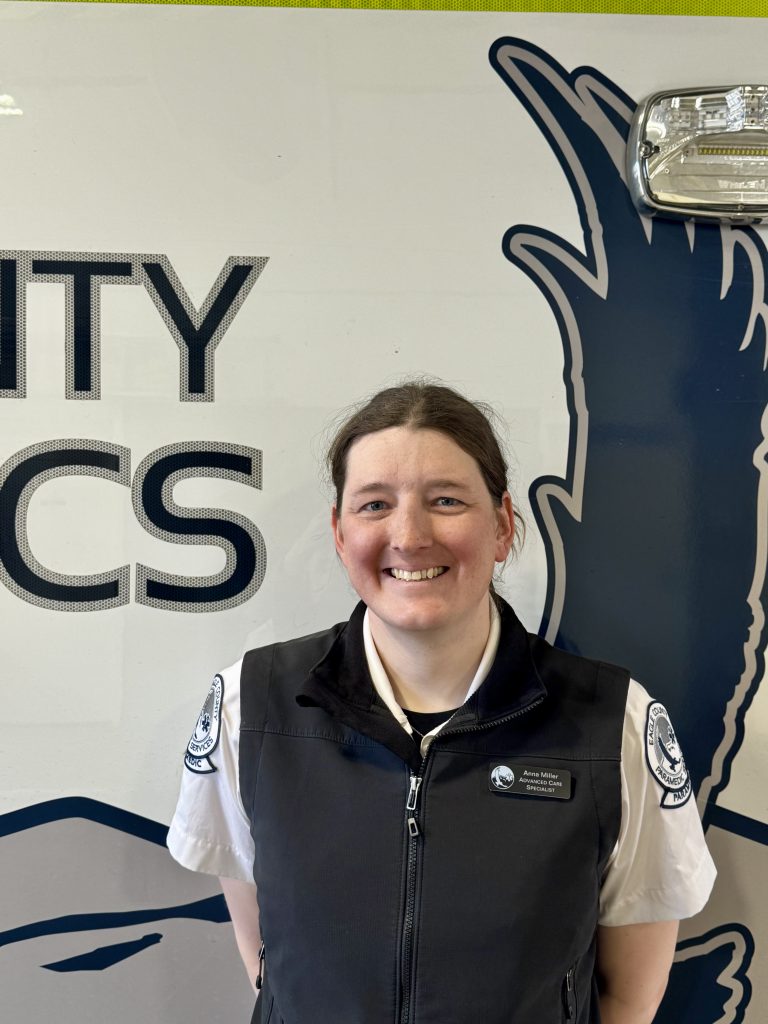
Eagle County Paramedic Services/Courtesy photo
On Dec. 29, Eagle County Paramedic Services responded to a call for help for a male in his 60s who was choking in Golden Peak. When two paramedics arrived just minutes later, they found the patient in cardiac arrest — unconscious, not breathing, with no pulse. After treatment on-scene, at Vail Health Hospital and at a Denver hospital, the patient, a visitor to Eagle County, walked away alive.
“Nothing that happened that day was luck or happenstance,” said Anna Miller, one of the two paramedics who responded to the call. “The system performed exactly as we have built it and trained on it.”
What happened Dec. 29
When paramedics arrived on the scene, there was already a bystander conducting CPR, under direction from the 911 dispatcher on the phone. Paramedics placed their cardiac monitor on the patient, identified a shockable rhythm — ventricular fibrillation — and went through a round of defibrillation. Another bystander took over chest compressions. Other bystanders returned to the scene carrying an AED.
“It was amazing to see everybody in the area helping out,” Miller said.
Two Vail Fire Department trucks arrived, and firefighters took over chest compressions. The paramedics managed the patient’s airway and medications, then delivered a second shock, still unsuccessfully.

Support Local Journalism
For the third round of defibrillation, Miller and her partner, Tyler McKinnon, followed one of Eagle County Paramedic Services’ newest protocols, implemented just weeks before the event: dual sequential defibrillation. Under this protocol, the pads from two defibrillators are placed on the patient and two shocks are delivered in quick succession with the goal of restoring normal electrical activity to the heart.
“That immediately resolved his rhythm,” Miller said.
It was the first time the protocol, pioneered in hospital-based care, was used in the Eagle County Paramedic Services system.
How new protocols are saving lives
Eagle County Paramedic Services’ medical directors, Dr. Jason Zeller and Dr. James Engeln, both emergency room physicians at Vail Health, spent about a year working toward bringing the dual sequential defibrillation to the agency after data showed its effectiveness in resuscitating cardiac arrest patients in hospital settings.
“The next logical step of that was, if it’s successful at terminating that lethal rhythm, then why don’t we do that earlier in the field, when it’s going to be more beneficial?” Miller said.
Trust what you read. Stay informed with us.
Sign up for daily or weekly newsletters at VailDaily.com/newsletter
“Having the ability to perform procedures like that dual sequential defibrillation, as a cutting-edge treatment in EMS, that to me was very special, because it showed this area, this agency, is committed to doing things that are innovative, that are really making a difference,” McKinnon said.
With the patient resuscitated, the paramedics moved to administer stabilizing care.
It was only with the patient resuscitated and stabilized that he was loaded into the balance and transported to Vail Health Hospital.
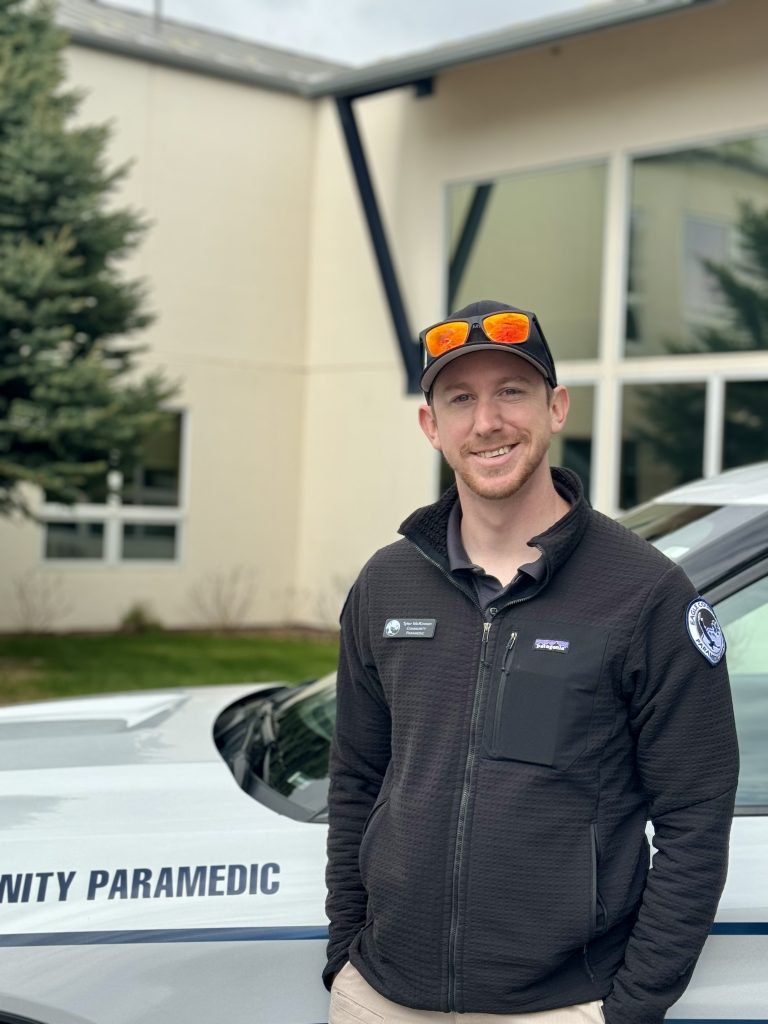
“It’s a public perception thing that the ambulance shows up and whisks someone away, when in reality, especially in Eagle County, we are showing up with very skilled, highly capable paramedic crews that are often, for these medical cardiac arrest patients, bringing the same initial resuscitation that is going to be provided in the emergency room,” Miller said.
“Continuing research in emergency medical services has shown that … getting (cardiac arrest patients) to the hospital on dangerous bumpy roads actually is a serious detriment to their care because we’re not focusing on the things that are hyper important to getting that return of circulation,” McKinnon said.
Bystander intervention is critical
The two key elements to resuscitating a cardiac arrest patient are early electrical assistance — defibrillation — and high quality, continuous chest compressions — CPR.
Data shows that the earlier a patient in cardiac arrest receives interventions, the likelier they are to have a positive outcome.
“The clock starts when the event happens, and anything that we can do to minimize that time to intervention adds to the possibility of a good outcome,” Miller said.
It does not have to be health care professionals that administer this kind of lifesaving care. “Electricity and CPR are the ways that we save people, and it’s quite possible that it doesn’t have to be EMS that does it,” McKinnon said.
Resuscitating a patient after cardiac arrest is rare. In Colorado in 2024, just 13% of patients who experience out-of-hospital cardiac arrests survived to hospital discharge.
But Eagle County Paramedic Services’ cardiac arrest care system, which has been carefully designed and is continuously updated, seems to be working.
Eagle County Paramedic Services patients fared far better than the state average; 27% of cardiac arrest patients in 2024 survived to hospital discharge. The results were even better for arrests like the one on Dec. 29, which were witnessed by bystanders and the patient’s heart was in a shockable rhythm. Fifty-seven percent of Eagle County Paramedic Services patients survived this situation, much more than 36% in Colorado.
This is in large part due to bystander intervention. In 2024, 60% of ECPS arrests received bystander CPR, compared to 42% in Colorado. An AED was applied before EMS arrival in 80% of local cases, compared with 24% statewide.
McKinnon recommended everyone get CPR certified, and look for the defibrillators placed throughout Eagle County.
“Most public places these days have an AED somewhere,” McKinnon said. If there is a witnessed cardiac arrest, “Ask someone specifically to go find it.”
“Don’t be afraid to help, especially if it’s a situation like this where someone is unconscious in the street,” Miller said.