Eagle County physical therapist headed to Cortina with U.S. Snowboard Cross Team
Special to the Daily
Courtesy photo
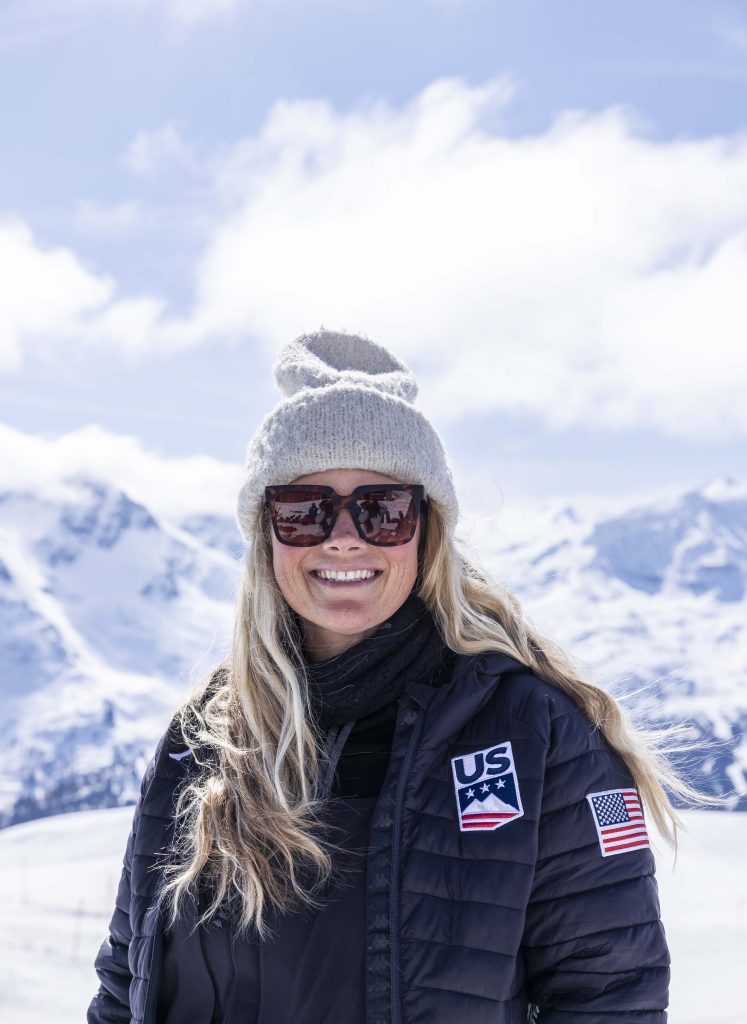
When Vail Health Howard Head Sports Medicine physical therapist Helen Bradley learned she was headed to the Winter Olympics, the news arrived quietly via her supervisor in January 2025. U.S. Ski & Snowboard had formally requested Bradley to serve as the physical therapist for the U.S. Snowboard Cross team at the 2026 Winter Olympics in Cortina d’Ampezzo, Italy, continuing a long tradition of Howard Head clinicians supporting athletes on the world’s biggest stage.
“I was very excited, stoked, and grateful for the opportunity,” Bradley said. “This has been a goal of mine since I attended my first Olympics in South Korea in 2018.”
That first Olympic experience was deeply emotional. Bradley stepped into the role after a close colleague, Eric Dube, who had originally been selected as team physical therapist, passed away unexpectedly just months before the Games. At the time, Bradley was postpartum and had not planned to travel that season.
“But when you’re asked to go to the Olympics, you go,” she said. “It was bittersweet. It should have been Eric there.”
As Cortina 2026 approaches, Bradley views this return as a moment of closure. “My goal was to be selected again and have no guilt attached to that decision,” she said. “I cannot wait.”

Support Local Journalism
Bradley’s Olympic selection highlights the enduring partnership between Howard Head Sports Medicine and U.S. Ski & Snowboard. As an official medical partner of the U.S. Ski & Snowboard teams for nearly 40 years, Howard Head Sports Medicine has played a vital role throughout the 2025–2026 season, with 17 clinicians traveling both nationally and internationally, providing medical support for athletes across Alpine, Nordic, Freeski, and Snowboard Cross disciplines.
Based in Vail, Bradley has worked with the Snowboard Cross team for more than a decade, building the trust required in one of the most chaotic and high-risk events in the Winter Games.
“Physically, every athlete at the Olympics is capable of medaling,” Bradley said. “What separates them is often mental resilience. In Snowboard Cross, one crash can end your Olympics. Sometimes luck plays a role.”
Bradley said her Olympic readiness comes from years of sport-focused training and real-world experience. She holds a master’s degree in Sport and Exercise Medicine, is a Board-Certified Sports Clinical Specialist, and has advanced training in dry needling, manual therapy, and emergency medical response through MESS training and USOPC medical conferences. She also emphasized the value of working with athletes over time, both in and out of the clinic, to build trust and understand the demands of elite competition. The training and experience are important, but what is equally essential is being compatible with the team, traveling for extended periods of time — you need to be flexible, easy-going, dependable and reliable. Without these qualities, the team won’t want you back.
What matters in your community, delivered daily.
Sign up for our morning newsletter at VailDaily.com/newsletter
At the Olympic level, recovery is everything and protecting it can be difficult. Time zone changes, media obligations, and family visits all challenge athletes’ routines.
“Sleep is the most important factor,” Bradley said. “And it’s also the hardest thing to protect.”
Hydration, nutrition, and consistent schedules are daily priorities, along with hands-on treatment and active recovery. International travel also brings health concerns, making illness prevention and quick acclimation to Central European time essential.
Despite the Olympic spotlight, medical care doesn’t always happen in ideal settings. Bradley has treated athletes in hallways and storage rooms when needed, always following SafeSport protocols.
“You figure it out,” she said. “Borrow equipment, find a quiet space, adapt. That’s part of the job.”
With Olympic dreams on the line, no medical decision is made alone. “We have a large medical team,” Bradley said. “Any decision to hold an athlete out is collaborative, involving medical staff, coaches, and the athlete.”
Equally important is maintaining composure. “Athletes need a calm face,” she said. “They’re already under enormous pressure.”
A typical Olympic day begins early with pretraining treatment, followed by long hours on the mountain. Bradley communicates by radio with coaches, assists with on hill injury response, and spends evenings providing therapy and preparing for the next day. “I’ve worked with some of these athletes for more than 10 years,” she said. “They’re like family.”
As Cortina 2026 gets underway, Bradley remains focused not on medals or headlines, but on preparation, recovery, and representing Team USA, Howard Head Sports Medicine, and the valley she proudly calls home.