In Eagle County’s other congressional district, ‘Blue Dog’ Salazar explains the rural mindset

Wikimedia Commons
When John Salazar interrupts a phone interview with a reporter to hop off his tractor on his farm in the San Luis Valley to get an oil filter for his son who’s working on another tractor, it’s not performative. As Salazar, a self-described “old buzzard” who turns 73 in July, explains simply, “I’m working like a fool, but I love it.”
There’s another animal, however, that leaps to mind when talking the economy and politics with Salazar, who’s the last Democrat to represent Colorado’s conservative-leaning 3rd Congressional District. And that animal is the rarest of beast these days in Washington — a moderate, “Blue Dog” Democrat. The caucus is down to just 10 after topping 52 in Salazar’s day (2005-11).
The older brother of former Colorado U.S. Sen. and U.S. Secretary of the Interior Ken Salazar, John Salazar proudly wears that Blue Dog label to this day, and says D.C. needs a lot more of them to get the country out of the economic mess it’s currently sinking into. That’s one of the reasons he’s endorsing moderate U.S. Sen. John Hickenlooper in the November election.
“John has always, always stood up for agriculture,” Salazar said of Hickenlooper. “He’s a moderate, and I think when you look at what’s happening in Washington and other areas, we need more moderates in there. It’s been so extreme. Both sides are so extreme.”
This is from a man who drew fire from environmentalists and fellow Democrats for voting against the American Clean Energy and Security Act of 2009, also known as the Waxman-Markey cap-and-trade bill, but then voted for the Affordable Care Act (Obamacare) because he saw rural families struggling mightily to afford health insurance as rural hospitals shut down.

Support Local Journalism
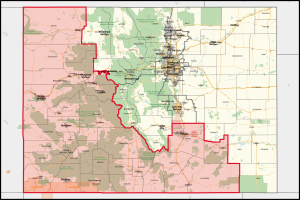
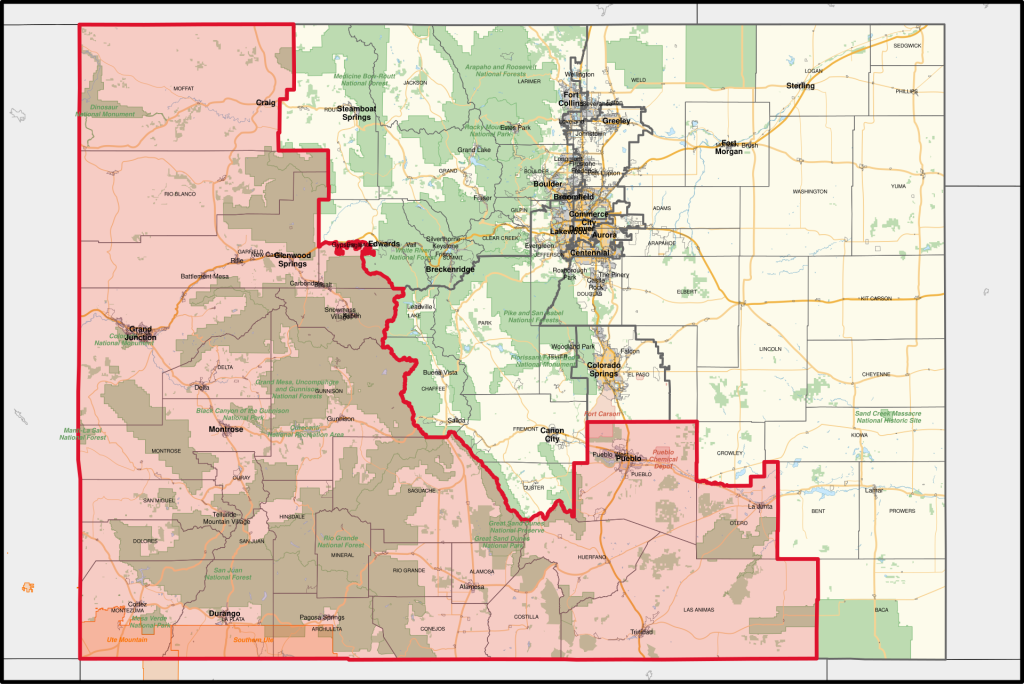
Both of those votes came down to having the backs of his constituents in a mostly rural district that stretches from Pueblo in the southeast to Grand Junction in the west and includes part of Eagle County south of Edwards, Eagle and Gypsum over to Basalt and El Jebel.
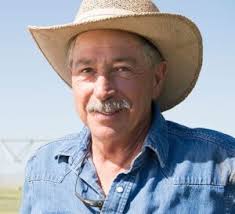
“That’s one of the reasons that I lost my election is because of the Affordable Care Act,” Salazar acknowledges. “Most of the Blue Dogs voted for it, and it cost us that year. That’s when the Tea Party came out.” Republican Scott Tipton rode that wave into office until he was deemed too moderate for the MAGA wave that brought Lauren Boebert to power in CD3.
Still, Salazar doesn’t regret his Obamacare vote.
“My foreman, he was already like 55 or so at the time,” Salazar recalls. “Anyway, my half of his insurance premium was $1,500 and his half was $1,500. How in the heck can young families back then pay 3,000 bucks a month for health insurance? Ridiculous. And then this guy’s been cutting all the funding for health care. Rural America needs help, and this isn’t a giveaway. This is maybe a little bit of subsidized insurance money.”
“This guy,” of course, is President Donald Trump, whose One Big Beautiful Bill Act did away with premium tax credits for health insurance and is expected to dramatically curtail Medicaid spending over the next decade.
As for his vote on the cap-and-trade bill that barely passed out of the House under then-Speaker Nancy Pelosi, who was shocked to see Majority Leader Harry Reid kill the bill in the Senate, Salazar said his views on manmade climate change were a little different then they are now.
“I used to kind of be a skeptic of climate change but I’m not anymore,” Salazar said after remarking on the record drought conditions this year. “I realize that it’s a real thing. I always represented my district the best I knew how because I never wanted to cause any harm to anybody. I didn’t care whether they were Democrats, Republicans or independents.”
At the time of that vote, Colorado generated about 70% of its electrical power by burning coal. That’s down under 25% with increases in both gas-fired power plants and renewable energy.
“A lot of our electrical plants were run by the coal mined off the Western Slope,” Salazar said. “And so I felt like it was going to hurt our consumers here in Colorado and the people that run these power plants and so I voted against that because I thought it was going to hurt Colorado.”
Asked about the surge in solar in the San Luis Valley and renewables across Colorado, Salazar doesn’t hesitate about where he stands now.
“I am a big proponent of renewable energy; don’t get me wrong,” Salazar said. “But you can’t just shut off the coal plants without having something to replace them, right? So we have to make sure that we have sufficient renewable energy here before we start shutting down coal plants. We can work towards that goal, right?”
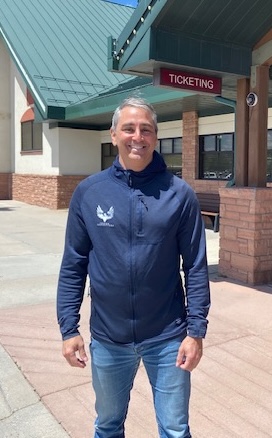
Alex Kelloff, a Democrat from Aspen in a primary race for CD3 with fellow Aspen-area Democrat Dwayne Romero, said he recently talked to some coal-plant workers in the Craig area who were planning on the shutdown of that facility and now have to try to map out their future in three-month Trump administration extension increments. Meanwhile, he said, the 80 or 90 coal plant jobs have been more than negatively offset by huge losses in federal workers there.
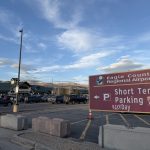
“So if this administration is talking about how we need to keep these (coal) jobs in these communities — and there’s some discussion about just base load for the grid, but that’s kind of a red herring — the whole jobs arguments is BS because they’ve just cut 1,800 people from our federal lands workforce,” Kelloff said recently at the Eagle County Regional Airport.
Incumbent Republican U.S. Rep. Jeff Hurd, who beat out Aspen Democrat Adam Frisch by nearly five percentage points in 2024 after Boebert left the district for the state’s Front Range, also faces a June 30 primary opponent in former Republican state lawmaker Ron Hanks. Hurd’s campaign did not respond to requests for comment for this story.
Kelloff, whose great-grandfather and great-uncles moved to Trinidad from the Middle East to mine coal 130 years ago, said he recently met with Salazar and has his support in the primary race. Kelloff’s paternal grandfather owned Kelloff Food Markets across southern Colorado and ran the stores for 70 years, while his maternal grandfather was a carpenter who worked on houses in Vail its first year before moving to the Roaring Fork Valley. In one way or another, Kelloff said his extended family has been in small business across the district for more than a century.
Kelloff said he’s amused that Frisch, who lost to Boebert in the CD3 race by just 546 votes in 2022, is now supporting Romero and portraying Kelloff as an unelectable candidate who’s out of touch with the sprawling rural district.
“Areas (Frisch) lost ground (between 2022 and 2024), those are places where, when I go there, 80% of the people I meet with are like, ‘Yeah, I went to high school with your cousin,’ or like John Salazar, ‘I did business with your family.’ So for someone to say I don’t know the district, particularly relative to Dwayne, who came from Texas, is disingenuous.”
Romero’s campaign did not offer comment for this story.
Frisch confirmed his support for Romero in the primary but declined to comment on the specifics of the CD3 race. He did note that in 2024, when he lost by just under 5%, the entire district went for Trump by about 10%. Two years ago, there were headwinds for Democrats, he said, and those may have shifted to tailwinds due to affordability issues this cycle, even with Hurd being a much more moderate candidate than Boebert.
“While Jeff is certainly more moderate in persona, he has taken a lot of votes — a lot, a lot — that are very anti-CD3,” Frisch said. “Representatives should only be beholden to their constituents, not to their party or any president. I say the same to both sides of the aisle.”