Living the mission at Walking Mountains in Avon
Foley Graduate Fellowship program cultivates environmental leaders at the science center
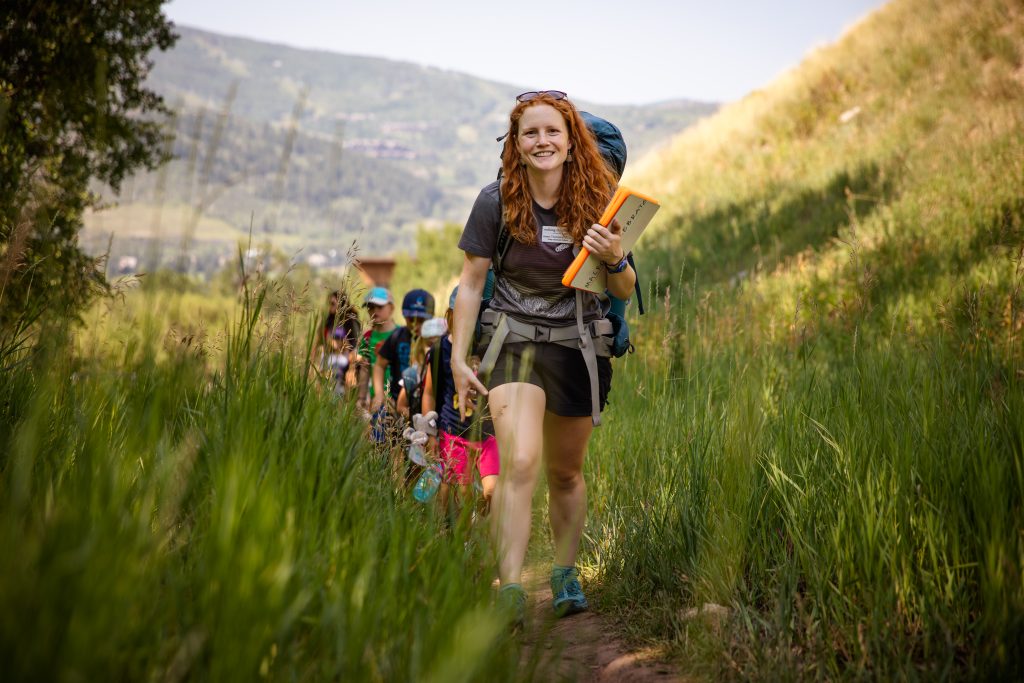
Chris Cohen, Walking Mountains Science Center
For a small population — approximately 55,000 full-time residents — the Eagle River Valley is home to some pretty impressive programs and nonprofit organizations that focus on the arts, youth, literacy, accessibility and more. Walking Mountains Science Center, which was founded in 1998 by Kim Langmaid under the name Gore Range Natural Science School, combines environmental stewardship and sustainability through education — the name changed to Walking Mountains in 2010. Though the organization’s reach is expansive, the graduate fellowship program is perhaps one of the most unique and least known aspects of the organization. And it serves as a microcosm of Walking Mountains’ very ethos.
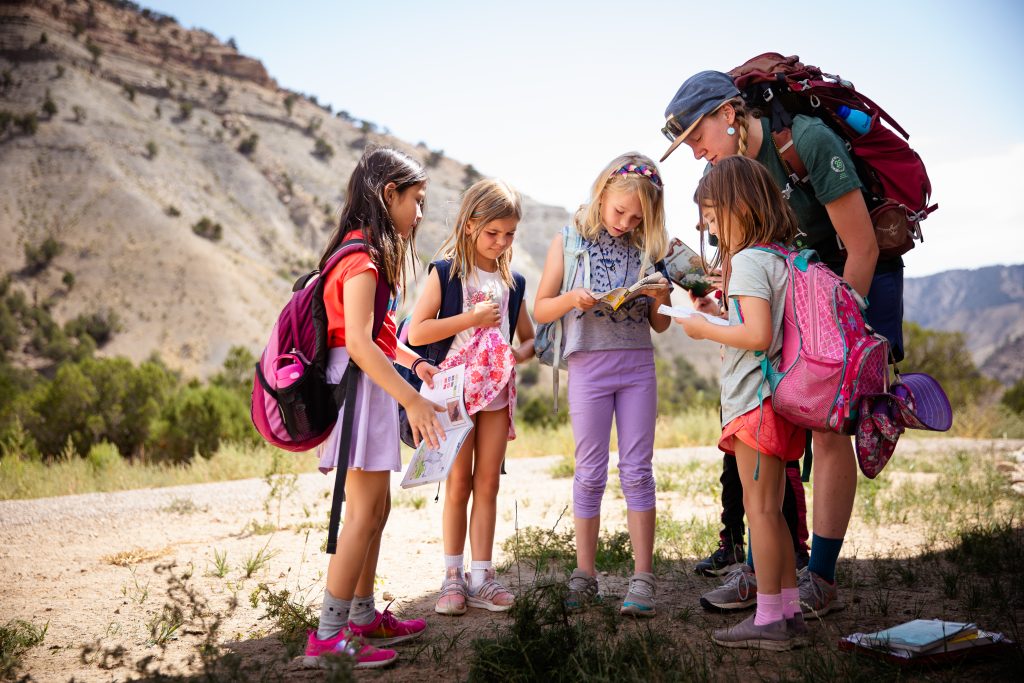
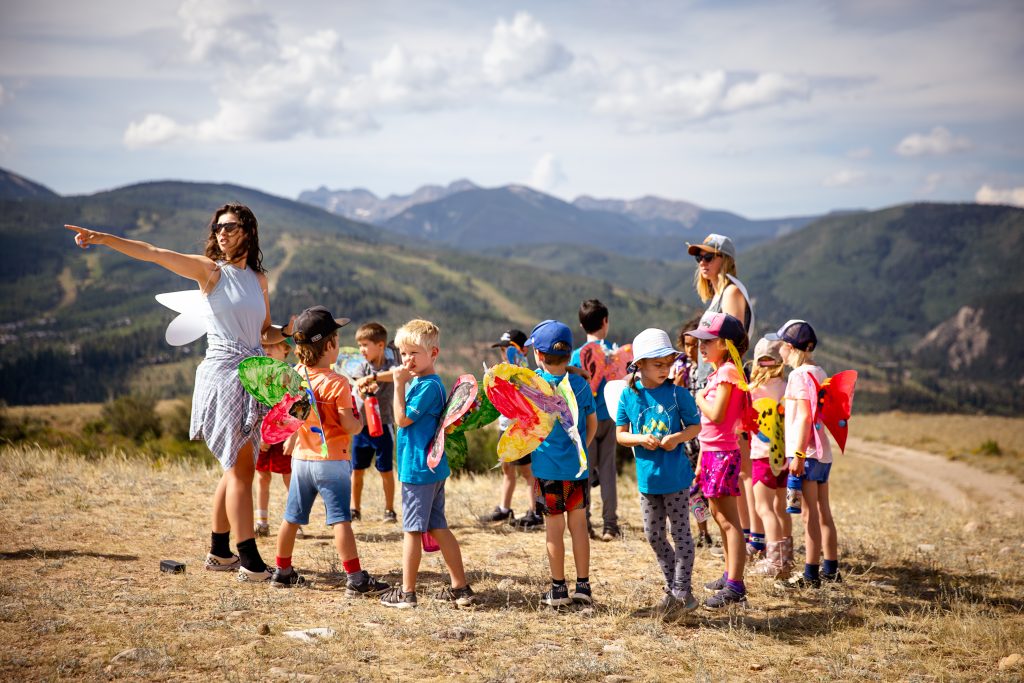
The Foley Graduate Fellowship is a 27-month professional development program that focuses on K-8th grade field science education and leadership. Throughout the fellowship, educators teach summer science camps and school field science programs while participating in a Master of Arts graduate program through the University of Northern Colorado and earning an M.A. in Science Education.
Blending the rigor of graduate study with immersive community living, outdoor education and environmental stewardship, the Graduate Fellowship at Walking Mountains is more than just a Master’s program: It’s a journey that equips passionate individuals with the tools, knowledge and support to become lifelong educators and advocates for the natural world.
Walking Mountains Graduate Fellowship Program
• 75+ fellows since the program’s inception
• 4 fellows admitted per year
• 2 years and 3 months: duration of the program
• Graduate degree: M.A. in Science Education from the University of Northern Colorado
• Paid full-time positions and free on-campus net-zero housing with private bedrooms and shared living spaces
• 4,000 Eagle County students reached annually
• Notable graduates: Educators, nonprofit leadership, government and more
• More info: walkingmountains.org
Impacting Eagle County’s youth
“Graduate school is a lifestyle. It’s all-encompassing. Fellows are working, studying and living together. We wanted the experience to be holistic, where what they’re learning in class is directly connected to what they’re doing in the field.” Chris Cohen, Director of Youth and Graduate Programs, Walking Mountain Science Center
At its inception, the Gore Range Natural Science School provided field science programs, summer science camps and adult programs, serving more than 600 Eagle County school children; the total program reached more than 900 people. Fast forward to 2022 and the total program reach exceeded 380,000. In the interim, Walking Mountains also opened the Buck Creek Campus in Avon, purchased land in Sweetwater for increased access to educational programming and outdoor experiences, created an agreement with Eagle County Schools to provide Eagle County kindergartners through eighth graders access to a free field science program each year and created the Graduate Fellowship at Walking Mountains.

Support Local Journalism
It’s the focus on education creating a symbiotic relationship that sets the Graduate Fellowship program apart: Students who are passionate about the environment have the opportunity to not only share their knowledge with the community in which they are living and working but also gain invaluable experience while attending graduate school.
There’s no other program in the U.S. that provides what the Graduate Fellowship program at Walking Mountains does: a paid position and a (really nice) place to live while earning an M.A.
A place to lay your head
Walking Mountains offers something increasingly rare in postgraduate education: fully funded tuition, a paid position and free, sustainable housing in a high-cost resort community. It’s the high cost of living in places like Eagle County that can make it impossible for early-career educators to accept internships or entry-level positions, no matter how passionate they are. Tayler Branson, current Foley Graduate Fellow (Class of 2025, graduating in July), says guaranteed housing is critical to her involvement in the program.
“I graduated during lockdown,” she said. “The fact that there was housing involved, and I could take an internship and know that I would have a place to live, was critical.”
Walking Mountains tackled this head-on. In 2020, the organization opened the Pete and Pat Frechette Educator Community Housing: two net-zero, sustainably designed co-housing structures located on the Avon campus. Each fellow has a private bedroom and bathroom, with shared common spaces that foster camaraderie while respecting individual privacy. The housing is not just a perk; it’s a cornerstone of the fellowship’s success.
“Communal living is naturally challenging, but having my own bedroom and bathroom provides so much privacy and peace,” Branson explained. “Our community is really good at coming together, celebrating each other, watching movies, having family dinner, going on adventures. It’s nice when you come home from a tough day at work to talk to someone who understands. I feel supported in that way.”
It’s also another tangible illustration of Walking Mountains’ commitment to sustainability. Some of the most energy-efficient structures on the Western Slope can be found at Walking Mountains’ campus in Avon: The original campus, completed in 2011, is the Valley’s only LEED Platinum certified facility; and the Borgen Precourt Center for Sustainability (completed in 2019) is a “net zero” building, which means it creates more energy than it uses in a year. The educator housing is not only net-zero, but is the only net-zero employee housing in Eagle County.
Coming full circle
For more than a decade, the Foley Graduate Fellowship program has not only launched careers but also set a new standard for how mission-driven organizations can support young professionals in high-cost mountain communities.
Chris Cohen, a former Fellow and now Director of Youth and Graduate Programs, knows how essential
this living and learning model is. She began her journey with Walking Mountains in 2008 through what
was then a 15-month program. In 2018, after earning her graduate degree and working in Olympic National Park and the Roaring Fork Valley, she returned to Walking Mountains as the youth program director. For the next seven years, she worked with Jaymee Squires, who was the graduate program director when she rejoined the team. Squires had also been Cohen’s graduate advisor.
“We naturally had a really wonderful mentorship relationship and she slowly brought me into the graduate program,” Cohen said. “We started to create more of a holistic situation between what the fellows were doing in their day-to-day jobs, which is what I originally managed, and the graduate program.”
Squires retired in August 2024 and Cohen took on the role of youth and graduate programs director.
“Graduate school is a lifestyle,” she explained. “It’s all-encompassing. Fellows are working, studying and living together. We wanted the experience to be holistic, where what they’re learning in class is directly connected to what they’re doing in the field.”
Learning by doing
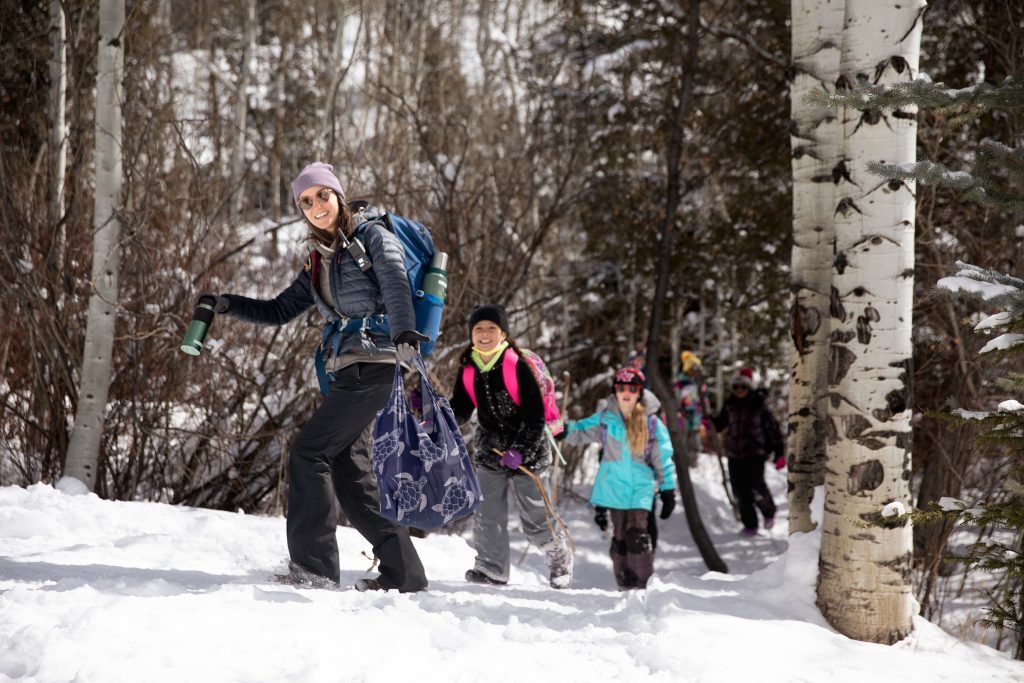
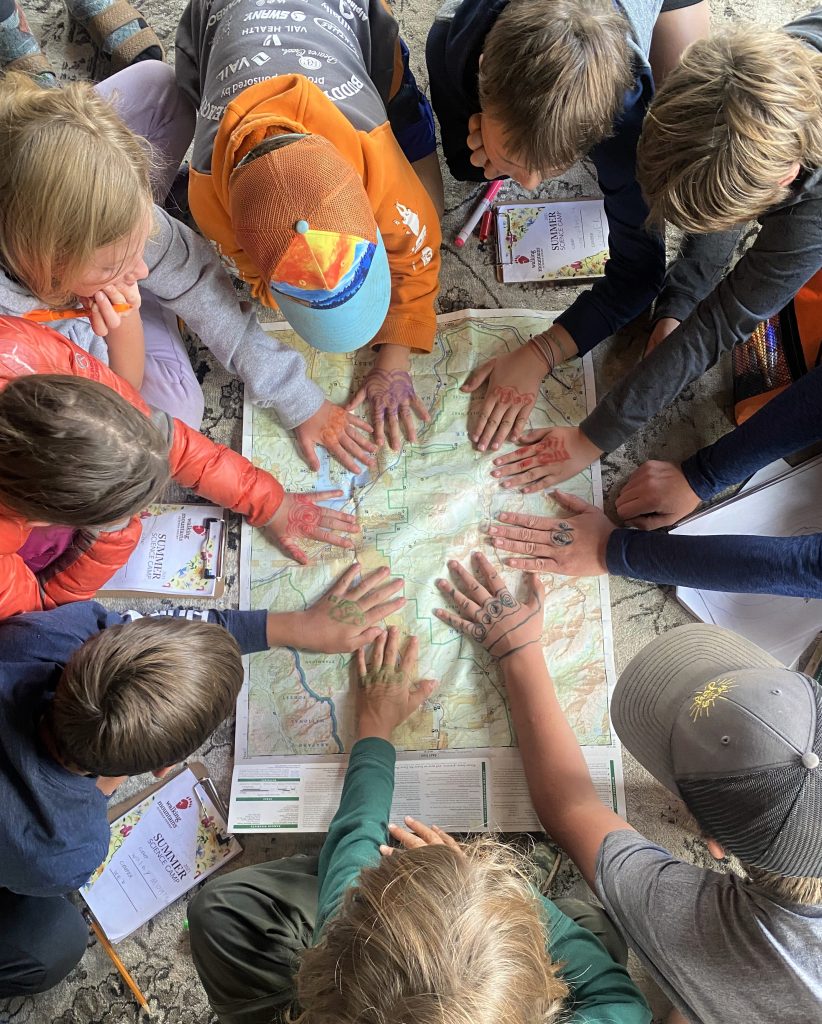
Fellows are full-time employees and full-time students. They teach kindergarten through eighth-grade students environmental science classes in partnership with Eagle County Schools and lead after-school and summer camp programs while simultaneously working towards an M.A.
The Fellows do more than teach — their time at Walking Mountains is a launchpad for innovation in environmental education. They write curriculum, conduct action research and pursue passion projects that influence both the organization and the community. One recent fellow created a mentorship program linking current and past fellows. Another launched a blog to share stories from the field. All fellows complete a capstone-style research project in their second year, tying together theory, practice and reflection.
“They make the program better,” Cohen said. “They bring fresh ideas, challenge us to grow and leave a legacy.”
Topics range from the effects of game-based learning on student engagement to how teaching empathy impacts children’s attitudes toward nature. These projects not only fulfill degree requirements but also inform program development at Walking Mountains.
It’s a rigorous program but one that creates lifelong memories and a lasting impact on the students as well as the Eagle County community as a whole.
“Not only am I learning the theoretical skills in the classroom, but the next day I’m able to apply it, which is something I was really craving in my undergrad,” Branson said. “It’s just such an amazing, immersive opportunity. Being around other people who have the same drive and mission, and are critically thinking about our practice, the students and the earth, is invigorating.”
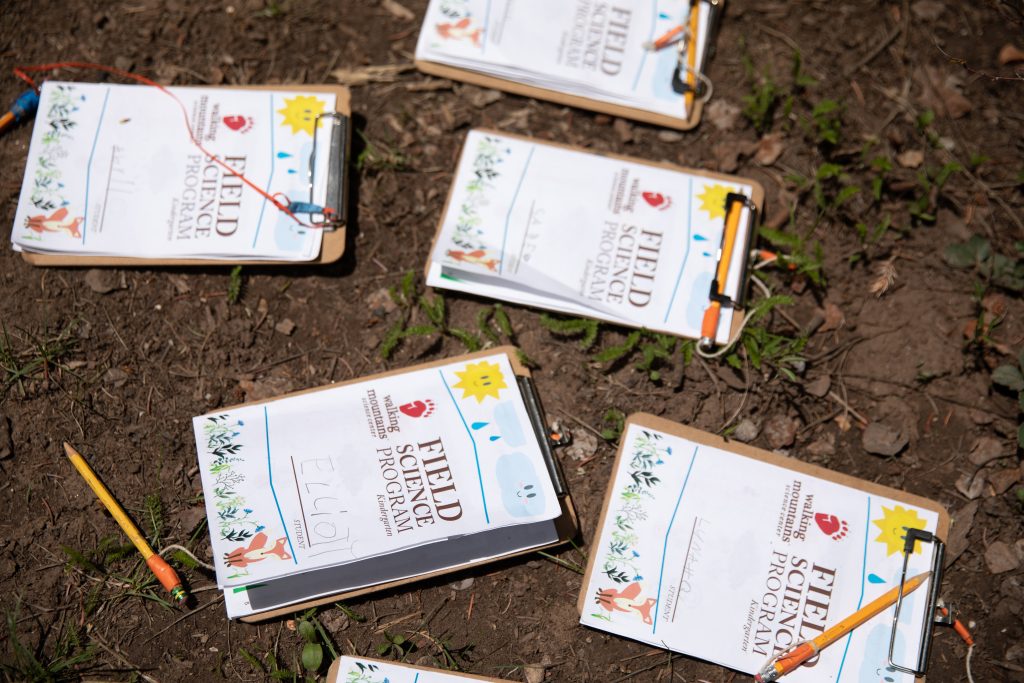
Walking Mountains sees approximately 4,000 Eagle County K-8 students annually through its programs. The fellows serve as their primary educators for special programming, facilitating standards-aligned, outdoor-based science experiences that complement classroom learning. These programs are scaffolded across grade levels and designed to support English language learners, encourage exploration and spark curiosity.
Making an impact in Eagle County — and beyond
The ripple effects extend far beyond Colorado. Graduates of the program have gone on to become classroom teachers, nonprofit directors, government employees and even staffers for elected officials. Some remain in the valley, continuing to shape local environmental and educational landscapes; others carry their experiences across the country.
“We’ve had 75 fellows go through the program so far,” Cohen said. “Some go into formal education, some into nonprofits and some into completely unexpected fields. But all of them take what they learned here with them.”
As mountain towns and resort communities nationwide grapple with how to attract and retain young talent in the face of housing and affordability challenges, the Walking Mountains model offers a compelling blueprint. By investing in people through housing, education and meaningful work, they are not only sustaining their own mission but also building a network of changemakers equipped to serve the planet in diverse and dynamic ways.
Fellows themselves are quick to acknowledge the impact.
“It’s changed my life,” Branson said. “I’m walking the walk. I get to live in a way that reflects my values and I have the skills and confidence to go out and make a difference.”
As Walking Mountains looks to the future, the Graduate Fellowship remains at the heart of its mission. The organization continues to refine the program, seeking new ways to support fellows and expand its impact.
Walking Mountains’ Graduate Fellowship is more than a training program: It’s a living laboratory for what’s possible when education, sustainability and community come together and benefits ripple outward into classrooms, wild places and the future of environmental stewardship in Colorado and beyond.
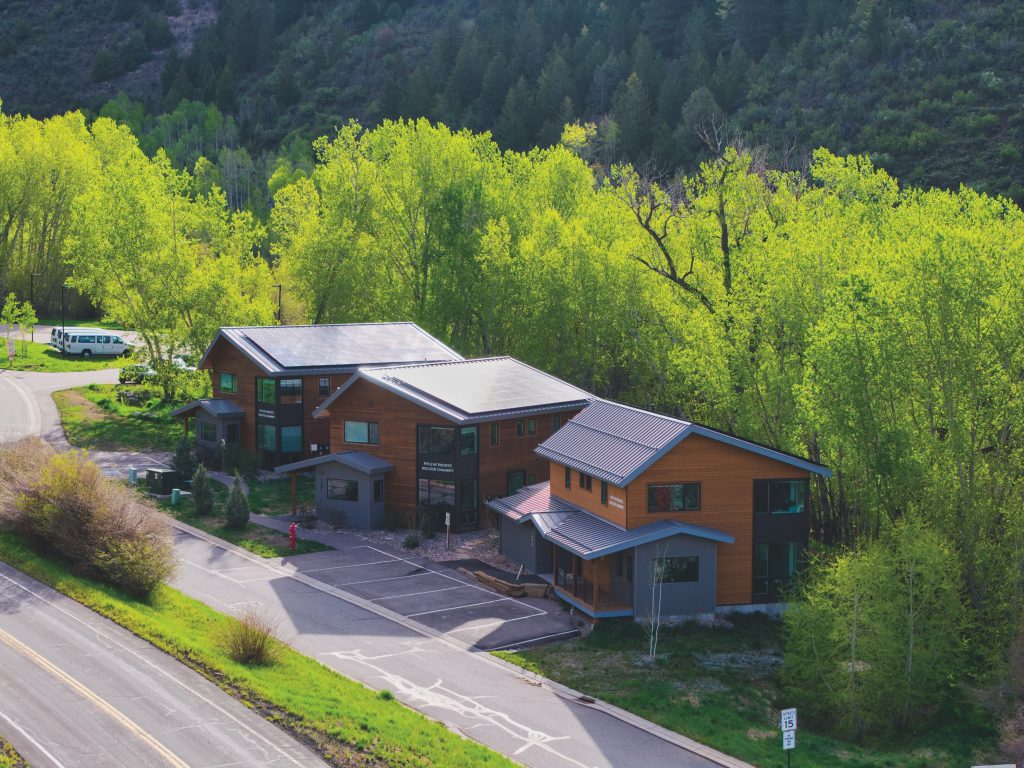
The Pete and Pat Frechette Educator Community at Walking Mountains is a standout example of sustainable, community-focused design, with green principles embedded from the earliest planning stages.
Brian Sipes, who designed the housing project and was the lead architect for the original campus, explained: “The green aspects — they were never even in question. It was always going to be, how do we do it? How do we do it as good as we can? What should we focus on, given that we don’t have an unlimited budget?”
This ethos shaped every decision, resulting in a project that not only meets but exceeds expectations for environmentally responsible affordable housing.
A defining achievement of the project is its net-zero energy performance. Sipes said that “these buildings have not had an energy bill since they were built. They make more energy annually than they use.”
The team achieved this through a combination of strategies: selecting an innovative wall framing technique that outperforms energy code requirements; installing high-efficiency windows; designing all-electric systems. The distinctive asymmetric roofs were a deliberate, cost-neutral choice to maximize solar panel capacity. Sipes explained, “by doing that, we could maximize the solar panels that face south. It was an option that helped us put as much solar on the roof
as we could.”
The educator housing is a co-housing model in three buildings, each with six bedrooms and shared common spaces — a rarity in affordable housing. The buildings are familiarly known as Pete and Pat, after the benefactors who helped make them possible; the third building has yet to be named.
Sipes said it was important that the housing fit into the existing architecture at Walking Mountains as well as fulfill students’ needs.
The co-housing model not only increases resource efficiency through shared appliances and systems, but also supports a range of living arrangements, from individuals to families. Sipes believes that co-housing could be a solution to the county’s housing challenges and explained: “Wiith a four-bedroom unit, you can rent to four individuals…or a family could use it. I think they’re salient ideas, not just for Walking Mountains, but for the rest of the valley.”
Preserving the site’s natural assets was a priority. Sipes recalled, “We studied putting four buildings where the three are now…it would’ve required us cutting like seven or eight trees and we decided that was against the organization’s ethos.” The result is a development that maintains mature cottonwoods and the riparian corridor.
Inside, the design maximizes daylight and a sense of spaciousness. A large living room features floor-to-ceiling windows that let in tons of natural light. It’s a coveted design feature that is absent in most “affordable housing.” Practical touches, like two full-size refrigerators, individual food lockers and generous communal areas, were informed by conversations with staff and residents about real-life needs.
One unit is fully ADA accessible and the others meet accessibility standards, ensuring inclusivity. Sipes described the process as “experiential architecture,” grounded in understanding how people realistically live and interact.
“We really thought about how these buildings were going to be used,” Sipes said. “That directly leads to success. So far, almost every graduate student I’ve talked to says they love these buildings. A lot of people say it’s the nicest place they’ve ever lived.”