Vail Valley local opens luxury skiwear stores in Vail, and beyond

Capranea/Courtesy photo
This month, Capranea and Dahu open their flagship stores in Vail Village at 281 Bridge Street and 286 Bridge Street, respectively. Granted, the brand did have a shared store that opened two seasons ago, but the shopping experience was too crowded, said Ian Widmer, CEO of Progression Brands Group, which is the investment and operating platform behind the two Swiss companies that specialize in luxury skiwear and innovative ski boots.
Now, the company has six stores, which are only found in Colorado: Two in Lionshead, one in Vail Village, and one each in Minturn, Telluride and Snowmass, the latter of which is just opening.
“Our vision here is to bring ski heritage, authenticity and fun back to the sport, and do it on Bridge Street making sure … that our guests have something to be excited about, and our locals have something to be excited about,” Widmer said, adding that he caters to locals. “Our goal is to create more than stores. We’re building destinations where performance, luxury and alpine culture meet.”
The Colorado native, who grew up in Pagosa Springs, said skiing has lost some of its soul, and he wants to reignite it.
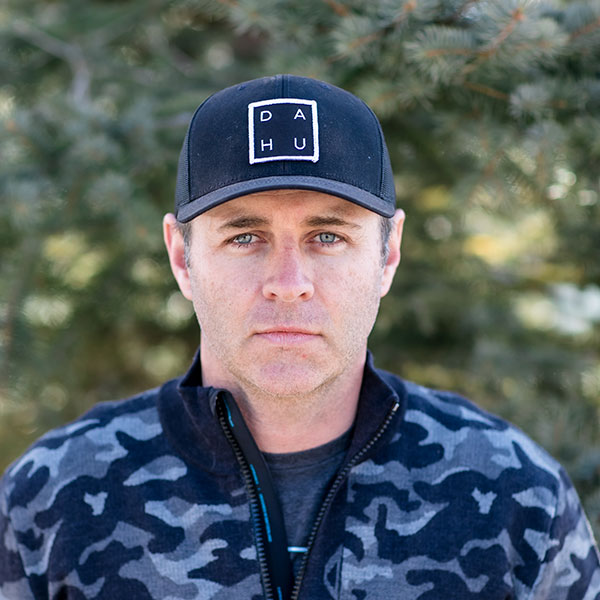
In high school, his first job involved renting ski equipment, and, ironically, after that, he decided he never wanted to work in the ski industry again because he didn’t want to make a career out of what he loved. But life has a way of bringing unforeseen opportunities.

Support Local Journalism
He attended Colorado College and intended to take a government job, but when it came time to take the leap, he decided the position wasn’t for him. So, after graduation, he did what any ski lover would: He moved to Vail with some friends for a year, and like any good ski bum, one year turned into four. During that time, he managed several ski and snowboard retail stores, including Burton. He lucked out by attending national sales conferences, where he became close friends with Jake Burton and his senior executive team.
When he decided to leave that position, the senior vice president of Gravis, Burton’s footwear brand at the time, called him to see if he wanted to team up and move to Los Angeles, California, to work with owners who bought Gramicci out of bankruptcy. The 18-month position taught him everything he ever wanted and needed to know, from garment versus yarn dying to textile components, managing a factory, negotiating with unions, putting distribution agreements together, business-to-business sales and even e-commerce in a time it wasn’t as popular.
“I was introduced to every retailer under the sun, from REI to Bloomingdale’s to Saks Fifth Avenue to Dillard’s to Backcountry.com. You name it. I got to learn about them, understand how you manage them from a brand side of things in terms of negotiations, margins and retail math, which, if people don’t understand how to do, it can really mess up your business. And if you do it right, you can have an amazing business,” he said. “I didn’t quite understand the value I was gaining, but it proved to be very fruitful in my later years.”
From there, in 2009, Canada Goose recruited him to expand sales in the United States. They paid him $45,000 for a year and said that if he succeeded, he could write his own ticket. He joked that, at age 27, he was young and dumb enough to accept, with the only condition being he could move back to Denver to live closer to the mountains. Turns out he wasn’t so dumb after all: From 2009 to 2017, he increased U.S. sales from less than half a million to $100 million. In 2015, they moved him to Switzerland — he’s half Swiss — to open an office there and consolidate the European business to increase sales, as he had done here. He was given two years, but turned it around in seven months — though he doesn’t credit himself alone.
“At Goose, we had something special. It wasn’t just me,” he said, adding that he doesn’t do things like startups. “What I’m good at is recognizing value and unlocking it.”
By 2017, it went public and he and his wife had a second child, so they decided it was time to leave.
They moved back to the States, and he launched PBG with his wife and a group of advisors from well-known brands. His vision: to help emerging brands succeed. The first move he made in 2019 was acquiring Dahu ski boots and the following year, Capranea.
To run the businesses, his family moved back to their place in East Vail. The brands have an office in Eagle and a warehouse in Gypsum because he wanted to invest locally and is a big believer in being within 15 minutes of a ski area to test gear and address any issues.
“Dahu is changing the game between comfort and performance,” he says. “We’re proving that performance and style can coexist — no skier should have to choose between the two.”
The boot holds two global patents. One involves a shell made so you can collapse the spine and pull out the liner, built as a blend between a traditional ski or snowboard liner and an après-ski boot. It’s the only liner made with Primaloft. You can also switch out tongues within the three-piece boot. The second is an integrated patent between the ribs and the boot’s channels.
“It ensures that the two pieces lock as one, so when you torsionally transition between edge to edge, you have no slippage, whereas if you think of a traditional ski boot liner, it’s a flat piece of foam on top of a flat piece of plastic. (Dahu) slides in and locks in place.”
Though he’s encountered plenty of challenges, particularly with Dahu, if anyone on the team believes in “can’t, won’t, there’s no way or this is how it’s always been done,” he gently lets the employee go.
“You have to be bulletproof. You have to run through the brick wall and realize that the impossible isn’t impossible; it just hasn’t been done yet,” he said. “I’m not really a backup plan kind of guy. It’s Plan A — you go full throttle, and if it doesn’t work, then you figure out your next move.”
Many ski shops reacted negatively to the boot because they didn’t understand it. So he mustered his grit and decided to sell directly to consumers, first online during the pandemic and then through a brick-and-mortar store, which he said became the turning point and saved the brand.
Meanwhile, Capranea entered a fairly flooded market with skiwear, so the key was differentiation — much of which stems from the fact that it’s Swiss-engineered, handcrafted, and made in Europe, rather than Asia.
“We’re the real deal, and if you don’t believe it, try it on — you put on the product, and you’re going to feel the difference, especially on the mountain,” he said.
This winter’s collection is inspired by its birthplace: Klosters, Switzerland, reflecting its alpine culture and après-ski heritage while blending innovation and elegance. It features 750-fill-power goose down, the highest quality insulation and proprietary Japanese four-way stretch fabrics.
“Klosters is at the heart of our DNA, and this collection reflects its spirit of sophistication and adventure,” he said. “We’ve created a line that is both technically advanced and stylistically timeless.”
The new stores include boot demos, community events and other brands, such as Chimi Eyewear, Yniq Eyewear, UYN, Hestra Gloves and Astis Handwear.