Lofty goals for redevelopment: Can West Lionshead make Vail a climate icon?

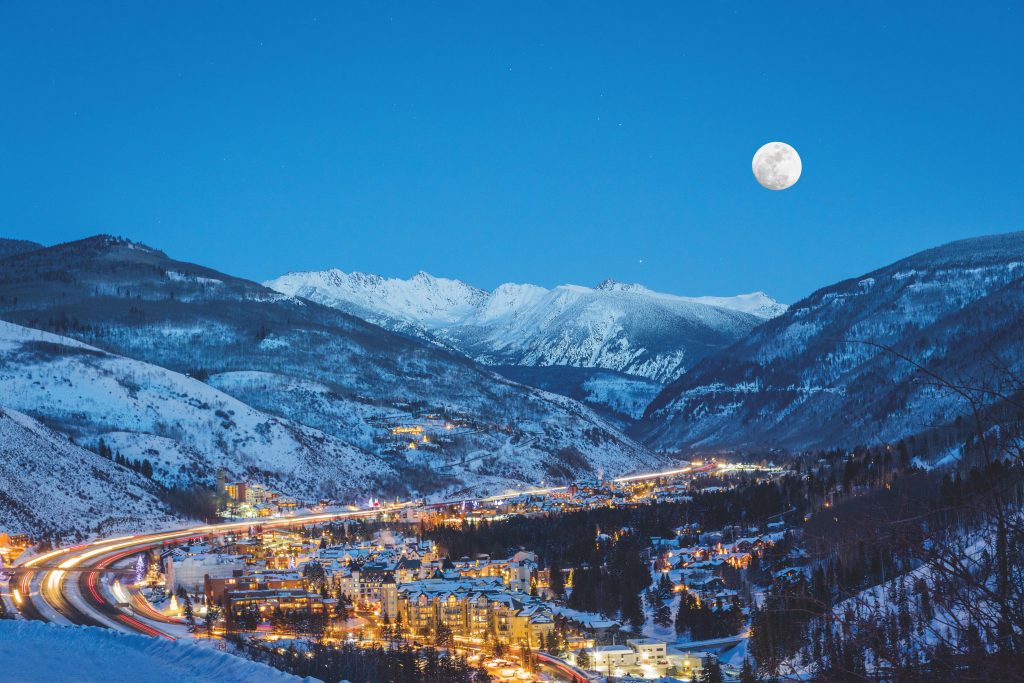
Brent Bingham/Vail Valley Magazine
The “Artist Formerly Known as Ever Vail,” as one Vail Town Council member (now mayor) cleverly coined it last fall, was a mid-aughts development proposal west of Vail’s Lionshead Village that was going to do a lot of heavy lifting for Vail Resorts when it came to climate credibility and the environment. Paradoxically, a $1 billion ski-area base village with luxury homes, a parking garage, hotel and a gondola to Vail Mountain was going to be an “everlasting … icon to sustainability.”
“It’s a development that’s going to be green through and through,” Vail Resorts CEO Rob Katz told the Vail Daily in 2007. Following a four-year hiatus serving solely as chairperson of Vail Resorts’ board of directors, Katz is back in the CEO saddle as of May of 2025.
Finally approved by the town of Vail in 2012 after more than 80 public meetings and the fallout from the 2008 housing collapse subsided, Ever Vail saw Vail Resorts get out of the development business altogether and derisively became known as “Never Vail” when its approvals lapsed in 2018.
Now it’s back in the form of a partnership between the town, Vail Resorts and developer East West Partners. Just don’t call it Ever Vail, or Never Vail, or the Artist Formerly Known as Ever Vail (even with apologies to the late, great Prince). Following Sept. 16 town council approval of revisions to the Lionshead Redevelopment Master Plan that largely strip away the past prescriptive language for Ever Vail, it is now known officially as “West Lionshead.”
Perhaps not as inspiring a name, but West Lionshead, many observers agree, could still do some heavy lifting environmentally by turning what’s basically a brownfield site that’s currently home to a maintenance yard, strip mall, offices and a wastewater treatment facility into a “transformative” base village that could solve some housing, transportation and emissions issues.

Support Local Journalism
Vail Resorts and East West officials declined requests to discuss those aspects of the project, which is still in the planning stages, instead referring to comments made by Vail Mountain Chief Operating Officer Beth Howard in favor of the master plan amendments and further planning “to fulfill the mission of creating a transformative new mountain base village that provides access to the mountain, an unparalleled public realm, for all people to enjoy.”
So what constitutes enjoyment when it comes to skiing? Most snow riders would likely concur that good snow, uncrowded slopes, minimal transportation hassles, well-staffed facilities and an overall calming mountain aesthetic would all contribute to enjoyment. But these days it also helps to know you’re not destroying nature while enjoying its bounty.
Former Vail Mayor Rob Ford, who infamously resigned in 1999 in a heated battle to build more housing for local workers, attended September’s master plan meeting because he’d informally surveyed business owners during Oktoberfest who said they were down 25% year over year, anecdotal information council members disputed with sales tax numbers showing only slight declines. Ford’s point was Vail should not approve new commercial space in this climate.
“They didn’t give a … they were hellbent to do what councils do, approve more development,” said Ford, a Vail resident who thinks Vail Resorts should be shouldering more of the financial burden as the town spends hundreds of millions of taxpayer dollars on housing. “They’re indebting the town to do housing, but that should be a cost of doing business for the businesses.”
Undoubtedly, one of the best things ski towns can do for the environment (and people who live here and the businesses they work for) is house workers close to where they work. That reduces transit woes, parking demands, carbon emissions and the stress levels of the local population.
Since 2020, the town of Vail has spent or committed spending nearly $267 million to build and deed restrict 1,000 affordable housing units by 2027, and it’s still 150 units below that target as of this fall. While Vail Resorts leases and owns employee units throughout Eagle County, the only workforce units the company has built in Vail were the 124 beds of First Chair back in 2011, and that was an obligation for the Arrabelle Hotel it built in Lionshead.
Ford points to West Lionshead as an obvious place to help solve that discrepancy, but he would like to see more units for local families to return some vitality to Vail as a local community, as well as return to Vail’s lost soul as a fun place to ski, party and relax. That, he argues, has been lost in the Epic Pass consolidation of the ski industry invented by Katz in 2008.
“Rob Katz came in and, look, these guys revolutionized the ski business. That’s great. OK. That’s capitalism. They did a great job. They made boatloads of money and they changed the face of the ski business,” Ford says, referencing a YouTube video called “How Vail Destroyed Skiing“. “But now is the opportunity with bringing back Rob Katz to reinvent the model. I mean, Vail Resorts is called Vail Resorts. It’s got our name in it. If they’re trashing Vail Resorts, they’re trashing Vail. Now is the time for [the town] to roll up its sleeves and work with Vail Resorts to come up with a new model, which maybe does its best to put quality back into the whole deal.”
Ford cites a long list of complaints, from dangerous overcrowding on the slopes to expensive and low-quality on-mountain dining to epic battles for parking in the town structures. But one of his biggest gripes is the Interstate 70 misadventure between Denver International Airport and Vail.
“The whole thing coming up from Denver is gridlocked out,” Ford said. “People can’t come up on the weekends anymore. I just shake my head and go, ‘People aren’t going do that anymore … it just doesn’t make any sense.”
Former Vail Mayor Dick Cleveland — a Vail resident who was in office when much of Ever Vail was negotiated, although not when it was finally approved — reminded Vail residents and town council members over the summer exactly what Vail Resorts promised as the aughts turned to the teens: parking and housing obligations he said would go a long way toward solving two of Vail’s longest-running shortages. As a result, the town, the ski company and the developers twice postponed public meetings, adding verbiage to the master plan before approving changes.
“Parking was always an issue and remains an issue,” Cleveland said of epic snarls on town roads. “The town has been going down the road of reducing parking requirements on all of their [housing] projects, as part of their green program to reduce parking and reduce traffic. And they think people who live in these projects will take the bus to work and will take the bus to go skiing and all of that. And, in my opinion anyway, that’s true of some projects. If there’s seasonal housing, that absolutely is possible.”
But the kind of permanent, year-round housing for middle managers, families and professionals Ford was alluding to will require more parking for more cars, Cleveland argues, because the public transportation system has not caught up to the green goals of town officials.
Former Vail Mayor Kim Langmaid, who founded Walking Mountains Science Center and was reelected to town council in November, acknowledges the debate over car culture and its impacts on the ski experience.
“There are definitely two very different perspectives on this issue about whether or not the town needs to keep pace with the same amount of parking it’s built in the past,” Langmaid said of Vail Resorts’ previous parking obligations at Ever Vail. “Some say everybody needs a car and others say people don’t want cars and we need to modernize. I feel like we do need to give it a try and modernize our system [to rely more on public transportation].”
CORE Transit Executive Director Tanya Allen said last summer the biggest hurdles to achieving CORE’s 10-year plan to increase bus service in Eagle County by 50% are the constraints of inadequate transit centers in key hubs such as the Chambers Park and Ride near the Eagle roundabout, Avon Station and the Vail Transportation Center.
“So what we find is as we try to add more and more buses, as [the state’s] Bustang adds more buses, as the town of Vail adds more buses, as we see increases in ride share and hotel shuttles and all the other transportation providers that are coming in and out of [transit centers], finding the space to pull in, pull out and circulate safety is going to be a challenge as we add more buses onto routes,” Allen said.
Vail Resorts in 2022 backed a tax increase to establish the regional transportation authority that became CORE Transit, and Langmaid said she has seen plans for a proper transit hub at West Lionshead.
“They’ve sited it appropriately on the east end of the project up against the frontage road, so there’s adequate space for CORE Transit and others to pull right in there easily,” Langmaid said. “That’s one thing I’ve been hearing from down-valley people is that they want better access to good lift service. That was one of the questions the town council did have … what kind of lift is it going to be? That was one of the changes that was responded to that there actually is language in the new master plan … that has the word gondola in it.”
Critics of another local East West development, the Westin Resort in Avon, say it lacks a parking structure, enough locals’ housing, and that it’s a short gondola to two chairlifts before reaching the top of Beaver Creek. Avon officials said they got as much as they could out of the deal.
Overall, Langmaid, whose stint as mayor was marred by a bitter legal battle with Vail Resorts over its proposal to build workforce housing at Booth Heights in East Vail, said she’ll work to make sure West Lionshead is developed with the same kind of thought and care that went into Vail Village in the 1960s and 70s so that it’s a “meaningful” addition to the town.
“Before the Booth Heights issue emerged, I had a great professional relationship with Vail Resorts, through partnerships, educational programming, those kinds of things,” Langmaid said. “It was only really the Booth Heights issue where we disagreed. So I would like to put that behind us and move forward in making our community a great place.”
That includes on the environmental front, where Langmaid hopes the company that has done a great deal to reduce its carbon footprint in Colorado and in other states where it does business, will be receptive to the town’s goal of implementing a thermal energy network with its first node (geothermal well) providing heat for the remodeled Dobson Arena and Vail Library.
Besides its ongoing support for local power co-op Holy Cross Energy, which is on track to average 85% renewable power this year, Vail Resorts has an opportunity to contribute to the town’s thermal network, which will absorb waste heat from making ice at Dobson and treating wastewater at Eagle River Water & District as well as heat new and existing buildings.
Beth Markham, environmental sustainability manager for the town of Vail, says the town is in talks with Vail Resorts about tying the Arrabelle into the system when it’s online and she’d like to see West Lionshead linked as well. But thermal was in the planning stages in the fall, with funding for renewable energy projects facing challenges at the federal and state levels.
“The good news is the federal government does like geothermal; fingers crossed it stays that way,” Markham said. “Whether our current federal administration is admitting it or not, we are in a climate crisis and we do need outside-of-the-box thinking to help solve that. Technology does exist and there are ways to make it all happen. It just takes planning and funding and all of those fun things … and political will.”
As for transportation, Markham said it’s the second largest emitter of carbon in both Vail and Eagle County, behind only the built infrastructure that geothermal will hopefully help address. Markham would love to see a rail solution to augment buses, but in the meantime the town is working with developers such as Triumph on car-sharing programs to reduce parking needs for locals and guests.
Markham agrees that a state-of-the-art transit center at West Lionshead will be critical: “You’re going to need to be able to service that new base area similarly to how Vail Village and Lionhead are currently serviced, and there was also discussion with the West Vail master plan of how could we get a transit center there as well to really link each area of Vail together seamlessly.”
Statewide rail advocates, who also support expanded bus service such as the Colorado Department of Transportation’s Bustang and Pegasus lines, have some reservations about East West on the rail front and in terms of transit hubs. East West redeveloped Denver’s Union Station, but, according to ColoRail’s Jack Wheeler, made some poor decisions there.
“The biggest scar of that landscape is the fact that East West Partners moved the light rail platforms, which were always on the west side of the Union Station concourse … west past Wewatta and Chestnut streets to the exhaust vents for the underground bus facility,” Wheeler said. “So the idea was to permit cross-platform transfers for light rail users for the A Train to the airport. Now you have to make at least a 10-minute connection because it’s a 1,500-foot walk. It was all to put high-end apartments and condos right at the station.”
ColoRail these days is pushing to expand the state’s Mountain Rail — currently from Denver to Winter Park and eventually on to Steamboat and Craig — to include a daily Denver to Grand Junction train with a stop in western Eagle County that could be served by CORE Transit. The organization argues trains are better for the environment than cars and trucks, and that municipal and county planners and private developers should be putting mass transit first.
“When it comes to climate, trains are the most energy efficient and climate-friendly mode of transportation that exists,” Wheeler said. “Getting more people to move using rail means a reduction in emissions … and is absolutely a solution to long-term climate goals.”
East West founder Harry Frampton is not a fan of reviving rail on the dormant Tennessee Pass Line through Eagle County, and his company used to own a van service to Denver International Airport, which it sold to Vail Resorts and is now known as Epic Mountain Express. It’s also worth noting Vail Resorts sued East West over that deal in 2009, and that while Vail rival Alterra backs Mountain Rail, Vail Resorts consistently declines to comment on local rail plans.
While I-70 is an overburdened artery into the mountains, aging transportation infrastructure is also plaguing the town of Vail, where parking rates have been raised to pay for maintenance of the town’s two parking structures that are nearing the end of their useful lives. That will put even more of a spotlight on the West Lionshead transit center and parking facility.
“I expect the West Lionshead redevelopment discussions will bring people to meetings as that project begins to take shape,” Vail Mayor Barry Davis wrote in the Vail Daily during his reelection campaign in the fall. “The future of the ‘Artist Formerly Known as Ever Vail’ area has been of interest to our community for many years. I expect our citizens, especially those who have followed that history, will be paying attention and showing up to be heard.”
This story originally appeared in Vail Valley Magazine