Photographer Raj Manickam on attention, observation and Eagle’s Banksy-style street art

Courtesy image
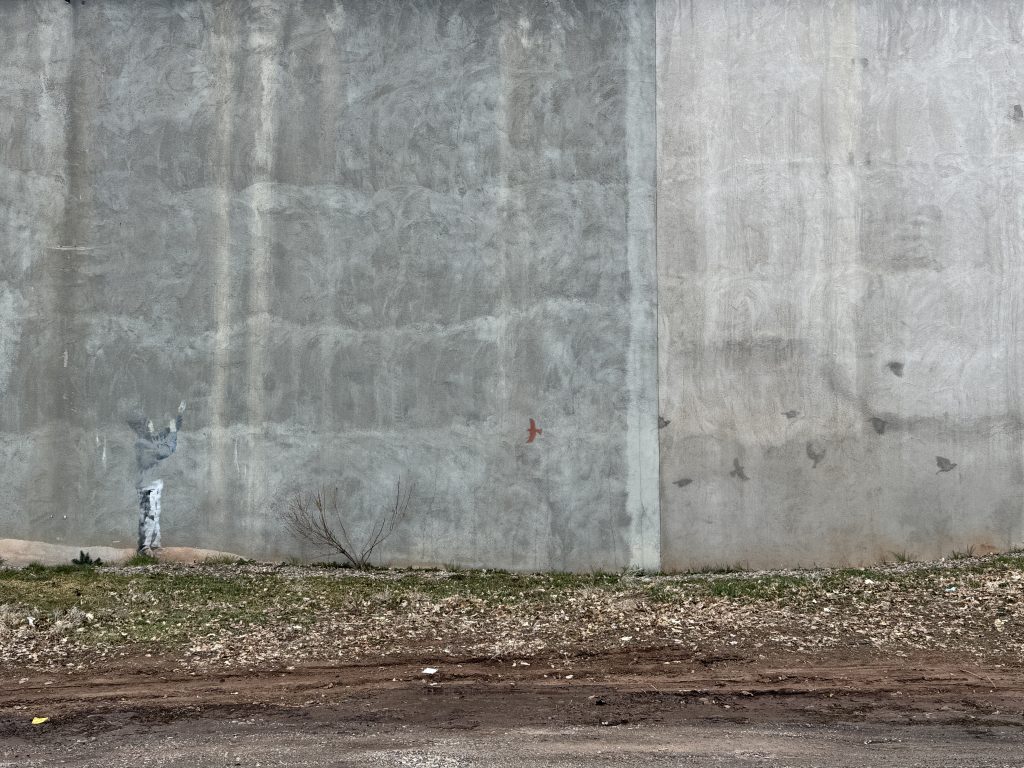
In 2016, Eagle County photographer Raj Manickam took notice of a Banksy-style work of street art near the jail in Eagle, stopping to photograph it in the daytime.
It was an unspectacular photo, one that he might otherwise not return to, yet he found himself thinking about it quite a bit.
“Something stayed with me, and the question formed in my mind — how would it look at night?” Manickam said Thursday during a Vail Valley Art Guild presentation at SteamMaster in Minturn, where his work is on display. “What story would it tell?”
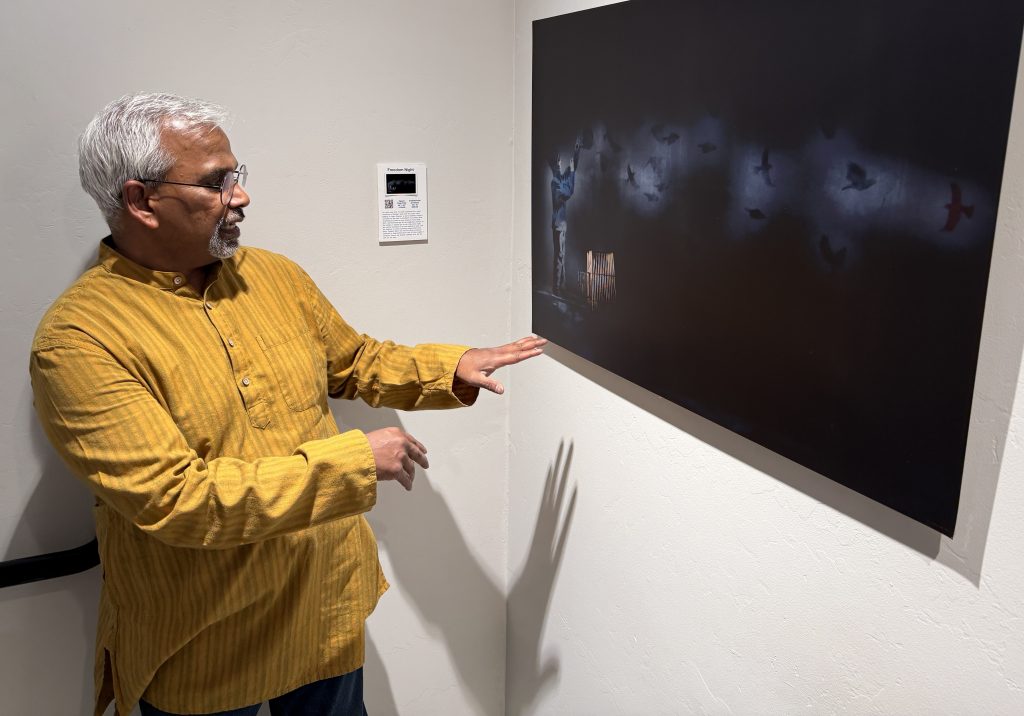
Months later, Manickam returned to the wall with a different approach. He brought a bird cage as a prop and used a long-exposure, light-painting technique to capture the scene in a completely different way. After dozens of attempts, a piece titled “Freedom Night” emerged, which has received wide recognition for its showcase of one work of art’s ability to inspire more.
Composer Paul Fowler, who wrote a piece of music inspired by “Freedom Night,” said he was intrigued by the photograph because “it’s a remix of sorts — a photograph of someone else’s mural, which was created in the style of someone else’s murals.”

Support Local Journalism
The theme of Manickam’s presentation on Thursday was attention and observation, skills that he says are of paramount importance in capturing powerful images.
“Many people think that photography starts the moment you lift your camera,” he said.
But before that happens, Manickam said, observation must occur.
And in order for observation to occur, “attention is the first step,” he said. “Without attention, observation stays on the surface.”
Good photography often requires a dichotomy of the slow and the fast, Manickam said. While photographers are rewarded for their ability to quickly produce a camera, adjust its settings and get a shot at just the right moment, a long process of observation likely preceded that moment.
“And observation improves when we slow down,” Manickam said on Thursday.
Manickam used an example of catching a moment of genuine joy on a person’s face. While a photographer at a park, for example, might have used their speed and reflexes to snap a child running across a lawn to greet someone, the observation may have occurred in slowing down and paying attention to the child first, and understanding that they were very excited to see the person they would later meet on that lawn.
“The world is full of moments like this, and most of them happen quietly,” he said. “Observation allows us to notice them.”
A scene like that, for an average person, is one of the more than 200,000 images someone might take in on an ordinary day.
“Every moment we are surrounded by thousands of visual details,” Manickam said. “Because of this, we see far more than we notice.”
But even if an image is observed, noticed and photographed, for Manickam, the more important part is the story that image is then able to tell. All of Manickam’s best images contain interesting stories to accompany them, he said, describing his style as story-heavy photography.
“Sometimes, an observation can become a photo,” he said. “And if we’re lucky, those images become a story.”
“Freedom Night,” in 2024, was selected by the Ars Nova Singers to be featured in their annual “Shared Visions” concert. Fowler’s music was played live on stage, where a giant image of Manickam’s photograph was displayed, and poet Jennifer Gurney read a poem inspired by the photo.
Gurney said for her, the photo’s story was one of peace and calmness.
“Although it’s dark in color and tone,” she said, “the poignancy of hope permeates ‘Freedom Night.'”
And not giving up hope was indeed a big part of the piece, Manickam said, because after dozens of botched attempts, he was ready to abandon the project.
“I couldn’t get my shadow out of the shot, and my hands were frozen,” he said. “I was ready to give up. But then I had an idea to walk a different way out of the frame, and I couldn’t believe it — it worked.”
See more of Manickam’s work at allingoodlight.com.