The ‘American Downhiller’: passing on the tradition of bold racing, Olympic excellence — and a denim Levi vest
Chris Dillmann/Vail Daily
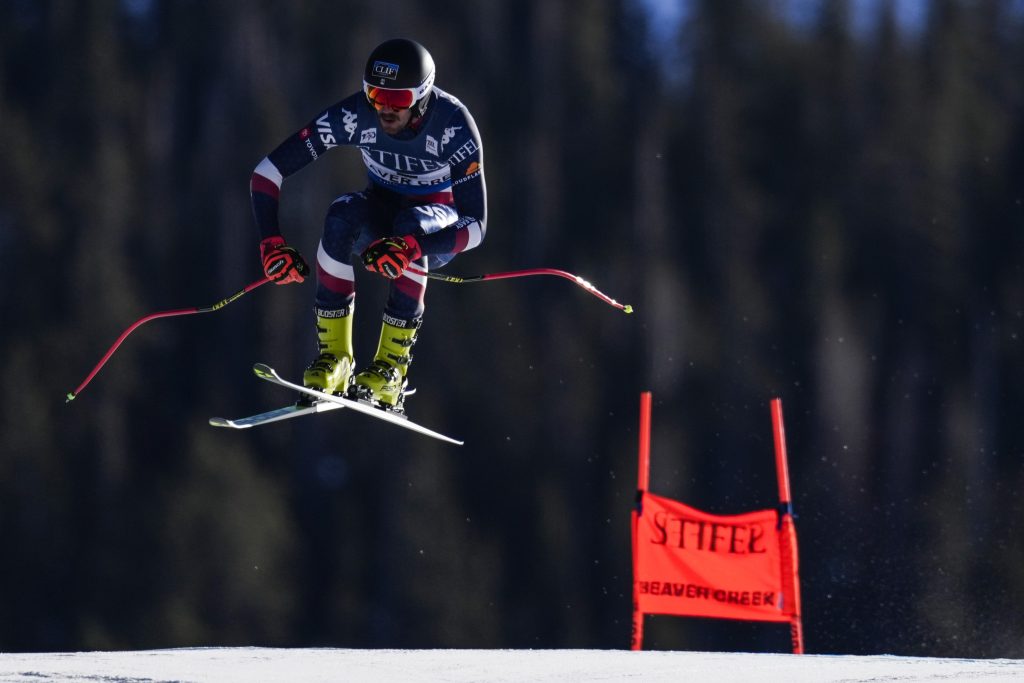
Set to make his 11th Birds of Prey appearance this week at Beaver Creek, Bryce Bennett doesn’t feel “that old.”
“But I can see the end is closer than the beginning,” the U.S. speed skier remarked at a press conference last week. The veterans of the U.S. men’s speed team — Bennett, along with Olympic silver medalist Ryan Cochran-Siegle and Jared Goldberg — are 33, 33 and 34, respectively. All witnessed the creation of Marco Sullivan’s ‘American Downhiller’ brand and each hope to pass it along to the next crop of daredevils.
“We already kind of knew we had a cult of the downhillers,” Goldberg said. “You knew if you made it a couple seasons on the team, were terrified in the Kitzbuhel start, went to the red room a couple times — you kind of start to understand why we do this and how it can be a little different than the other events. We try to carry that on.”
“We sort of have this split where we’re aware of this gap,” said 27-year-old Kyle Negomir, who — along with Sam Morse and Erik Arvidsson — represent the younger half of the men’s team. “And we’re trying to take in as much as we can from these guys and take in as much from what they’ve learned from the previous generation — and carry that legacy forward.”
The legendary Levi vest
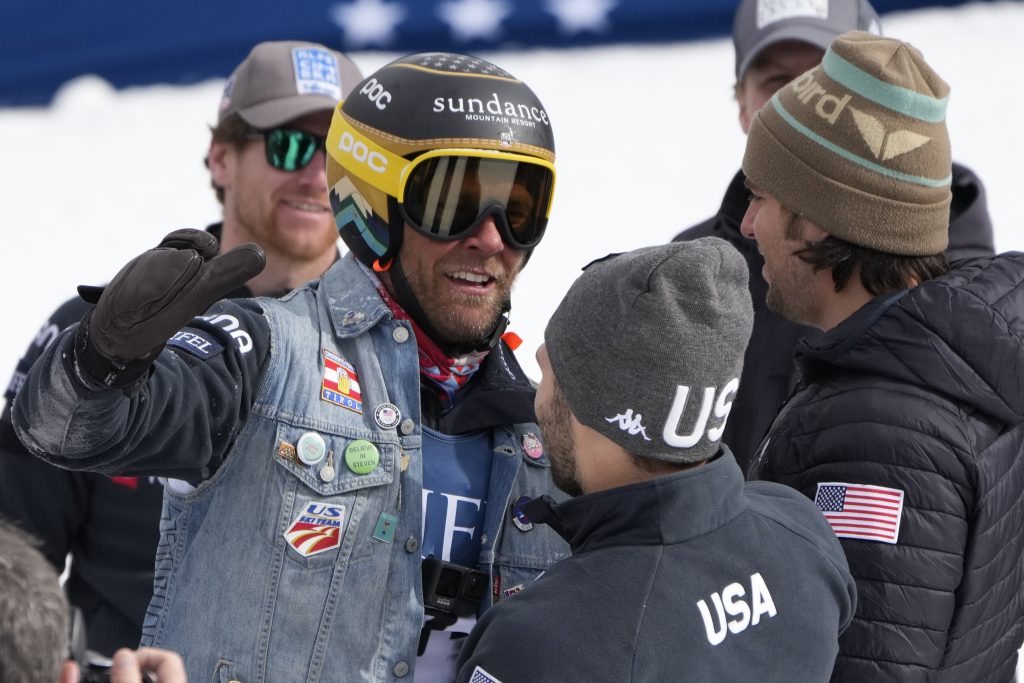
“I think it was really cool when Marco left us with the ‘American Downhiller’ name,” Goldberg said, referring to Sullivan, the four-time Olympian who catalyzed the concept of bold racing amongst the band of American brothers. Sullivan and Steve Nyman — who retired at 41 after a 20-year career — started the tradition of gifting a denim Levi vest to any American who finished in the top-15 of a World Cup downhill in 2015. The vest is still in rotation, but it’s starting to run out of room, Goldberg said.

Support Local Journalism
“It’s so American and we love it,” he added.
Having been on the World Cup for 13 years, Goldberg has witnessed a few other unique customs, like current coach Johno McBride’s habit of jokingly handing out a stuffed turtle to a particularly slow skier or a Finding Nemo one for those who looked a little lost on the race course.
“I think those things are fun,” said Goldberg, who has also observed the generational gap between the fearless speed demons of old and the downhillers of today.
“I think we were the try hards for the guys before us, and now it’s just getting a little more try hard — not that there’s anything wrong with that,” he said. “But there was a day where we’d watch Beat Feuz or Manny Osborne or Jan Hudec or those guys walk out of the lodge and do one leg swing and then go podium in the race — and maybe smell like beer.”
“We saw the tail end of (that) and then things have just ramped up,” he continued. “Sports science has gotten more and more and more (advanced). So we’re trying to have a little more of the ‘American Downhiller’ and pass that on to these guys.”
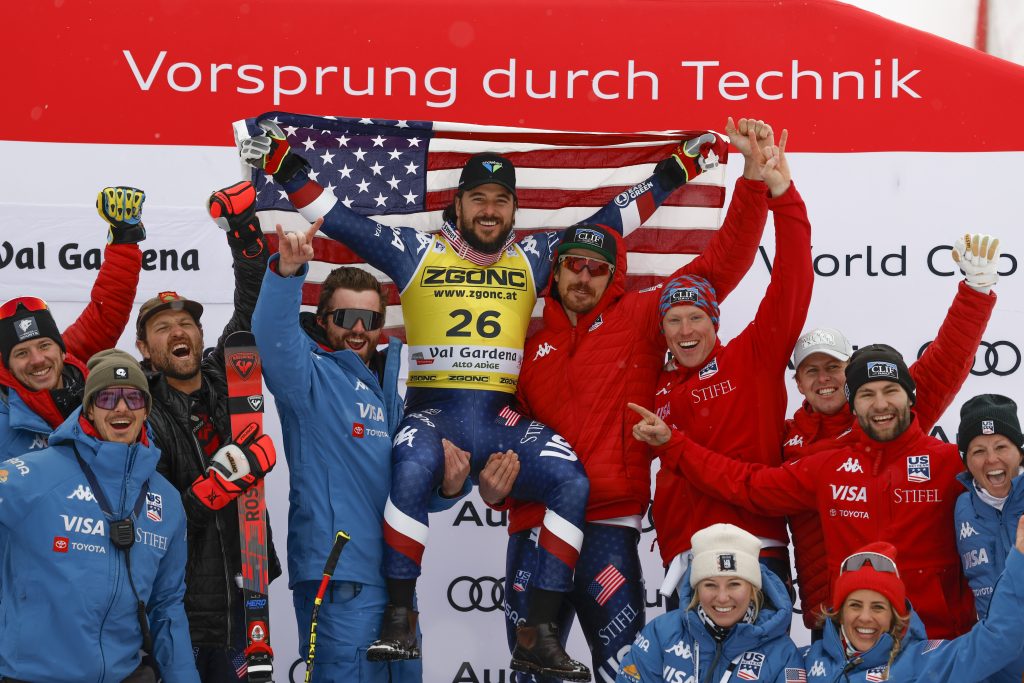
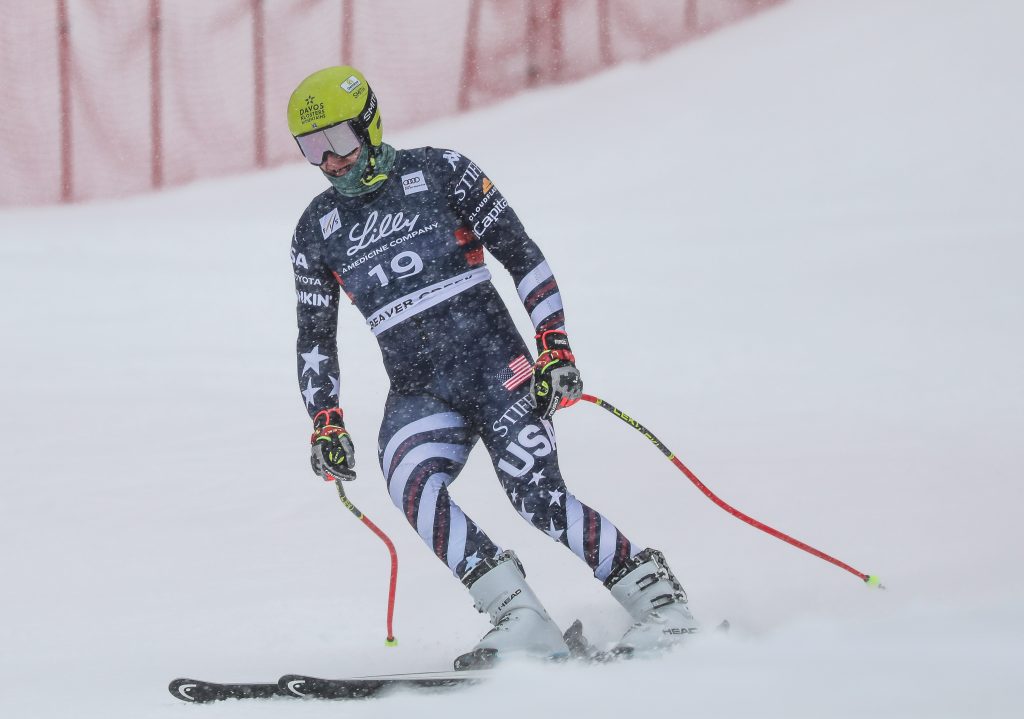
Goldberg showed the young bucks how it’s done in notching his first-career World Cup last season in Val Gardena. Bennett has the most recent success in front of Beaver Creek’s partisan crowd, having placed sixth in the downhill last December. Cochran-Siegle, meanwhile, is the only current men’s athlete to boast Olympic medal credentials.
“It’s pretty cool having Ryan on our team, because obviously he’s already done it,” said Edwards skier River Radamus, who has dabbled a bit in speed events himself, having posted an eighth-place result in the super-G at the 2024 Birds of Prey.
“You look at a guy like Ryan and you think, I mean if he can do it, then anybody can do it,” Radamus continued with a laugh, demonstrating the type of close-knit camaraderie and sense of humor across the entire men’s squad.
Another critical component to the American Downhiller spirit is success at global championships. From Tommy Moe’s downhill gold and super-G silver at the 1994 Olympics (despite having never won a World Cup downhill across his entire career) to Andrew Weibrecht’s heroics at the 2010 and 2014 Games, the American men seem to rise to the occasion when the rest of the world is watching. Cochran-Siegle said the “underdog mentality” seems to “play into how we get energized.”
“We all believe in ourselves,” he continued. “And I think sometimes when you feel like the rest of the world doesn’t see it, you kind of want to go out and prove it.”
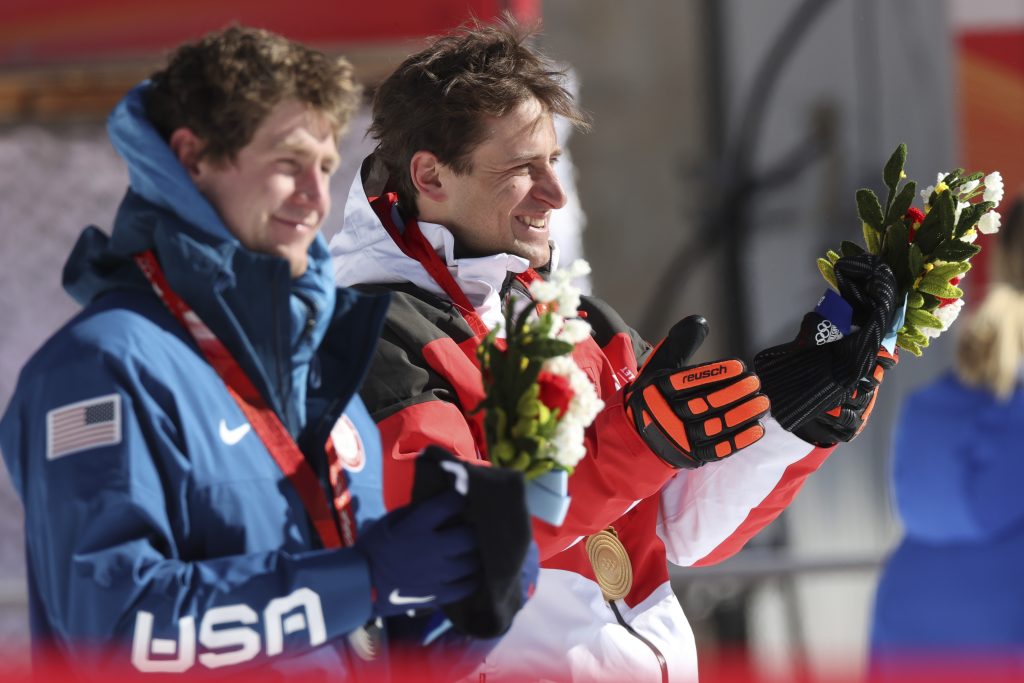
While Cochran-Siegle will surely be remembered for his super-G silver in Beijing, the Vermont-born skier said he categorizes legacy into two separate bins. Of primary importance is his duty to inspire young kids to work their way up the U.S. pipeline and represent their country on the legendary European slopes. The second part: performing once you’re there.
“We recognize our time is limited and honestly (we’re) just trying to get the ‘American Downhiller’ team to a level that competes every single weekend so we have fans back home cheering us on,” he said. To do that, Cochran-Siegle knows it’s important to pass along all the secrets, “to skiers like Kyle.”
“And this kid has so much potential,” Cochran-Siegle said of Negomir. “He crushes us in training every single day and it’s pretty painful at times. So it’s only a matter of time I think.”
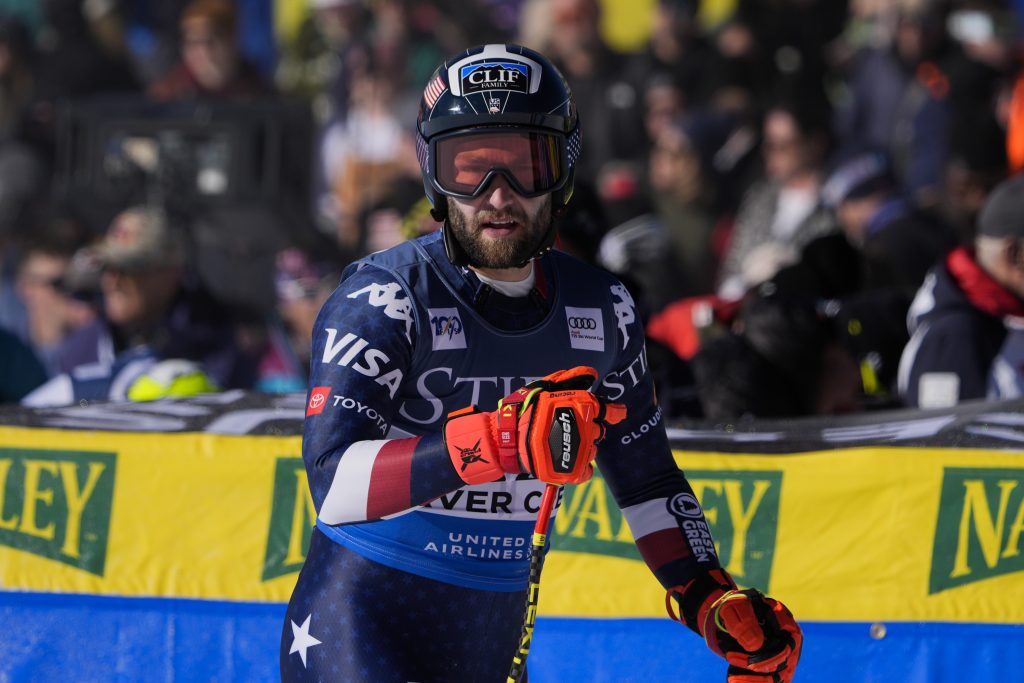
Most of Negomir’s best results have come in super-G, though he does have a 19th from the 2024 Kvitfjell downhill. The former SSCV skier is coming off a 24th-place finish in the one speed event at Copper Mountain last week. He admitted watching Bode Miller, Daron Rahlves, Sullivan and Nyman compete in the red, white and blue played a huge role in him getting hooked on the sport in the first place.
“A lot of kids in my generation, that’s why people started ski racing,” he said. “You watched guys go down Kitzbuhel. You’re like, ‘wow that’s badass, I want to do that.'”
Bennett recognized he benefited from older athletes on the team when he was young, too. He said Nyman was “an open book.”
“(He) helped me out as much as I wanted. He’s still trying to help me out,” Bennett said before adding that he’d like to do the same thing for Negomir and Co.
“So that when he earns the responsibility of being old, he can pass that on to the young guys,” Bennett continued. “And we can continue the tradition of American downhill skiing in the U.S.”
For the next few months, making the Olympic team and performing well in Italy is the main goal for all of Team USA’s athletes — old or young. Whenever they decide to hang ’em up, Bennett, Goldberg and Cochran-Siegle hope the uniquely American tradition lives on.
“That path wasn’t carved easy. The boys worked hard to do that,” Bennett said. “I hope I’m a little bit a part of that legacy.”
“Hopefully through time he’s the top guy and we’re all out swinging golf clubs,” Cochran-Siegle added of Negomir. “I know Goldy is dreaming of it.”