Town of Vail breaks ground on massive locals-only housing project on north side of I-70
Project will deliver 268 new rental homes in what is now the largest town-owned capital project in Vail's history

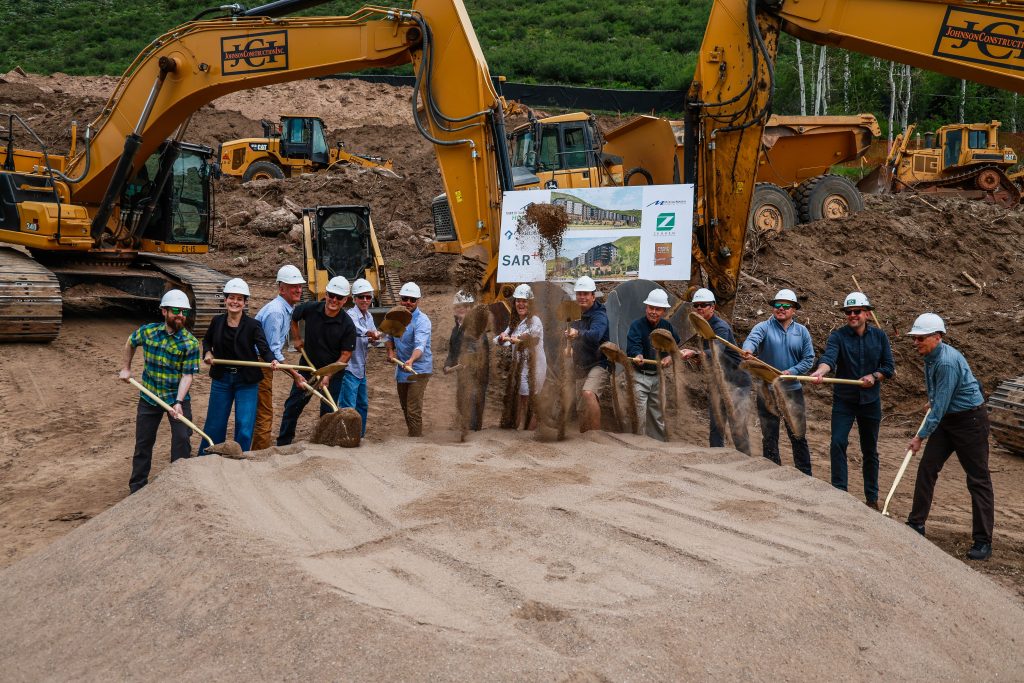
Chris Dillmann/Vail Daily
Sam Biszantz and Reid Phillips each got a face full of dust on Tuesday at the groundbreaking for Vail’s newest workforce housing project.
With Town Council members tossing dirt with gold shovels, and camera shutters firing as the wind picked up, Vail Town Manager Russ Forrest asked Phillips how the dust in the air tasted.
“It tastes like progress,” Phillips shot back with a smile.
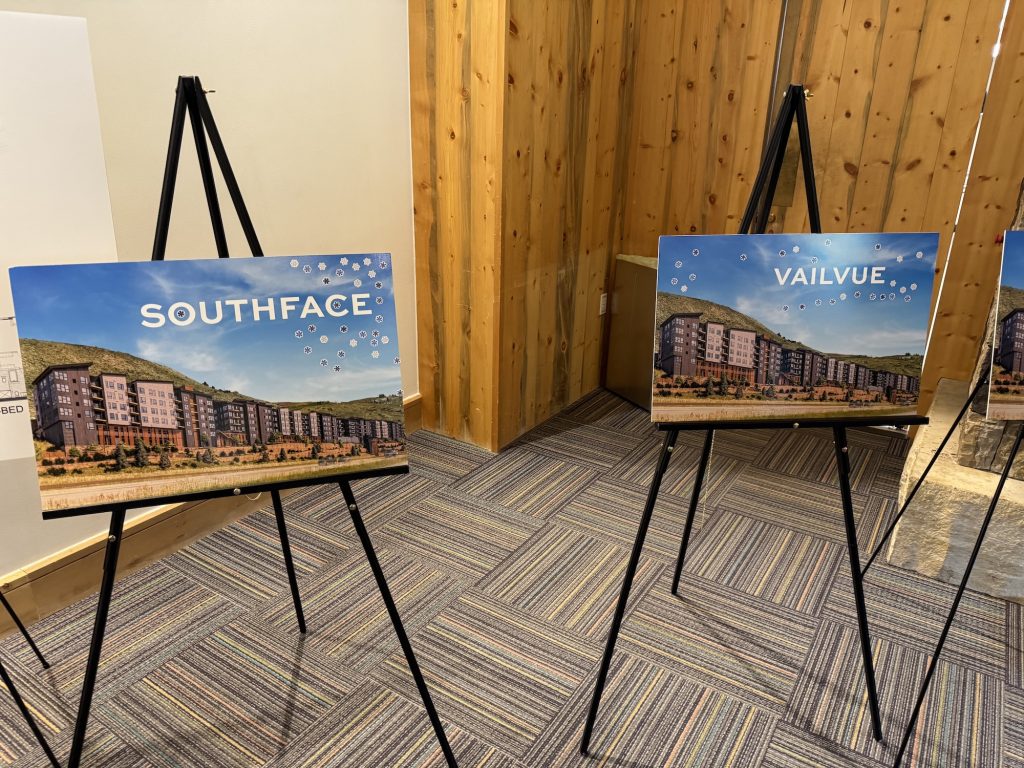
Located on North Frontage Road between Red Sandstone Elementary School and the Middle Creek apartments, the project doesn’t yet have a name. Officials on Tuesday, with the help of all of the stakeholders who showed up for the groundbreaking, narrowed a long list of names down to their final two choices, Southface and Vailvue.
Whatever it winds up being named, the new locals-only rental housing development certainly represents massive progress in the town’s stated goal of creating 1,000 employee housing units in a decade.

Support Local Journalism
Massive, as in 268 new rental homes in what is now the largest town-owned capital project in Vail’s history, at a total estimated cost of $189 million. Previously called West Middle Creek, the project will take around three years to complete. Site work is already underway, with vertical construction anticipated to begin in September of 2026.
The development will be comprised of 84 studios, 100 one-bedroom units, 84 two-bedroom units and 257 parking spaces, with two stories of podium parking and four stories of residential above. The development is deed-restricted, requiring that every rental home be occupied as a primary residence by at least one full-time employee of an Eagle County business.
The town is contributing $10 million in cash to the development, with the rest financed through a bond sale in May that resulted in $126 million in housing revenue bonds and $63.2 million in certificates of participation sold over a 40-year financing period.
The total interest cost will be $366.7 million if the town does not refinance the debt, which will be an option in 10 years. Town officials, however, say that the cost will be fully covered by revenues generated by the project. In addition to covering interest, operations and capital reserve payments, the development is expected to generate $88 million above those expenses over the next 40 years.
It’s an ambitious project that, along with other major capital investments underway in Vail, such as the $55 million Dobson Ice Arena remodel and the $165 million redevelopment of Timber Ridge, represents a considerable risk for the town. But Forrest and Vail’s elected Town Council members on Tuesday said standing pat wasn’t an option.

‘This is very Vail’
“I like the word ambitious,” said Vail Mayor Pro Tem Barry Davis, who emceed Tuesday’s groundbreaking ceremony with Mayor Travis Coggin away. “Yeah, I think Vail is ambitious. That’s in our DNA. The whole creation of this place was ambitious. And for us to continue, we have to evolve and improve. And I think ambitious undertakings like this are in our DNA. This is great. This is very Vail.”
Phillips, a ski patroller at Vail Mountain who, like Davis, has raised his family in Vail, said projects like the Timber Ridge redevelopment and this latest housing development embody why he ran for Town Council in the first place.
“We’ve really kind of established, especially with this council, this commitment to the workforce and the people that are delivering this experience and the people that have to live and work here,” he said. “And this is a commitment to it. When Barry and I first moved here, everyone lived in town. Everyone worked in town. And we’ve slowly watched the erosion because there just wasn’t the availability of housing. And I think we’ve changed that dynamic with a significant commitment.”
Phillips said both housing developments will change the town for the better and bring back a vibrancy that existed when he first moved to town.
Changing the housing narrative
Steve Lindstrom, who is serving his fifth term on the Vail Local Housing Authority, was all smiles Tuesday as he talked about how far the town has come in its efforts to create a continuum of housing.
“You know, if everybody who works here leaves at the end of the day, it’s just a resort,” he said. “Yeah, we’ve been at those places. It’s like the island when everybody goes across on the boat at the end of the day. That’s not a community.”
Lindstrom said every employer in Vail, including the town, faces the same challenge when it comes to attracting talent: Where are you going to live?
“This hopefully will change that narrative to make it easier for people to come to Vail and also attract some people that you can’t get because they say they can’t find housing, right?” he said. “This is a good place to live. People want to live here if they can figure it out.”
Maintaining and sustaining a community
Forrest said when he returned to Vail in 2022 to take the town manager job, he thought the goal declared by town officials in 2017 of building 1,000 new units in 10 years was “crazy.” But ensuing councils have been crazy about sticking to the goal and Tuesday is proof of all that hard work.
“We’ve now had a series of town councils and housing authority support that has essentially, they not only articulated the goal, but they kept our feet to the fire to achieve that,” he said. “This isn’t just housing for our employees, our residents who want homes here in Vail. It’s also a great opportunity to have 1,000 or so new people living in Vail. I mean, that’s kind of a game changer.”
He added that the town and the county have been declining in population for the last couple of years. With its infrastructure already built out, Vail is a perfect place for folks who want to live where they work.
“This moves us towards a higher level of sustainability, having residents that will be on the Housing Authority Planning Commission, employees in the community,” Forrest said. “And also, at the end of the day, coming to our bars and restaurants and keeping them vital throughout the year. That’s been our mission from the start here is to maintain and sustain a community.”