Vailhalla Gravel: The reimagined Vail 100 bike race returns this weekend
McCormack brings ultra-long distance off-road cycling event back to valley

Jace Stout/Courtesy photo
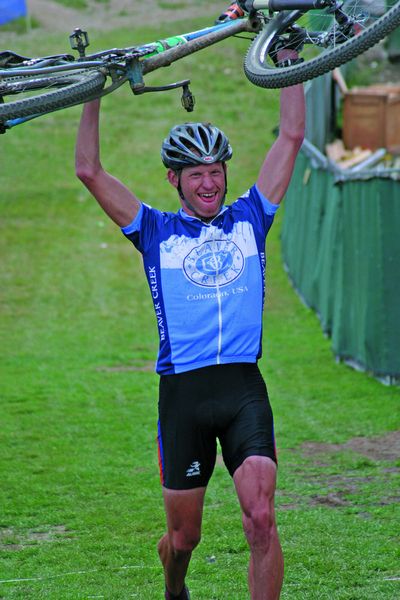
It’s been 16 years since Jay Henry captured the last Vail 100 title. On Saturday, James Deighan’s original 100-mile mountain bike ultra, which ran from 1999-2006, begins a new chapter with Vailhalla Gravel, a “reimagination of one of Colorado’s most celebrated off road cycling monuments.”
“Really it came down to — someone else invested in elevating this concept, so pay honor to that,” said race director Mike McCormack in regards to his inquiring and receiving Deighan’s blessing before moving forward with the 2022 Vail 100, which is part of the Vailhalla Gravel weekend. “Respect it. And he very graciously said, ‘run with it, that would be neat.’ With that blessing from someone whom I adore, I was like, ‘We’re going for it.’”
Deighan, in a phone call earlier this summer, said: “I’ve always had a ton of respect for Mike — not just for the events he produces but for the passion he’s always had for the mountain biking and off-road community. I had so much respect for him as a person and a businessman and I said, ‘Look, it’s been 16 years since we produced that event. I don’t have any desire to spark it back up again. I officially just sort of bequeathed it to him as a kind of giving back to the mountain biking community and to Mike.”
The original Vail 100
Vail Daily Archives
Deighan said the original event’s concept sprouted from the MBA thesis of two business partners — Jeff Brausch and Scott McCormack — at the Daniels College of Business at the University of Denver. At the time, Deighan, Brausch, McCormack and Herb Hanemen were Highline Sports and Entertainment’s four partners.
“It was us as a company creating the event; it just happened to be their thesis while they were getting their MBA’s,” Deighan explained.

Support Local Journalism
Deighan said his race wasn’t necessarily based on the Leadville 100 mountain bike race, which, having started in 1994, was two years old at the time.
“We had been producing the local mountain bike race series here in Vail, and we kind of felt like at the time there was pretty strong interest from the mountain bike community to do an ultra-endurance race,” Deighan recalled. “We wanted to bring it local and we were kind of a burgeoning event company at the time and wanted to continue to grow on what we were doing.”
At the time, Highline Sports and Entertainment’s focus was on winter freesking events and the local mountain bike series in the summer.
“And we wanted to expand on our mountain bike portfolio,” Deighan said.
The Vail 100 ran for eight years, eventually moving from Vail to Beaver Creek for its final iterations.
“It moved because the town of Vail no longer wanted to help fund the venture as a sponsor and Beaver Creek Resort Company did,” Deighan explained.
Jace Stout/Courtesy photo
While a search for results from the inaugural 1998 turned up empty, Pat Norwil wrote on MountainZone.com that Mike Kloser won the second annual Vail 100, which attracted 450 riders, in 7 hours and 28 minutes on Aug. 21, 1999. The race was discontinued after 2006 because Highline Sports and Entertainment “took its existing company business model a little bit away from sports and more into the entertainment realm,” according to Deighan.
“What we found was that sporting events and action sports weren’t business-wise as lucrative as the entertainment world, so we started to focus a lot more on concerts and festivals,” he said.
The CEO of Highline Sports and Entertainment still has fond memories of setting up the course in the middle of the night and announcing the 6 a.m. start.
“You had some excited guests in town and you had some disgruntled ones who found us waking them up at all hours of the morning as we were setting up and announcing the start,” Deighan said. “There was some fun stuff back in the day for sure.”
Seizing the day
Saturday’s event, with courses of 30, 60 and 100 miles running out of 4 Eagle Ranch in Wolcott beginning at 9 a.m., promises “authentic Colorado cowboy/viking/valkyrie vibe mixed with a generous dose of hipster mustache wax and Lil’ Nas X,” according to its website.
“Some of you may be wondering about the transition from Vail 100 to Vailhalla,” stated a Sept. 14 email to race participants. “They’re one and the same. The Vail 100 is a part of the Vailhalla weekend.”
During the summer, McCormick said the idea for the name came from Stephen Fitzgerald, the founder of the Denver-based cycling company Rodeo Adventure Labs.
“His take was, Vail 100 is a little bit sterile. You have that great Vail name, but he felt like to capture the soul of something, it needs to be bigger,” McCormack recalled.
“He said, ‘I have this concept of Vailhalla running around my brain and it’s about how Vikings seize the day.’”
McCormack loved it. The monicker “conjures images of supremely joyous, hard-charging, mead-swilling vikings and valkyrie.”
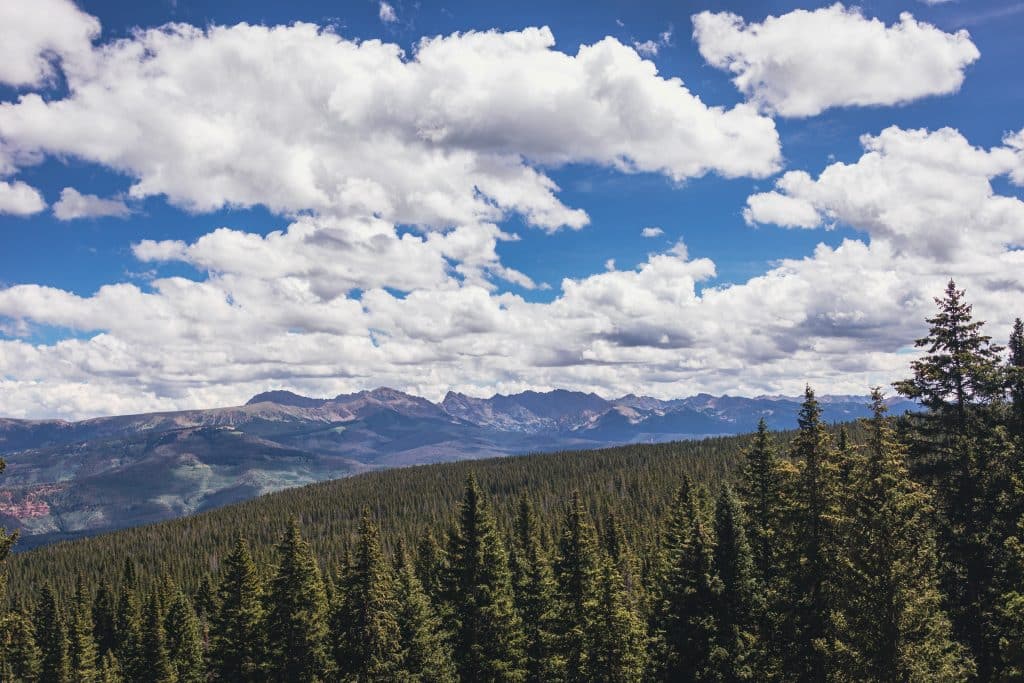
“It’s about a weekend that’s celebratory and inclusive and physically challenging — that is a shared accomplishment,” he said. “Vailhalla is the upper-deck of the course — you have to earn your way up there and it is stunning to a degree that I think is going to knock people’s socks off.”
In terms of route, the 2017 Beaver Creek Brevet might actually be the rightful predecessor to the Vail 100.
“It was really tough to get a permit for anything, so we decided to run a freebie and keep the numbers below the threshold that you need a permit,” McCormack explained of the Beaver Creek Brevet, which allowed the race organizer to “get the wheels in motion” of bringing back Deighan’s race, a goal of his for several years.
“What we’re doing now is a derivative of both. The Vail 100 — I think it’s important that an event of that stature comes back. It was notable. They did a great job and I think the valley should have something like that. I think this can be it,” he said. “The Vailhalla piece — the celebration of effort, glory and suffering is a really good match with that.”
One takeaway for McCormack from the Beaver Creek Brevet was that “the experiential part was just as important as the competitive part,” when it comes to adventure gravel.
“It’s not about a podium,” he said. “It’s about ‘I did this.’ It’s a weekend Everest right in our backyard.”
“Vailhalla is an inclusive celebration of “undiscovered Vail,” the remote corners of a truly beautiful valley; the places that the tourists never see,” he elaborated in his Sept. 14 race director’s email. “It’s a weekend and event where all bikes are welcome.”
While McCormack believes the Vail 100 will bring “a little slice” of the other off-road classics in Steamboat Springs, Leadville, Kansas and Breckenridge, he is perhaps most excited about his and Rodeo Adventure Labs’ shared vision of inclusivity.
“They have this great philosophy about how people should approach cycling,” he said of Fitzgerald’s company. “It’s yes to everything; they have this inclusivity that’s charming and direct.”
“The community has hosted some really world-class mountain bike events,” McCormack continued. “But this is different. I think it can be high-end and high-touch and really have that comfortable jeans appeal. It will be surrounded by free rides and the ability for people to ride bikes with each other and enjoy the things we enjoy — not just about Vail — but about the valley.”
Which bike?
McCormack said he leaned into the influence of local rider Karen Jarchow as he contemplated the course.
“Do we make it a gravel race or a mountain bike race? Her input really helped shaped what we decided to do,” McCormack said.
Jace Stout/Courtesy photo
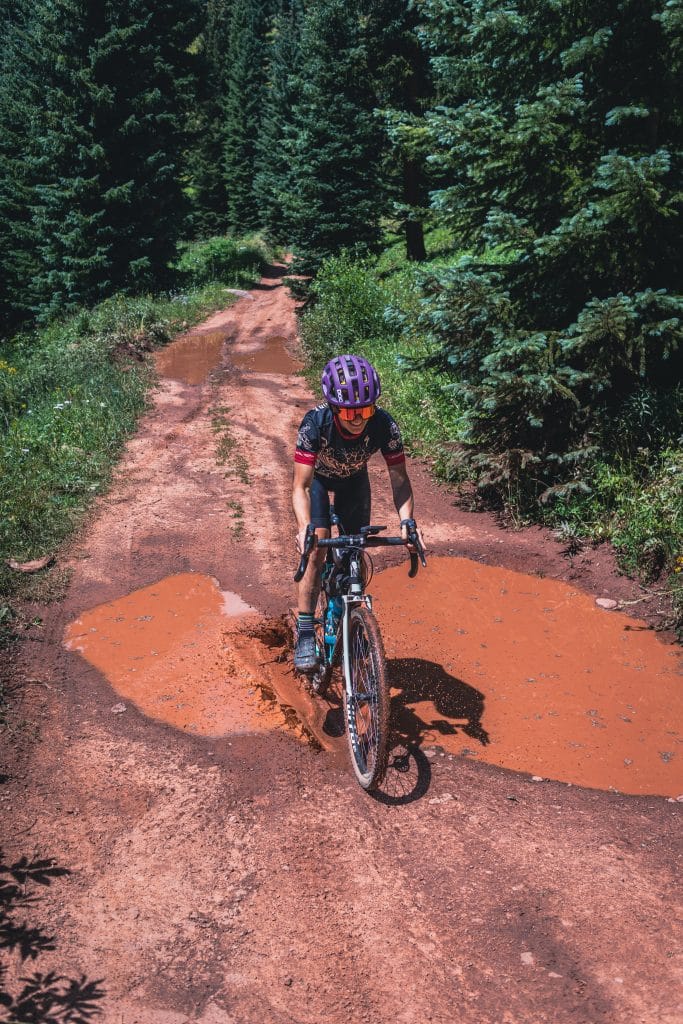
In paraphrasing his conversation with Jarchow, McCormack said the pro cyclist has enjoyed the gamesmanship involved in selecting either a gravel or mountain bike. “Why not make that a feature?” McCormack rhetorically asked.
“You gotta be selective about your equipment.”
McCormack believes the event will be similar to the Crusher in the Tushar in that at some point “you’re going to be on the wrong bike.”
“It’s a gravel race, no doubt about it, but someone on a lightweight 29er (mountain bike) is going to have some advantages out there,” he said.
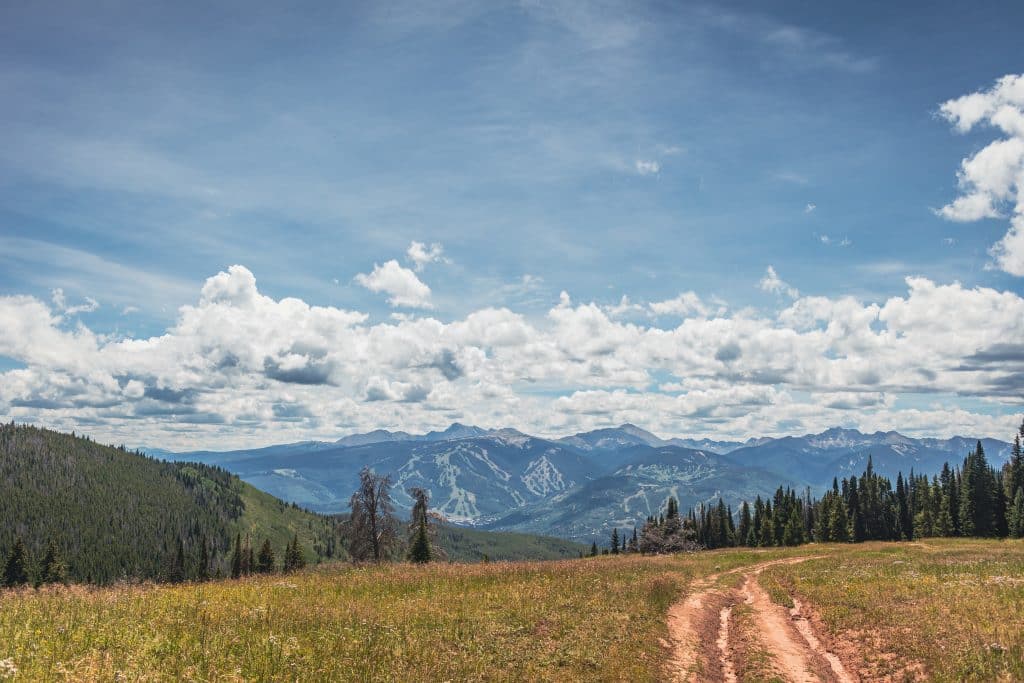
Of the course, McCormack added, “it’s grander — a bigger canvas — than I expected. It’s so much more soul-filling than I thought it would be.”
The intersection of sheep grazing permits and outdoor recreation, a thread a recent New York Times piece delved into in the San Juans, is connected to the Vail 100 and its course, too.
“There’s history in the valley of how those things don’t go together well,” McCormack said.
So, is their beef up there?
“No, not at all,” McCormack said. “Those people have been there for a hundred years — they deserve to be there. But, what it creates is this beautiful negative space. There’s some risk of going up there when the grazing permits are active. I believe they should be up there; I’m ok with us waiting until they get off.”
He continued, “I respect what they do and how they do it and it’s this vestigial piece of ‘Old Colorado’ — we should be hanging onto those things. They’re good people.”
McCormack said the situation “leverages scarcity.”
“That terrain is not very accessible without certain, specific risks, until Oct. 1,” he said. “And then we’ve got two weeks to enjoy it before its snowed in.”
Looking ahead
McCormack, who also runs the Breck Epic, noted in an email last Friday that work on a 2023 event is also already in the works, with a possible course expansion.
“Expect additional loops and a multi-day event next year,” he wrote of next year’s event, scheduled for Sept. 29-Oct. 1.
In terms of this year’s registrations, McCormack said he’s “right where I expected to be.”
“First-year events present their own unique challenges,” he said.
“Success for us is going to be measured in ‘did everyone have a good time’ and ‘did we make our point that we deserve to be here on the calendar.'”
McCormack is confident that with a year’s runway in 2023, elites like Leadville champion Keegan Swenson will have to consider the season-ending event when planning their race schedules.
“We’ll be on peoples’ calendars — I’m not worried about it,” he said. “But this year, it’s our chance to invest sweat equity and money to figure out how does it run, what needs to be done really well, what are the pinch points and how do we ‘wow’ people?”

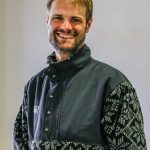
Mike McCormack/Courtesy photo
He compared the experience he hopes to provide on Saturday to a night of fine dining.
“It’s like being a good waiter,” he laid out.
“I want your water glass, when you come to our event, metaphorically, to never be empty. You bring your bike — we’re going to worry about everything else.”
Jace Stout/Courtesy photo