Freeride added to 2030 Winter Olympic program while Nordic combined gets cut
Ski Mountaineering is also expanding to include an individual event after making a successful Olympic debut last February
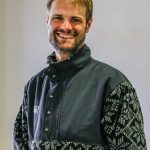
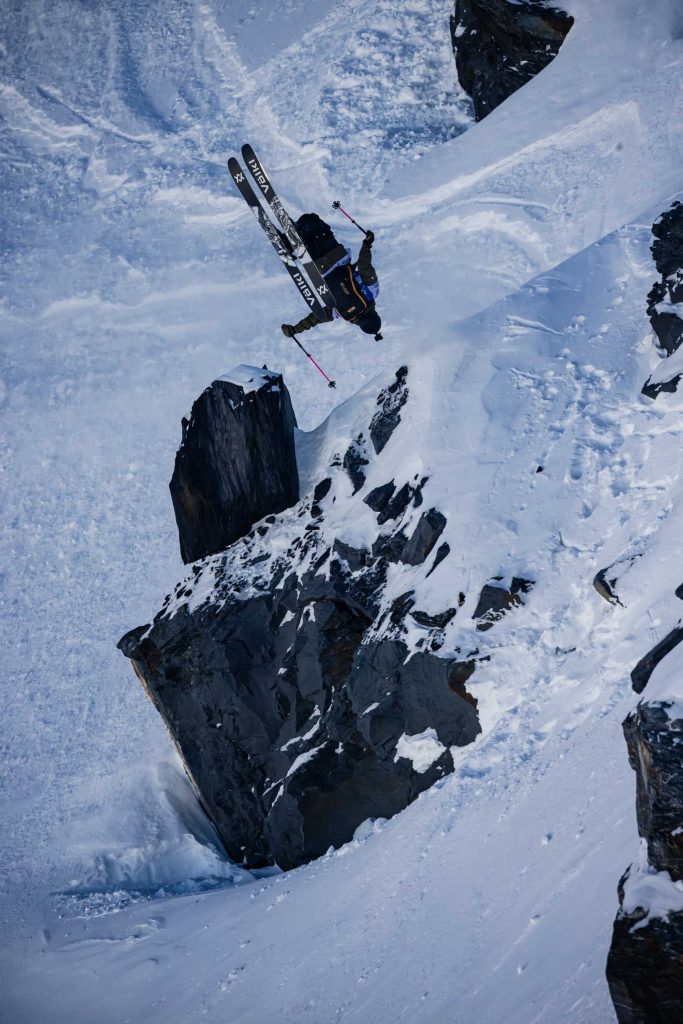
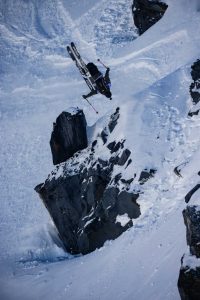
D. Daher/Freeride World Tour
The 2030 Alpes Games will be the first-ever Winter Olympics with freeride and without Nordic combined, two snow sports with rich Colorado roots. The International Olympic Committee confirmed Tuesday the addition of the former to the 2030 program as well as the elimination of the latter.
“It’s a moment of joy for the entire freeride community,” stated Nicolas Hale-Woods, the founder and CEO of the FIS Freeride World Tour, in a release. Hale-Woods said the inclusion of freeride in the Olympics was the “result of three decades of commitment and dedication.”
“My first thoughts go to the riders, from those who first believed in this discipline and helped build it, to the young athletes who can now dream of an Olympic medal,” he continued. “I think too of the organizers and everyone who has grown this sport over the years, and of all the partners who trusted us throughout the journey.”
Edwards skier Joey Leonardo — a 2020 world junior gold medalist — called the decision “a huge step for the sport.”
“Over the last year and a half, I think everyone has been a little on edge about the decision to be included in the next Olympics,” he added. “We all wanted it to be, so this is a major milestone for everyone involved in freeride skiing.”

Support Local Journalism
The reaction from the state’s Nordic combined community was understandably more subdued.
“It has been a rough morning, to say the least,” Nordic Combined USA President Jill Brabec told the Steamboat Pilot & Today earlier this week. “When you get news that you don’t want to hear, it’s important to take a few moments and process it.”
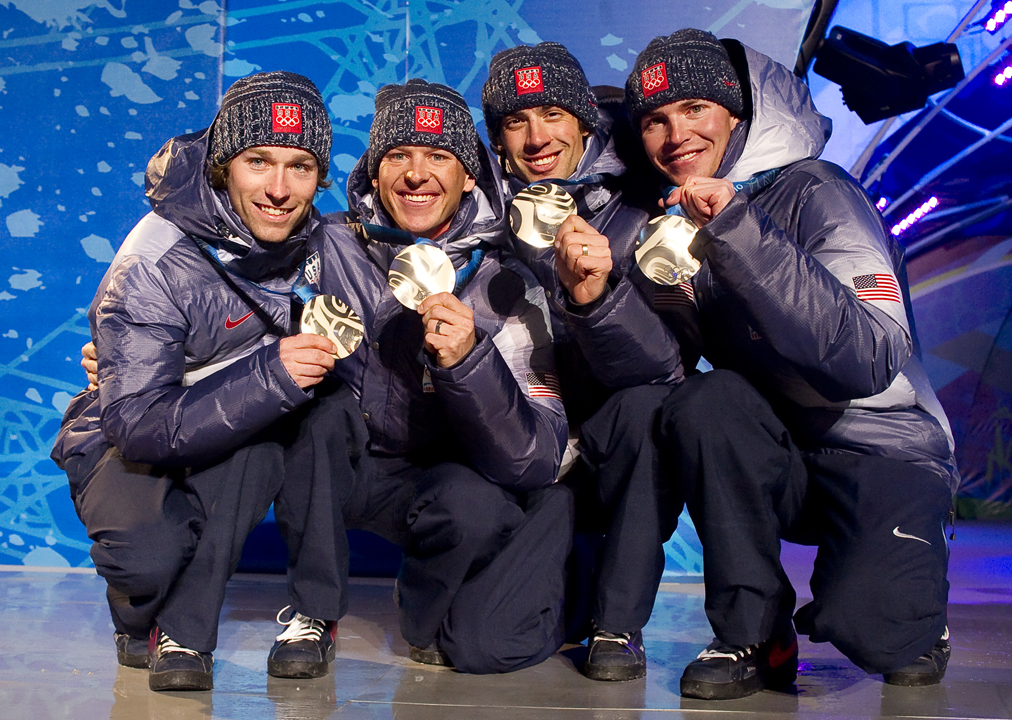
Steamboat Springs has a long history with the sport, which has been included at every Winter Olympics ever staged, starting at the 1924 Games in Chamonix, France. The U.S. picked up four golds in Vancouver in 2010 behind the performances of Steamboat Springs athletes Todd Lodwick, Johnny Spillane and Billy Demong as well as Park City’s Brett Camerota. Erik Lynch, a former Steamboat Springs Winter Sports Club athlete, indicated on social media that the IOC’s decision hasn’t deterred his motivation to continue pursuing the sport he loves.
“There are DEEP reasons, that far exceed any commission, or IOC board, for why we do this. Why we choose this. It’s times like these that I get to remember that,” he posted on Thursday. “It can be up to us to represent purity of sport, this sport, and the men and women that should be in, in 2030. The pursuit of progress is a worthy pursuit. That pursuit will continue, and will not be stopped by an IOC board.”
Why is Nordic combined being eliminated?
In 2022, the IOC declined the International Ski and Snowboard Federation’s (FIS) application to include women’s Nordic combined at the 2026 Olympics due to a lack of non-European interest. Doubt arose regarding the sport’s presence at the 2030 Games, too, as the IOC demanded “significant positive development, particularly with regard to participation and audience” at the time.
According to Tuesday’s news release, the IOC conducts a quadrennial global study covering all Winter Olympic sports, disciplines and events across key markets on all five continents. The evaluation during Milano Cortina 2026 measured 14 popularity indicators across broadcast coverage, digital media, general public interest, ticketing and press, involving up to 50-plus markets per indicator, the release noted.
“Across most of the popularity indicators, Nordic combined ranked lowest among all Olympic Winter Games disciplines at Sochi 2014, PyeongChang 2018, Beijing 2022 and Milano Cortina 2026. At the most recent Olympic Winter Games, it was the lowest-ranked discipline in 11 of the 14 popularity indicators assessed,” the release stated.
The Pilot & Today wrote Tuesday: “Brabec said that the IOC’s criteria for measurement were vague, and there was no sound measurement for deciding to cut or keep the sport.”
FIS Nordic combined race director Lasse Ottesen found the decision “difficult to accept and even harder to understand.”
“I am at a loss for words and struggle to understand the reasoning behind it,” he stated in a FIS news release.
FIS President Alexander Ospelt reiterated the sentiment, describing Nordic combined as “a discipline that has been observing clear and tangible growth and an ever-broader international participation over the last few years thanks to the inclusion of women’s competitions.”
“This is a very hard decision for FIS and for our National Ski Associations,” he added. IOC President Kirsty Coventry said at a news conference earlier Tuesday that there have been “very good conversations with FIS on what expectations would be in the future.”
“And that the possibility could always remain open for 2034,” Coventry continued. In order to be added back for the Utah Olympics in eight years, Nordic combined would need to pass the IOC’s “three stage evaluation framework” outlined in its new “Fit for the Future” Olympic program methodology. Under that model, candidate disciplines will be assessed against three core criteria: global appeal, cost, and operational complexity and athlete representation.
While the lack of an Olympic tagline could make the sport’s fundraising and recruiting efforts more difficult, Brabec believes the future is bright. Her daughter, Alexa, finished second in the 2025-26 World Cup overall and won in Seefeld, Austria, on Jan. 30.
“We still have a World Cup and World Championship season, along with the new Velocity Ski League,” Brabec told the Pilot & Today. “Our focus turns away from appeasing the IOC and towards pushing the sport into the future.”
International Federations proposed 26 new events for Olympic inclusion, according to the IOC’s release. Ultimately, the IOC’s Executive Board approved three disciplines and 16 events “to enhance gender equality, innovation and youth interest, in line with the principles approved in 2024.”
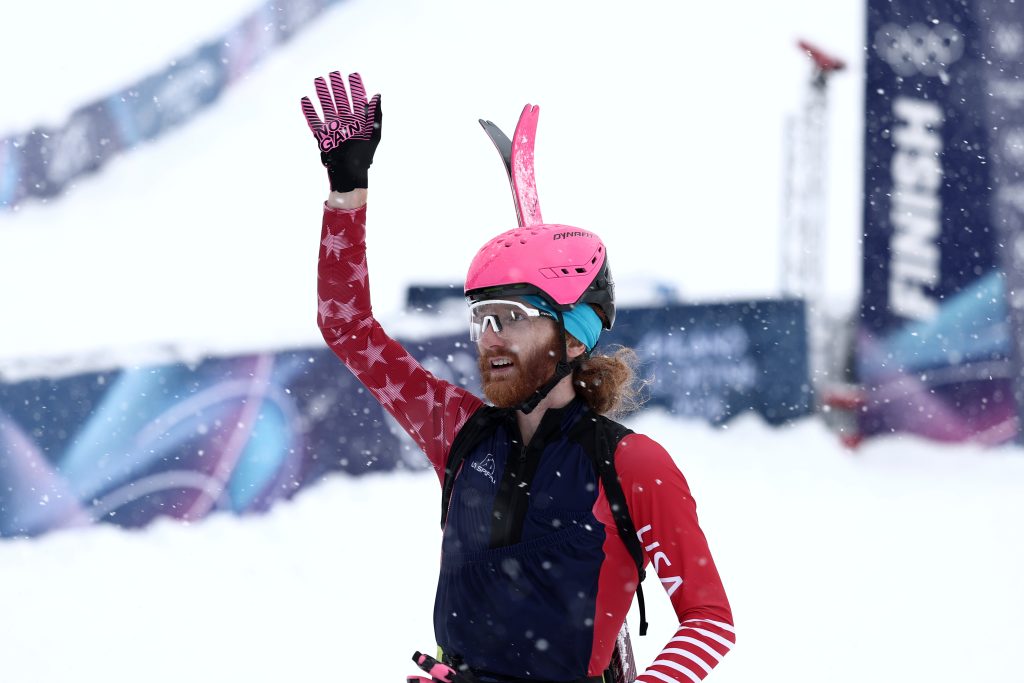
Ski mountaineering — another sport with rich Colorado ties and talents — will be expanded after making a successful debut this February in Milan Cortina. Crested Butte’s Cam Smith teamed up with Anna Gibson to lead the U.S. to a fourth-place result in the team sprint event on Feb. 21. In 2030, individual men’s and women’s event will be added to the individual and team sprint events. One could argue the longer, more technical individual discipline hearkens back a bit closer to the sport’s adventurous, all-mountain heritage. Smith said he plans to train through the next two Olympic cycles.
“The level will continue to rise and I’m getting older. But I’ll absolutely be all in chasing the dream,” he stated on social media. “After 2030 looms the 2034 Games on home soil, which I’m already desperate to be a part of.”
What does the inclusion of freeride mean for US athletes?
On the same day the IOC made freeride an official Olympic sport, U.S. Ski & Snowboard announced the addition of freeride skiing and snowboarding as the newest discipline to fall under its umbrella.
“Bringing this discipline into our high-performance system means our coaches and sport scientists can start supporting these athletes now, well ahead of 2030,” Anouk Patty, U.S. Ski & Snowboard chief of sport, stated in a news release. “We are excited to welcome them to our organization.”
According to the release, U.S. Ski & Snowboard has partnered with the International Freeskiers & Snowboarders Association to continue overseeing the grassroots competition series.
“U.S. Ski & Snowboard will publish selection criteria for freeride and name elite teams within the 2026-27 season, providing athletes with the same high-performance and commercial support as the organization’s existing 230 athletes,” the release stated. “Skiers who participate in freeride will be on the Stifel U.S. Freeski Team, while snowboarders will be on the Hydro Flask U.S. Snowboard Team.”
FIS acquired the Freeride World Tour (FWT) in 2022, made it an official sport two years later and hosted the first FIS world championships this winter in Andorra. Currently, the FWT calendar includes more than 300 annual events across four continents with around 10,000 licensed riders. The tiered pipeline includes four competition series: Junior, Qualifier, Challenger and the elite Freeride World Tour.
“It is clear why freeride’s combination of raw excitement on a stunning natural terrain is an appealing addition to the Games,” Ospelt stated. “Above and beyond that, freeride is a success story on the development level: within a couple of decades, the discipline created a structured pathway for athletes to compete, from the junior level all the way to the elite.”
The FWT website said details regarding the Olympic qualification pathway will be shared as they are confirmed.
“It’s unclear of how it will change things and affect us, but it’s exciting to think we could have some kids go there,” Ski and Snowboard Club Vail freeride head coach Matt Luczkow told the Vail Daily in a preseason interview last November when asked about the possibility of an Olympics. Locals have thrived on the international stage. Two years after Leonardo’s junior worlds gold, Luczkow’s pupil, Jenna Meyers, won gold as well. Last year, Ingrid Gerdes and Kaleb Gibbs represented the U.S. at junior worlds; this past winter, Gibbs returned alongside Julie Brown, who was fourth in her debut. Meanwhile, 21-year-old Finn Griffith finished 19th in the 2025 FWT standings and Blake Moller — the 2022 FWT snowboard champion — finished ninth at the inaugural FIS Freeride World Championships in February.
“We do have these athletes who have graduated who are still competing,” Luczkow said. “And if this becomes an Olympic sport, we’re kind of thinking how can we support them further to get there.”
Leonardo, who was 22 when he qualified for the FWT in 2025 and made “The Cut” this past winter, is excited about the possibility of becoming an Olympian.
“I can’t wait to see how it all goes down and to see how much this will impact funding for athletes and the overall growth of our discipline,” he said. “The future is looking bright for freeride skiing and I am so excited to have the chance to witness and maybe even be a part of this next chapter.”