Paul Spencer plans to pedal his bike around the world
Avon cyclist and Birds of Prey worker spent his summer riding all three UCI Grand Tours consecutively

Paul Spencer/Courtesy photo
If human-powered movement across a mass of land or water is truly a prerequisite for residency in Eagle County — as recent glances at the Vail Daily sports page might suggest — Paul Spencer has the ultimate trump card.
The Birds of Prey race team worker for the past 22 years once biked across the U.S. — from both directions … in the same 4,500-mile ride (a Guinness World Record at the time). He recently finished biking every stage — and every mile between them — of the 2022 Giro d’Italia, Tour de France and Vuelta Espana, a 128-day, 14,500-mile (with 750,000 feet of climbing) effort. And if that has you heading for the La-Z-boy to put your feet up, get a load of this: He wants to bike across the world.
Though COVID has delayed the final testing and tune-up of his F1-worthy pedal boat — which has been locked away in New Zealand for two years — Spencer told the Vail Daily on a Zoom call from the United Kingdom earlier this month that he’s eyeing a winter of 2024-25 launch date for his historic quest, which has already been approximately 10 years in the making.

Paul Spencer/Courtesy photo
“Everything I’ve actually done I consider preparation for it,” he said. For Spencer, life is one big training camp, and the time to hammer is right now.
Growing the dream
Born south of London, Spencer moved to north Wales at 10. He went to boarding school and then briefly to university, but at 18, a ski instructor course he took in Canada altered his trajectory.

Support Local Journalism
“I decided I wanted to be a ski instructor, so I quit university and moved to Canada,” he said. “It didn’t work out, so I ended up moving to Vail.”
Why Vail?
“I basically looked at a map and was like, ‘where is a lot of ski resorts close together that I could get a job as a ski instructor,’” he recalled.
Since his parents had moved stateside, he had a green card.
“I was like, ‘I’ve got a green card, where can I go?’ I saw the Vail Valley and I was like, ‘alright, I’m going there.’”
He flew to Denver, took a bus to Vail and immediately applied for a ski instructor job, but he was too late.
“I’d missed all the new hire training,” he said of that December 2000 day. “But, I was a race coach as well.”
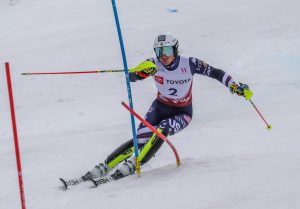
He was told to apply for the race department at Beaver Creek, but remembers being warned that “staff might be tied up trying to run this race going on.” He waited on the steps outside the Beaver Creek offices until the crew came off the hill. After an interview, he was told to start at 5 a.m. the next day. He’s been helping to organize the Birds of Prey World Cup races ever since. In the last 22 years, he’s also worked three Olympics and multiple World Cup events, but done little instructing.
“As I moved up in the race department, I stopped teaching altogether, and I prefer that,” he said. “I wasn’t very good at teaching.”
His work volume varies, which complements his life of bike challenges. He worked 2 1/2 years in the lead-up, production and post-production of the 2015 Alpine World Ski Championships. Other years he’s only been at Beaver Creek for a few months, which is when he’ll split time with construction work in Denver, where he’s now renovated a property to rent — money which he plans to funnel into his around-the-world savings account.
It was actually at Beaver Creek that his passion for biking was birthed. When a coworker injured his knee and was prescribed biking to rehabilitate, Spencer figured the activity would probably be “good training for my job.”
“Then I started riding more and more,” he continued.
The ski resort was also where his appetite for cross-continental efforts first surfaced. While working a NASTAR race late at night in 2011, he was flipping through a magazine when he read about a bike race across Africa.
“I was like, this is really cool — I want to do that,” he said.
Actually, the first bike-across-something experience for Spencer came over beers.
“There’s this thing called ‘Land’s End to John o’Groats,” he regaled of the notorious route from the southernmost point of England to the northernmost tip of Scotland, an 800-mile ride most will divide into 14 days. Someone Spencer knew had just finished it in seven when his friends had gathered for a party in 2007.
“Well, I bet you could do it in like four?” Spencer said after having a few drinks.
“As a joke, I was like, well surely you could ride 200 miles a day,” he recalled of the moment this fall. “And this broad statement then became a bet … and that became, ‘Well, you’re going to do it.’”
He did. And he loved it.
“I really liked the challenge,” he said.
While working the 2010 Vancouver Olympics, he devised a “fun” training trip for the race across Africa (7,500-miles) — a ride from Seattle to Florida. “It’s kind of like the longest two points in North America,” he said, as if to suggest such an anecdote would sound attractive to most. Then, his brother got involved, and he looped in Guinness World Records. Suddenly, the new objective was to cross America — first north to south (Seattle to Los Angeles), and then east to west — but still within the same six-week span he originally allocated for vacation.
“My summer of fun biking changed to this world record, and the distance went from 3,000 miles to 4,500 miles, but I still had the same window of time,” he laughed.
It was during this attempt that he first became aware of an around-the-world self-supported bike race, which happened to be going on simultaneously.
“I started looking into it at the rules. Well, the around-the-world record is, you have to do 18,000 miles of biking and you’re allowed to fly over the oceans,” he noted. “I sort of thought in my head, well, that’s not really cycling around the world is it?”
In a moment similar to his Land’s End to John o’Groats beer-induced bet, he “stupidly” said, “truly cycling around the world would be using a pedal boat to go across the ocean.”
“And then it just kind of … well that would be really cool. Is that possible?” he continued. “The first couple of years it was just an idea. And then it grew. Every time I did one of these big rides, that idea grew and grew.”
Paul Spencer/Courtesy photo
After succeeding in his record across the U.S., he won the HooDoo 500, an ultramarathon race across Utah, which qualified him for RAAM, the preeminent cycling trek from Oceanside, California to Annapolis, Maryland. Those supported grinds didn’t have the same appeal, however, as the arbitrarily invented challenges Spencer drafted on his own.
“I didn’t enjoy the supported riding,” he said. “Having those people with you — it’s a big bill, it’s a lot of pressure, you don’t ever get a break — you’re just riding your bike and people are feeding you food out of a window. I enjoyed finishing that race, but I never want to do it again.”
The other factor, he said, is that in endurance races of RAAM’s proportions, the winner is often the person who not only can “race insanely fast” but go without sleep.”
“I’ve realized that lately, so I do them for fun and I stay within my limits,” he said.
Another factor connected to support — or a lack thereof — is Spencer’s goal of limiting his environmental impact as he bikes the globe.
“I would like to have support vehicles for the whole trip, but I don’t like the carbon footprint of it, so I want to have electric support vehicles, and if I can’t figure out an electric support vehicle, I might just bikepack it and carry my stuff,” he said.
Spencer’s ‘tiers’ of theoretical trips include a level 1 — him bikepacking everything on one bike — and extend up to the dream: Red Bull takes to his F1 look-alike pedal bike and sponsors the trip alongside Tesla, who loans him a solar-powered RV. “That’s the No. 1 dream,” he said. “And you go all the way down to it’s self-supported by me and I’m riding my bike with my bike bags.”

Paul Spencer/Courtesy photo
Pedal bike beast
In 2012, Erden Eruc set the record for the fastest human-powered circumnavigation of the globe — five years and 11 days — using mostly a rowboat for ocean crossings. Spencer’s spin on the record is that he wants to pedal the whole thing. To do that, he reached out to the famous boat builders at Lomocean.
“I’ve had this idea and the boat was always the sticking point; I spent years emailing people,” he said.
Most told him to take a regular rowboat and convert it, but the answer wasn’t satisfactory for Spencer.
“I kept looking and looking,” he said. “It was just luck. I saw this boat and the shape of the boat — I thought it’d be pretty easy to put sides on it and a roof, because it already has those two beams that run along the top.”
He sent an email to Craig, the designer of the boat.
“He was randomly like “yes, this is a brilliant idea — I’m totally in.”
Paul Spencer/Courtesy photo
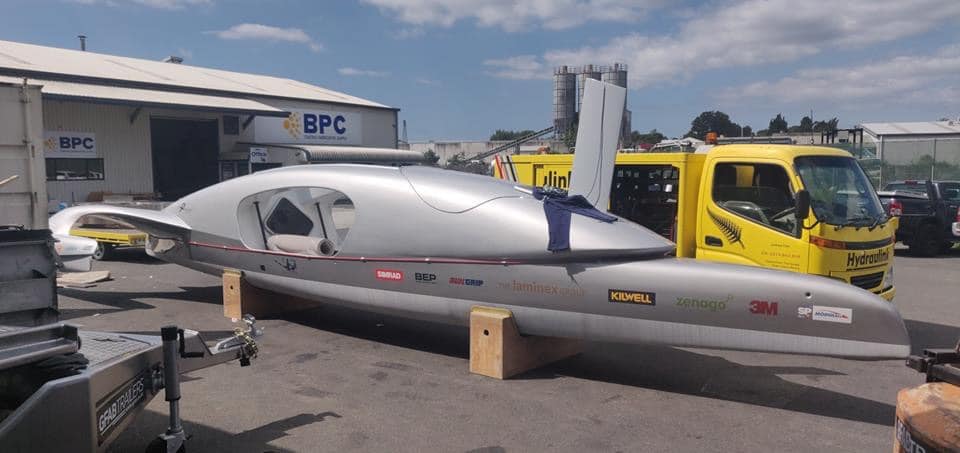
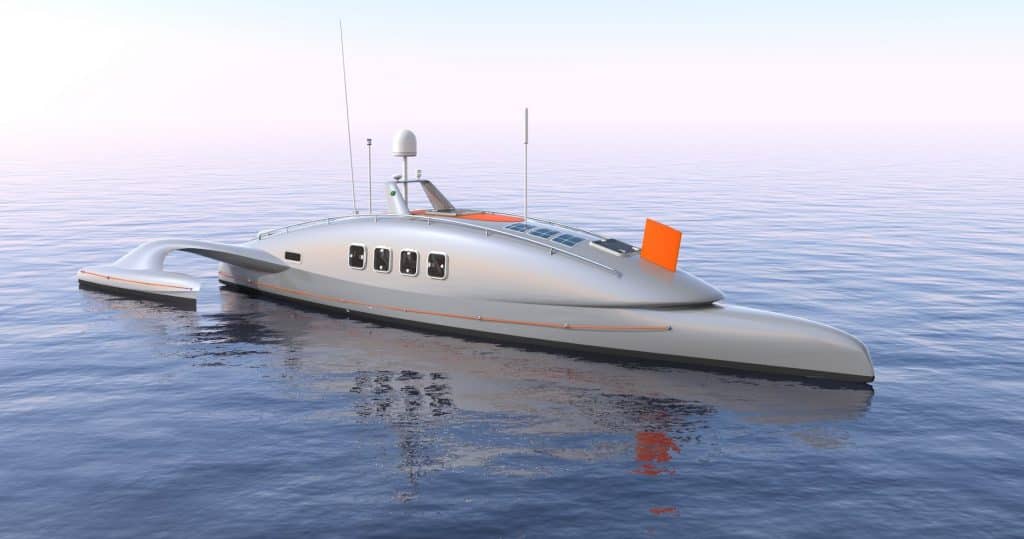
In Jan. 2019, he went to meet Danny, the original owner of the aerodynamic carbon-fiber-filled sea bullet, who had intended to use “The Tasman Rower” — it’s original name — to race from New Zealand to Australia and back through the Tasman Sea. Due to it’s lack of trade winds and current, the stretch of water is one of the hardest to row across, which is why the 38-foot boat was designed to be so aerodynamic.
“Which is all great for me,” Spencer chimed in. “My boat is an ocean row boat, but it doesn’t look like a boat.”
Danny had received larger bids than what Spencer offered him, but “he wanted the boat to do something cool,” so he sold it to the guy eyeing the around-the-world adventure. Spencer then discussed customizing the boat with Craig.
“Craig basically was like, ‘the problem is that people use speedboat propeller parts with bike parts and that’s not the way to do it,’” Spencer said.
Craig, who also built the first solar-powered boat to go around the world, gave Spencer’s boat the same unique triple-blade propeller, which only allows two of the 2-foot blades in the water at any time, with the nose-cone of the propeller out of the water.
“It’s new and it’s never really been used,” Spencer said of the design. “Craig says, imagine you’re in a kayak and you have really big hands and you basically slowly grab a handful of water and pull yourself back — that’s what my propeller blades are like.”
After Craig worked his magic, it was sent to Big World Composites for more carbon customization.
The boat offers the cyclist recumbent option so he can be fully enclosed and protected from weather. He can also put in a regular seat post and pedal with his head outside of the top. Two cabins — one in front for storage and a rear for sleeping and communication — allow Spencer to bring the food he’ll need for 10,000 miles of sea-pedaling and buckle himself in during rough waters.
When asked if the prospect of large swells frightens him, Spencer paused and said, “Eh .. Not really. I think it sounds exciting. I mean I’m sure it will be terrifying at the time.”
An autopilot navigation system will take care of his coordinates, so Spencer plans to envision himself “being in a computer game” when the seas get choppy.
“You’re rolling all over the place, but you’re not staring at this giant wave in front of you,” he said of the fact that when he’s enclosed, he can look out the side windows, but not directly in front.
“Obviously, you’re going to feel it in the boat, but it’s self-righting, it can get rolled — I’m sure it’s going to be scary as hell, but I think you’re just going to have to get on with it.”
At night, he’ll use a sea anchor — a giant underwater parachute that submerges into the deep waters unaffected by currents — to hold his location. If a favorable breeze happens to push him in the right direction?
“It’s the same as rolling down a hill on a bike,” he said smiling.
Spencer will have a marked speed advantage compared to the other vessels routinely crossing large swaths of sea.
“The trouble with rowing is you have to stop to drink water or do anything,” Spencer detailed. “I can pedal and read a book type on a computer. The calculation — Craig thinks I can pedal about 25% more per day with the same amount of sleep.”
Spencer pointed out that websites monitor the dozens of individuals rowing across the ocean at any time.
“If I prove pedaling is more efficient than rowing, which we think it should be, maybe in 20 years time it will be people pedalboating across the ocean instead of rowing.”
Special to the Daily
Having the right bike for the right situation
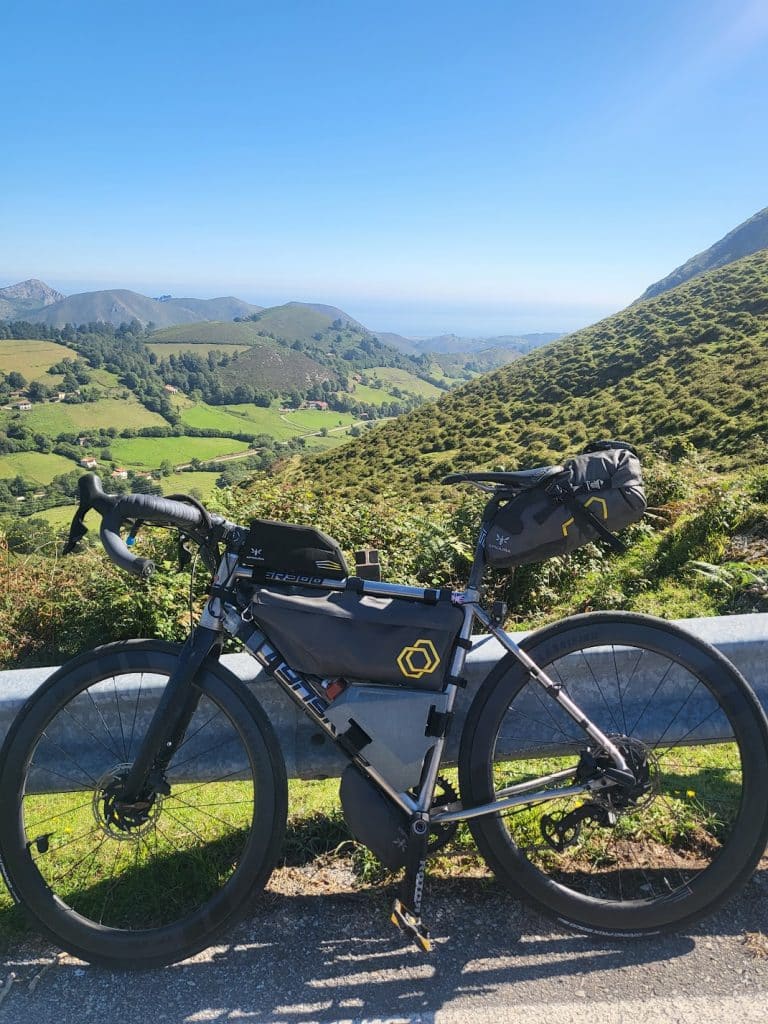
“Half of the trip is, I want to use the right bike for the right situation,” Spencer said. “A road bike when it’s hilly and road, a triathlon when it’s flat and straight, a cyclocross bike when it’s gravel road. Part of the trip is bikes are amazing. I just rode all over Europe on a bike; having a right bike for the right situation is important. So, (it’s about) showing what the bike can do.”
Spencer hopes snow is on the ground when he leaves Beaver Creek in two winters.
“And I can start on a fat bike because that just shows, I biked on snow,” he added.
Paul Spencer/Courtesy photo
The more support he gets, the easier it will be to carry out the idea. He’d even entertain the prospect of hopping on a velomobile, an ultra-fast human-powered car-shaped bike, for some of the more desolate stretches.
“Having one of those on those areas where there’s nothing to see — it would be cool to knock out 200 miles,” he said. “It helps show how good a bike can be and how quick they can be.”
If he has to do everything alone, he knows he’ll probably end up going across Europe on an all-round bike.
“So that’s the same thing — I’m riding the right bike for the right situation — one that can support my tent and my load,” he said, defending his logic.
Paul Spencer/Courtesy photo
His parents will support him on the ‘easy’ leg from Colorado to San Francisco. From there, he’ll load up with food, hop in his pedal boat, and ‘bike’ 2,350 miles to Hawaii. After restocking and resting, he has 4,350 miles across the Pacific to the Philippines, the first touchpoint the prevailing currents and winds are destined to take any boat, Spencer said.
Theoretically, he hopes to rest some as he flips between land and sea across 1,500 miles of the Philippine islands to get to China. From China to Yemen is 9,500 miles, Yemen to Eritrea — across the Red Sea — is 35 miles, across Africa is 6,500 miles, and crossing the Atlantic from Liberia to Brazil will be another 2,500 miles in the boat. When he rides on land, his boat will be shipped to the next departure point.
His route around South America (9,000 miles) has him taking in the east and west coast, coming up through Central America, Texas and up to the Colorado (4,000 miles) finish line. Before the pandemic interrupted things, Spencer told Little Miss Bike Tour he hoped to complete the route in roughly three years, depending on the speed of his ocean vessel.
A Grand Tour Training Camp
Paul Spencer/Courtesy photo
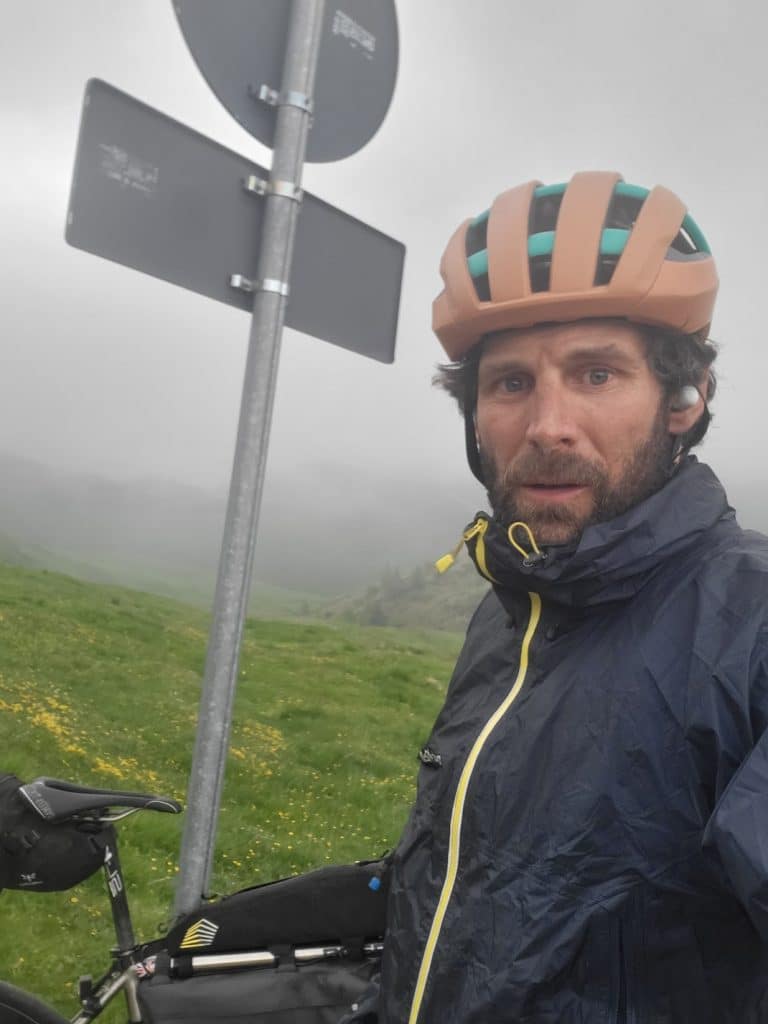
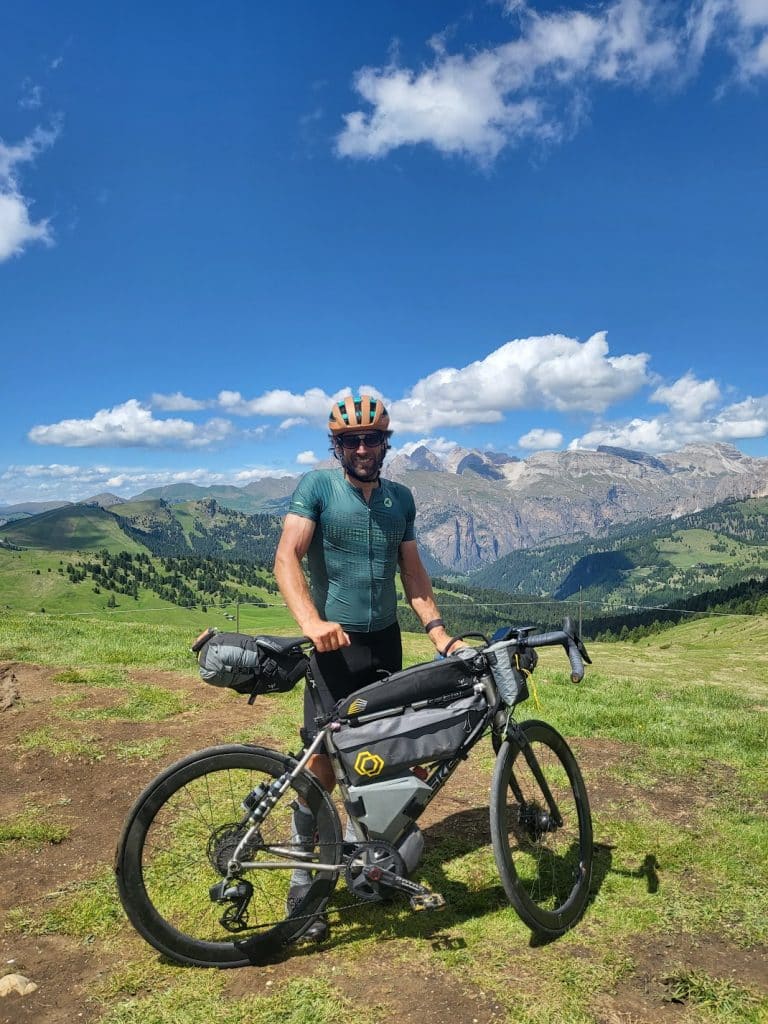
Spencer’s life is obviously adequate training for the around-the-world challenge. Last summer, pro cyclist Lachlan Morton road the Tour de France — and bikepacked between stages — an inspiring feat which caught Spencer’s eyes.
“I’d always wanted to do that,” he said.
Per usual, a Spencer twist was thrown onto the event by a friend, who suggested, “Well, you should just do all three tours.”
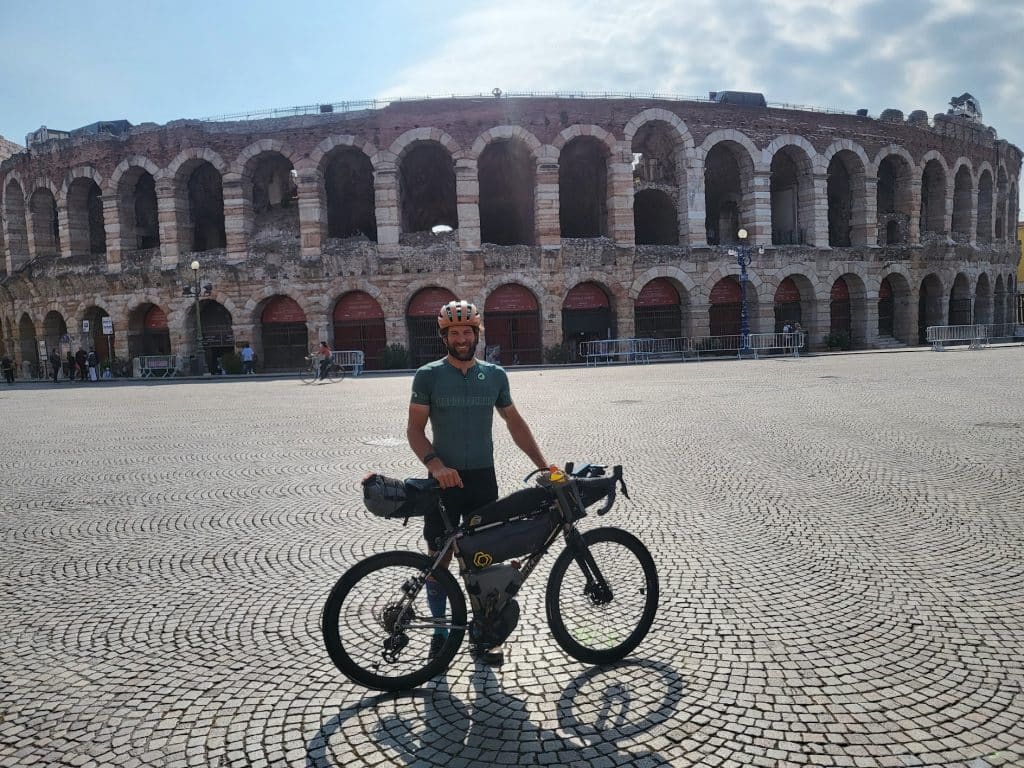
So, Spencer road the Giro d’Italia — the three-week, 2,100-mile tour of Italy — in May, the Tour de France in June and July, and the Vuelta a Espana — the 21-day, 2,100-mile route around Spain — last month … plus every mile between starts and stages.
“It was unbelievable. It was the coolest thing ever,” he said, agreeing that there is no better way to have an intimate experience with a landscape or country than by pedaling through it.
Paul Spencer/Courtesy photo
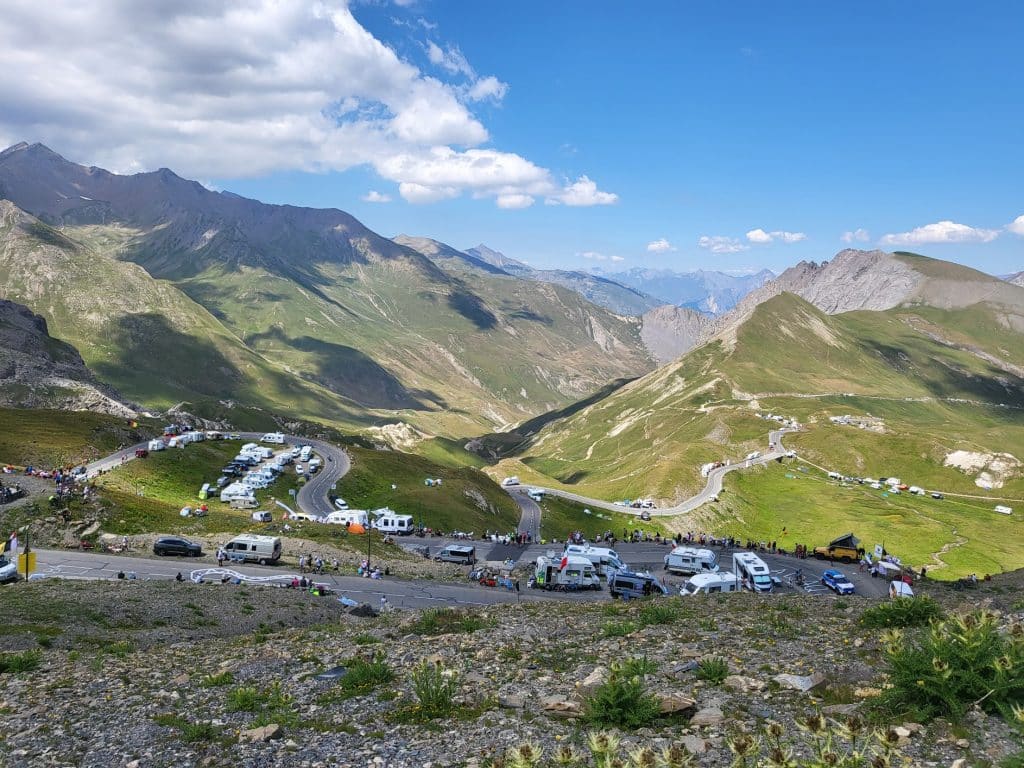
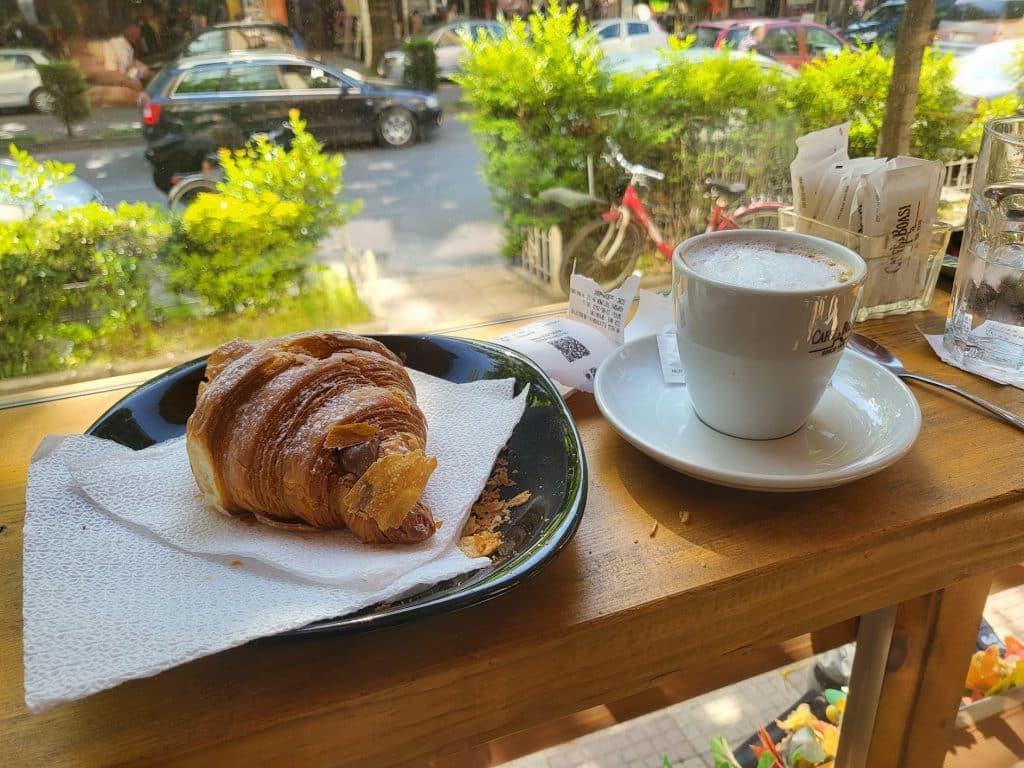
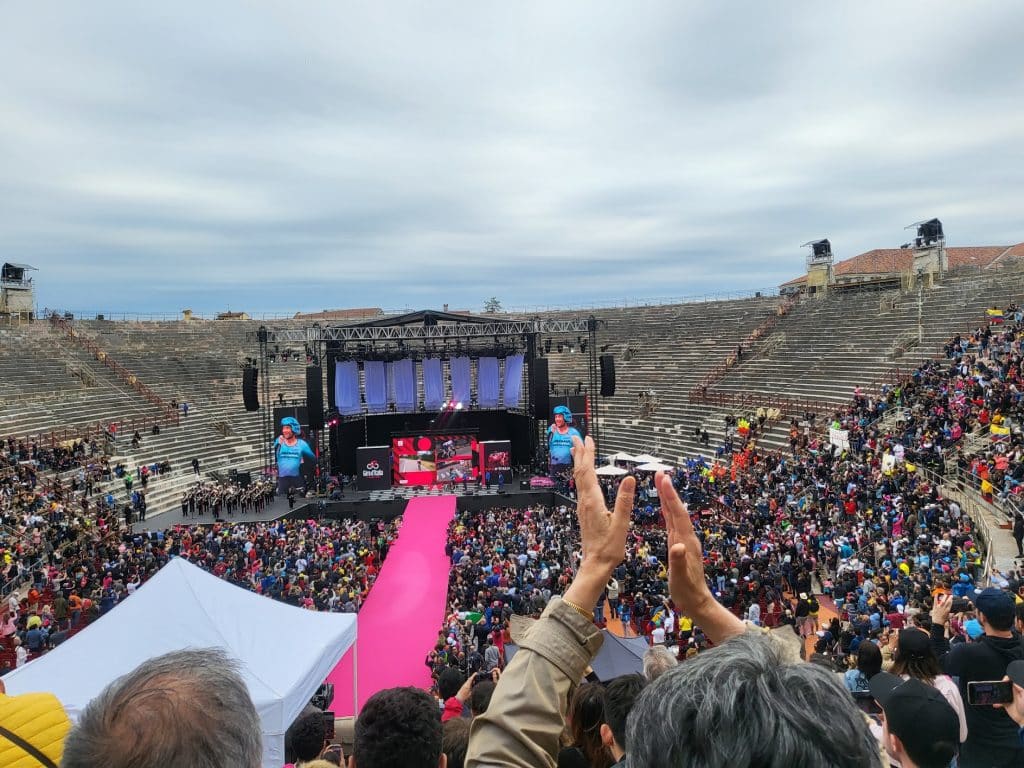
From being in the Coliseum for the Giro d’Italia’s award ceremony to adding on an extra mountain pass or two on the famous Alpe d’Huez day of the Tour de France to learning the ins and outs of ordering food in local countries, Spencer’s summer was well spent.
Paul Spencer/Courtesy photo
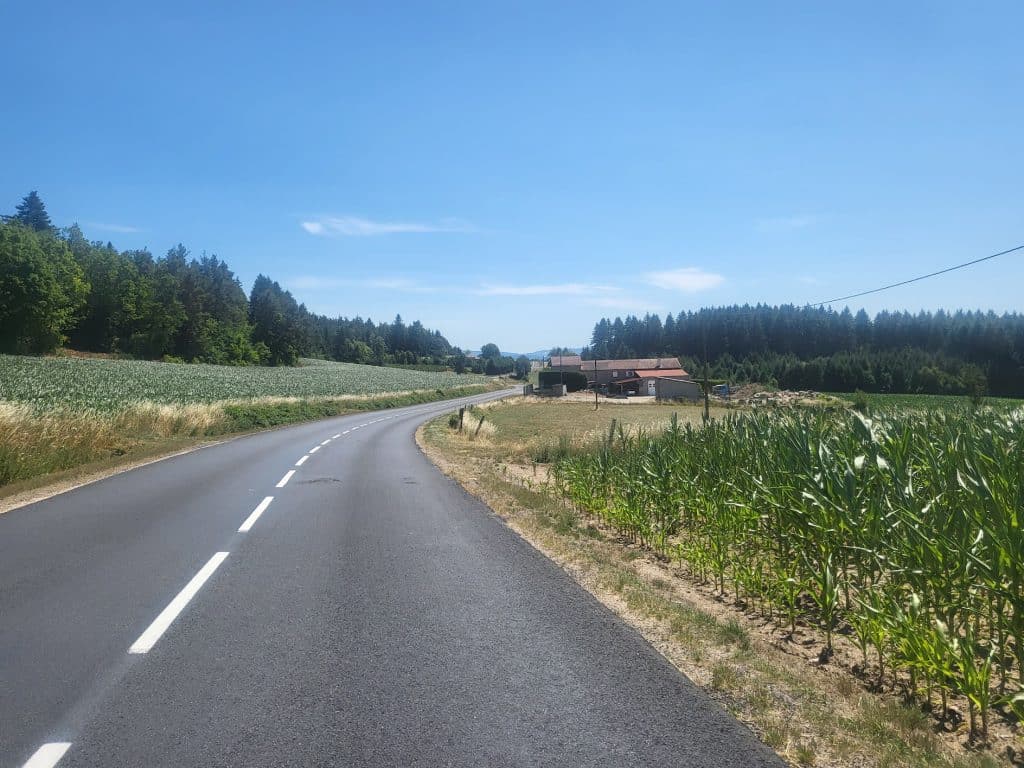
Spencer would leave before the start and get 20-30 miles ahead before the gun went off. At the Tour de France, he was pulled off the course even if he was in a spot racers wouldn’t get to for another three hours. In low-key, bike-friendly Spain, he probably could have road in the peloton, but he hopped off course, found a bar, and mingled with fans when the race came to within a 20-minute striking distance. The differences in race coordination extended to other areas as well.
Paul Spencer/Courtesy photo
Paul Spencer/Courtesy photo
“It was funny how it changed,” he said from crossing borders. “It’s figuring out the ins and outs of the country. Italy was easier with food, but everywhere said pizza but they only did pizza at certain times.” He said people would be “friendly — and then super unfriendly.”
According to Spencer, the Netherlands had the best bike lanes, but if you didn’t use them, you were in trouble. In France, drivers were very respectful of cyclists being everywhere and Spain was perhaps the best in terms of sharing the road with cyclists. Italy, by contrast, was the worst.
“I nearly got hit by people on the other side of the road racing through country lanes on the wrong side of the road coming at you,” he said.
The Tour de France repaved every road the race touched, while the Vuelta a Espana seemed to search out bumpy, steep roads.
“They searched out the crappiest roads and sent you up this insane hill and the crappy roads,” Spencer joked.
Paul Spencer/Courtesy photo
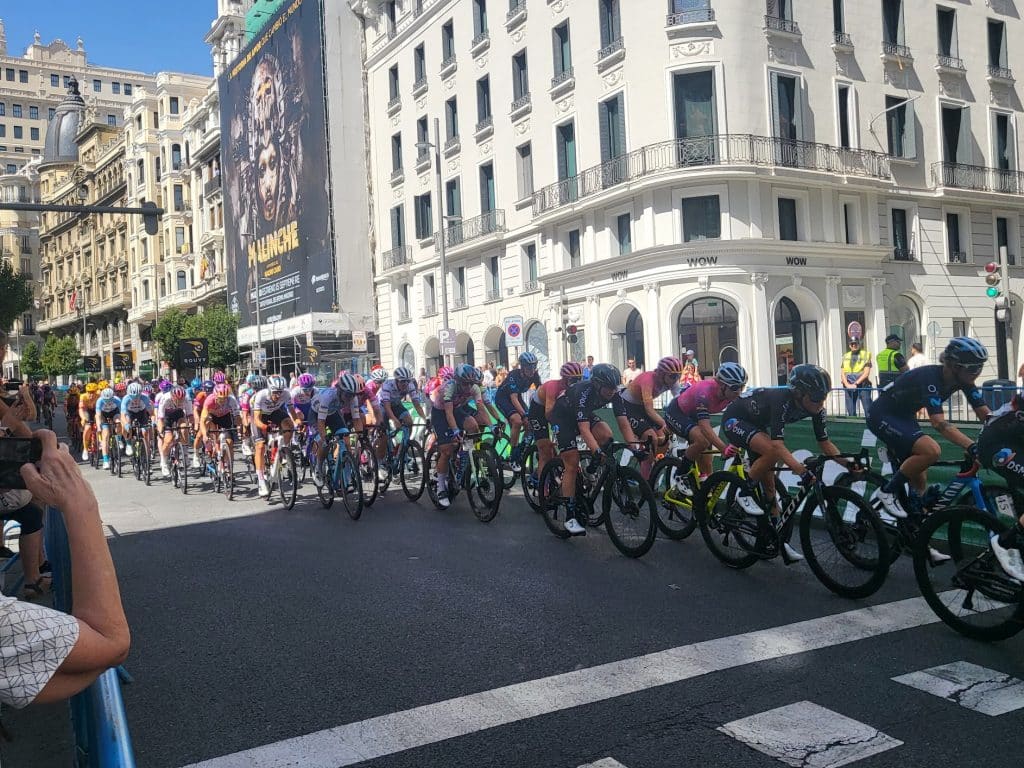
His daily routine was to break as he’d pull off the course, watch the race, finish the stage and then bike into the wee-hours of the next morning to get to the next day’s start. Every rest day for athletes was a chance for Spencer to make up ground and stay with the caravan of pro teams, camera crews, policemen and of course — ravenous fans.
“The crowds and the people were incredible. Just so many people. People everywhere,” he said of the atmosphere. “Going up the mountain stages — I was still riding 3-4 hours before the race — and I was going through the KOM (king of the mountain) points and everyone was banging on the banners cheering. I felt like a rockstar, it was hilarious.”
After logging countless hours, it was difficult to pinpoint a No. 1-ranked road.
“There was just so many,” he said. “I think every tour had a point where you’re on an empty road, going up a beautiful climb with view after view.”
What’s next?
Spencer is currently back in Avon getting ready to start Birds of Prey preparations. As far as his ride goes, his main concentration this winter is on the pedal boat. With New Zealand open again, he plans to test the rig this January, then go back in May to ride around the north island of the country. Afterward, he hopes to ship it to the Canary Islands and compete in a race from there to Antigua and back.
“Next year I really want to concentrate on doing stuff with the pedal boat,” he summarized.
Just in case you thought a circumnavigation of the globe would be the ultimate icing on the cake, know that Spencer has more ideas for future rides. He’s already tested out a Colorado Trail duathlon format — where one rides every bike-able section of the trail and runs the rest — and hopes he can organize and support a race for 20-30 people at some point.
“I actually tested that route two years ago. I basically went 14 hours a day every day for nine days to test it. It was really cool,” he said.
Another proposal he dreamt up is very Vail-centric.
“You’ve got to hit all four corners of Colorado in any order you want and then end up back in Vail,” he described of a yet-to-be-conceived bikepacking race. “You plan your own route — the four checkpoints are the four corners of Colorado — and then the start and finish are in Vail. I’ve been thinking of something like that.”
One thing is for sure: he’ll have plenty of time to work out the kinks on his next ride.
Paul Spencer/Courtesy photo