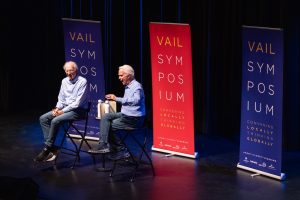
Ambassador Dennis Ross takes the stage at Vail Mountain School to answer the hard questions on Iran, the Middle East and diplomacy.
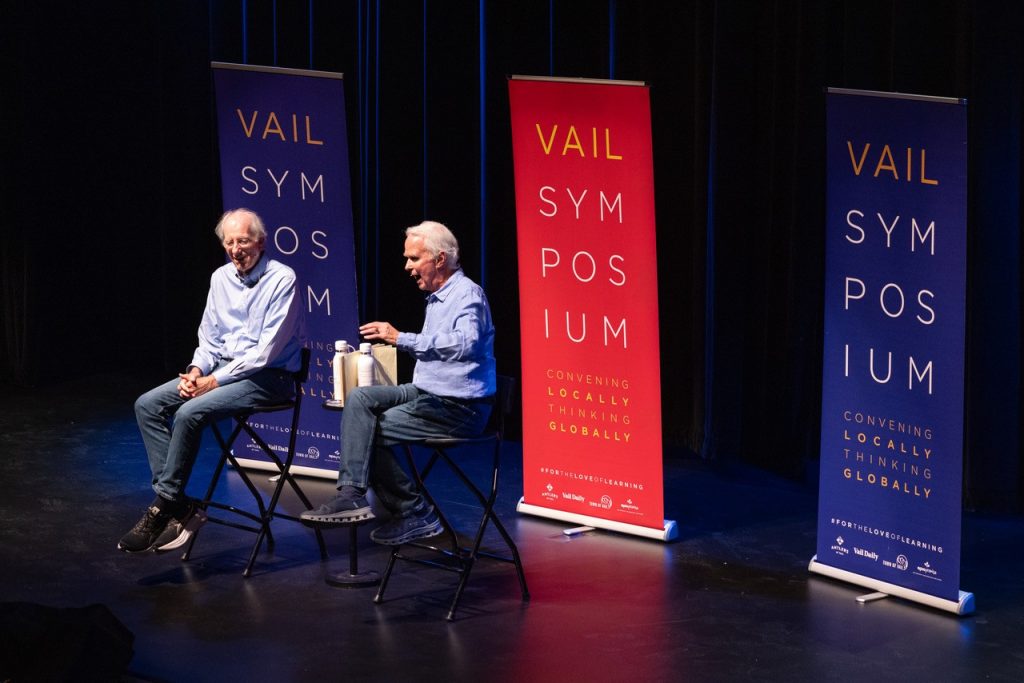
Dennis Ross
As someone who has been to the Middle East almost 700 times, Dennis Ross has seen firsthand how Middle Eastern conflict has shaped into what it is today.
On July 15, at Vail Mountain School, he shared his insights alongside his longtime friend, Eagle County local and Emmy-winning journalist, Greg Dobbs, at the Vail Symposium’s “Iran, the Middle East and the Possibilities of Diplomacy with Ambassador Dennis Ross.”
For more than 12 years, Ross has been a key figure in the U.S.’ involvement in the Middle East Peace Process. He played a role in helping Israel and Palestine reach the 1995 Interim Agreements and in brokering the 1997 Hebron Accord. Ross has also served under four presidential administrations, and is currently the William Davidson Distinguished Fellow at the Washington Institute for Near East Policy and teaches at Georgetown University’s Center for Jewish Civilization.
Now, as U.S. strikes on Iran ramp up while both countries hint at diplomacy, Ross visited Eagle County for a third time since 2012 and helped a packed house make sense of the current status of the complex relationship.
“This was a war of choice,” Ross told Dobbs in front of the audience. He explored where the Trump administration failed, navigated the position of the powers involved, and discussed the what-ifs of war, raising the possibility of what he described as an Iranian Gorbachev.

Support Local Journalism
He also talked about the recent memorandum of understanding between Iran and the U.S., and recent news that suggests a breakdown of the June deal.
“This was a great opportunity to listen to a man who has had immense experience in the Middle East and who was interviewed by Greg Dobbs, who has a lot of experience in the same area, mainly covering Iran but also discussing the challenges in trying to come up with a process to bring peace to the area,” said Eagle County local Merv Laplin who attended the event.
Ross and Dobbs’ in-depth discussion gave viewers a chance to get a better perspective of motives, vulnerabilities and even patience of Iran, the U.S. and other key players like Israel and Palestine. Both in-person and online viewers were also given the opportunity to ask questions to the experienced diplomat.
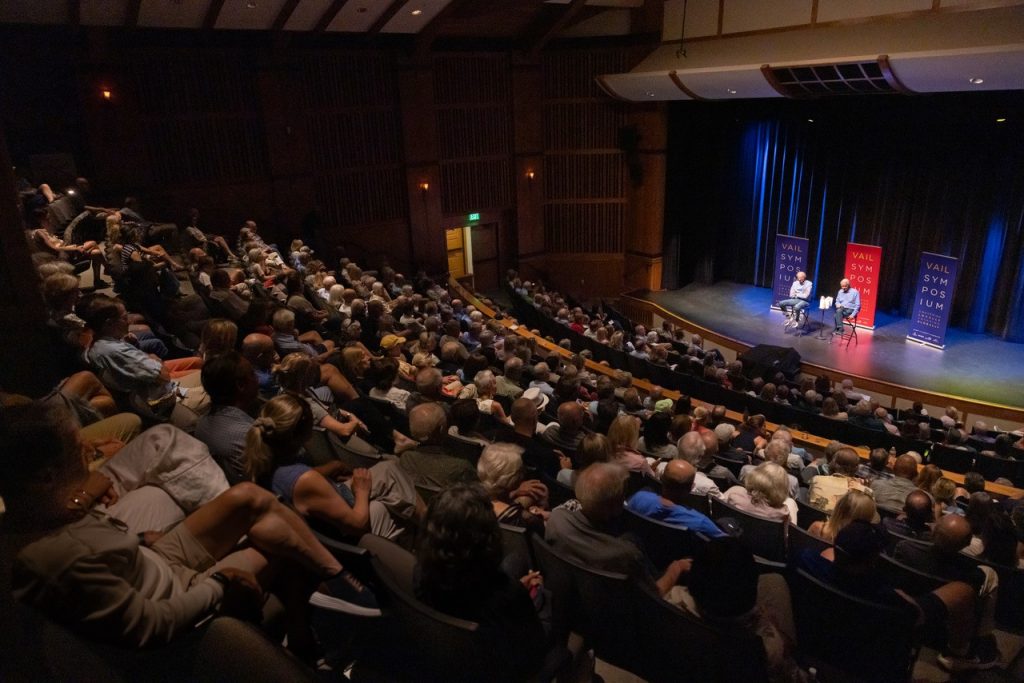
For attendee Chris Fedrizzi, the event reinforced the views he had about the Trump administration and how he believed they entered the war unprepared. “To hear him say it and validate what I thought was good. If anybody’s gonna do that, it’s gonna be someone like him,” he said.
“He confirmed that the experts are not at the table,” said Laine Lapin, another spectator.
Executive Director of Vail Symposium, James Kenly, told the Vail Daily that the symposium tries to demonstrate civil discourse and critical thinking through their events, and by bringing in Ross, they’re giving Eagle County access to someone who has been involved in Middle Eastern politics at the highest level.
“It’s 2026, Iran and the Middle East is the headline around the world, and we have one of the top authorities coming to speak,” he said. “It’s not every day you get to spend time with an ambassador and ask your question and have your question heard.”
And hear them, he did. Following the event, Ross and Dobbs reflected on the questions they received from the community.
“These are people who, even in the shape of their questions, reflect that they follow this closely. It’s not just that they want to understand it, but they actually think about it,” Ross said.
As a local, Dobbs understands what the Eagle County audience concerns may be, but reassures they are not alone.
“From what I could hear, they are no different than an audience would be in New York City, Miami, or San Diego, because all Americans have the same questions because we have the same fears of what’s going on,” Dobbs said.