Colorado lawmakers seek tougher enforcement of people carelessly luring bears with food, trash
A new bill proposal would reduce the burden of proof and increase penalties for repeat offenders

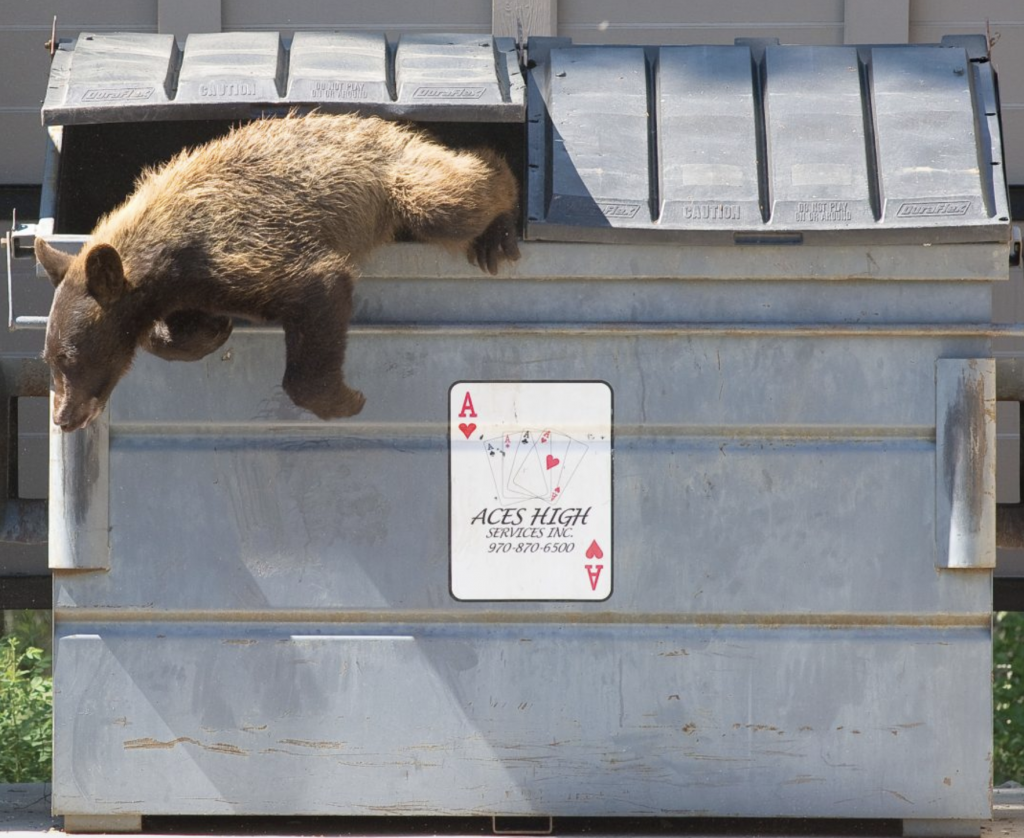
John F. Russell/Steamboat Pilot & Today archive
Reports of conflict between humans and black bears have been climbing across Colorado. With human behavior driving most of these conflicts, Colorado lawmakers are introducing a bill that would make it easier to charge someone who leaves out food or trash that attracts bears.
“Human-bear conflicts continue to rise across the state, driven by population growth, increased tourism and fluctuations in the availability of natural food sources,” said Rep. Meghan Lukens, D-Steamboat Springs. “Many of these conflicts could be avoided if (Colorado Parks and Wildlife) were equipped with stronger tools to deter mismanagement of attractants like food waste and garbage.”
House Bill 1342 would lower the standard of evidence required to charge someone for luring black bears, requiring law enforcement to prove it was done carelessly rather than intentionally. Lukens is sponsoring the bill alongside Rep. Katie Stewart, D- Durango, and Sen. Janice Marcman, D-Loveland.
“The current law requires law enforcement agencies and prosecutors to prove that a person left food or edible waste in the open with the specific intent of luring in a bear,” said Travis Duncan, a spokesperson for Colorado Parks and Wildlife. “In practice, this is a very difficult thing to prove in court, making the current law hard to enforce.”
In addition to changing this standard, it would also allow penalties on the first offense instead of requiring a first-time warning, and would increase the fines for those who have been convicted three or more times.

Support Local Journalism
The idea for the bill originated from a human-bear conflict working group that Colorado Parks and Wildlife set up in 2024. According to Duncan, the proposal was viewed by the group as “a simple yet effective way to reduce human-bear conflicts that are the result of the mismanagement of trash and other human attractants.”
“This bill will equip wildlife officers and other POST-certified peace officers with stronger tools for holding people accountable for negligent actions that result in the luring of bears, specifically as it relates to human attractants like garbage,” Duncan said.
POST, or Peace Officers Standards and Training, is the certification program required for law enforcement officers in Colorado and applies to police officers, municipal court marshals, sheriffs, undersherriffs, Colorado State Patrol officers, town marshals and more.
Lukens said the bill sponsors have been engaged with law enforcement, local governments, environmental groups and agricultural producers and are still taking feedback. According to the secretary of state, no organizations have filed in support or opposition of the bill as of March 31. The Colorado District Attorneys’ Council has filed an “amending” position on the bill, and the Colorado Cattlemen’s Association and the Colorado Wool Growers Association are monitoring it.
The segment of Colorado law that the bill proposes to change does not apply to agricultural activities.
Human behavior drives up conflict with bears

Parks and Wildlife estimates there are 17,000 to 20,000 black bears in Colorado. Conflicts between humans and bears are driven by the availability of natural food sources — berries, fruits, nuts, plants and grasses — as bears will seek human food sources when it’s readily available and these natural foods are limited due to the climate or food failure.
Colorado Parks and Wildlife began tracking human-bear conflicts in 2019. In the years since, the reports have continued to rise, hitting an all-time high in 2025. Trash is consistently the No. 1 cause of conflict between humans and bears, accounting for around 67% of all reports in 2025.
“It’s really up to us to change our behavior and secure our attractions because the bears are just trying to find food, they’re just trying to survive,” said Lara Xaiz, the wildlife coordinator for the city of Aspen. “Even if that is helping them to survive in some way, it’s still very unhealthy for them.”
According to the bill text, in 2024, Parks and Wildlife spent nearly $800,000 on supplies, grants and salaries to address human-bear conflicts, with its staff spending nearly 6,000 hours responding to such problems.
Once bears learn to exploit humans for food, it can become dangerous for both bears and people — and the options for wildlife officers are fairly limited. One option is to relocate the bears, which has limited success because bears will travel long distances to return home. A second is for the bears to be killed.
In 2025, out of the statewide 5,229 bear reports, 78 were killed and 52 relocated. The majority of those were in the southwest wildlife area that includes Durango, where 26 bears were euthanized and 29 relocated. Seventeen bears in the northwest were killed, and six were relocated due to conflict in 2025.
“There’s always going to be another bear coming in to access trash, and as long as it’s there, you can’t really change that behavior in them,” Xaiz said. “Killing one or relocating one just opens the door for another bear to come in and do the same thing. So, to really tackle the problem, it’s humans who need to change their behavior and secure attractants, so bears can’t get into trash, birdseed, dirty grills, even food wrappers and things like that.”
Complementing community, state efforts
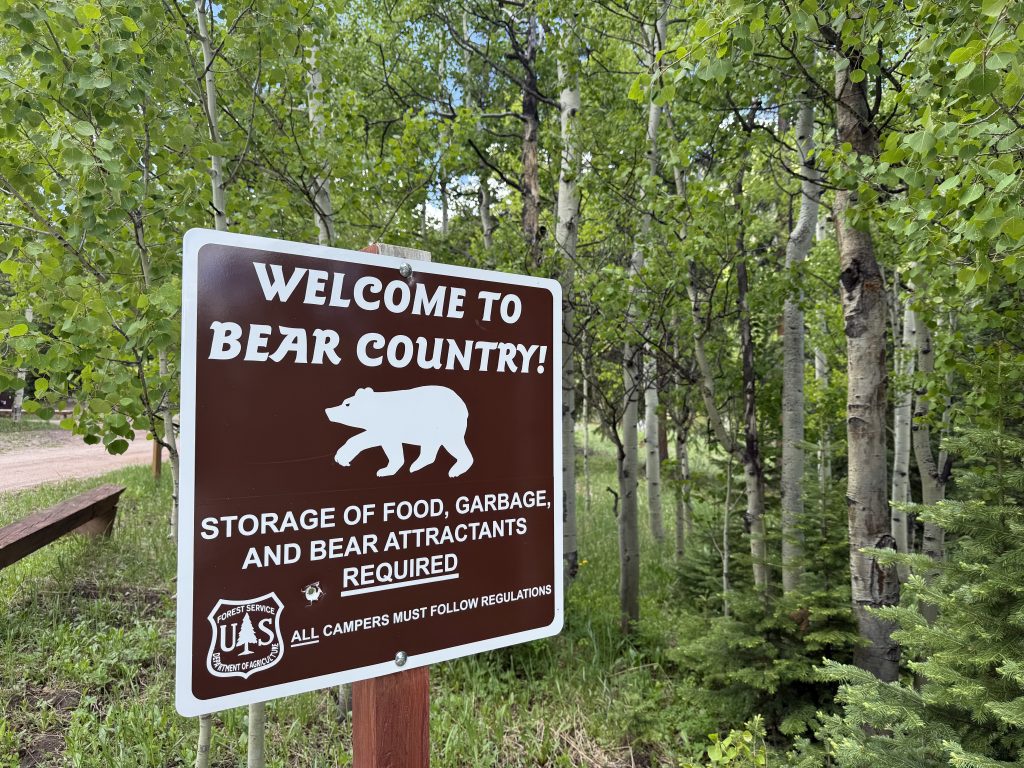
In many Western Slope communities — where bear populations and conflict are the highest — many municipalities have implemented programs and policies to limit access to trash for bears and other wildlife. These span from rules requiring wildlife-resistant containers to restrictions on where and when the bins can be stored or put out for pickup.
According to Duncan, the change proposed in House Bill 2342 “would allow state agencies to help support local government efforts to manage attractants, as state officers cannot enforce local ordinances.”
“This would also allow state and local law enforcement agencies to address issues in areas without local ordinances,” he said. “A person could not be charged with and separately prosecuted for a violation of a local ordinance and the state law. The principle of double jeopardy prevents a person from being prosecuted twice for the same offense.”
While Aspen is among the municipalities with strict requirements for wildlife-resistant trash containers, Xaiz said the bill “comes at a time when not every community has wrapped their head around that this is a people problem, not a bear problem.”
“We’re really fortunate in Aspen that we’ve passed strong ordinances over the years that help us tackle the problem locally within our community, but there are so many outlying areas where either community groups or staff haven’t been able to get the traction to get strong ordinances passed,” she said. “This will be a blanket for the entire state that can make it easier for state wildlife officers to write citations based on people not securing their trash.”
The proposal will also complement other efforts by Parks and Wildlife to reduce human-bear conflicts, Lukens said. This includes its grant program, which awards over $1 million annually to counties, towns and groups working to reduce local attractants. At the recommendation of the working group, Colorado also recently joined BearWise, a national program sponsored by the Association of Fish and Wildlife Agencies. The program offers resources and materials to educate the public about living with black bears.