Colorado Parks and Wildlife kills ‘elusive’ wolf tied to attacks on at least 22 sheep since 2025
Agency identified the animal as the uncollared wolf that was separated from the Copper Creek Pack in 2024

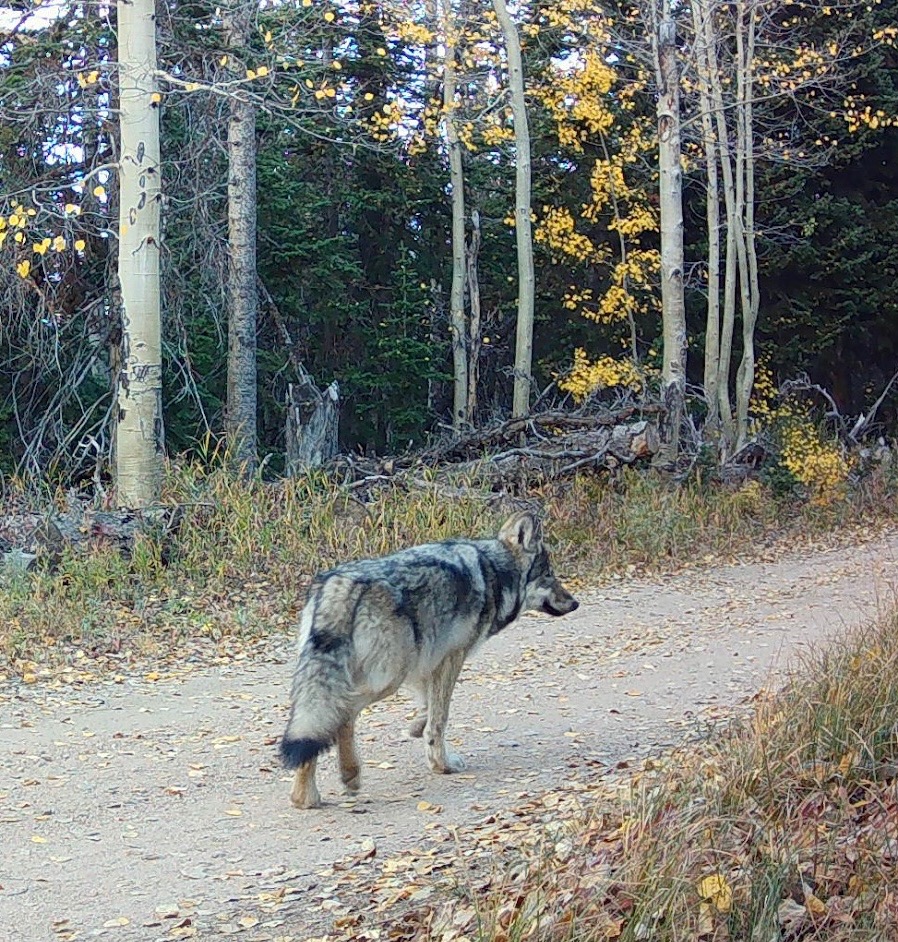
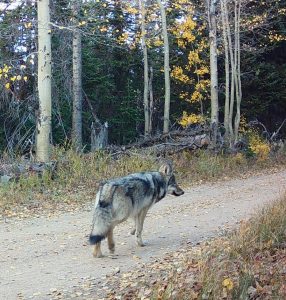
Colorado Parks and Wildlife/Courtesy Photo
Colorado Parks and Wildlife killed an uncollared wolf on Friday, June 12 in Routt County. The wolf — which was born to the Copper Creek Pack in spring 2024, but separated from the pack that fall — has been tied to 10 confirmed depredation events involving 22 sheep in both Rio Blanco and Routt counties since 2025.
Parks and Wildlife has made multiple unsuccessful attempts to kill this wolf after it has repeatedly attacked livestock, including an attempt last August where the wolf was shot.
In a Saturday news release, the state wildlife agency announced that it killed the wolf and obtained evidence from the scene that it’s the same wolf that was attacking and killing sheep in Rio Blanco County starting in 2025.
Parks and Wildlife said the wolf was most recently tied to two confirmed attacks on livestock in Routt County on June 10 and 11, each involving one lamb.
The news release confirmed that both events had “clear and convincing evidence” that a wolf was involved in the attacks and occurred despite “the producer pursuing substantial non-lethal conflict minimization efforts,” including site assessments, deployment of range riders, use of livestock guardian dogs and scare devices, active human presence from sheep herders, and permits to deploy injurious non-lethal hazing techniques.

Support Local Journalism
“The decision to pursue lethal actions is never an easy one, but the circumstances around this wolf’s repeated depredation history made this a difficult but necessary decision,” said Laura Clellan, director of Parks and Wildlife, in a statement. “The producers impacted by these depredations have worked diligently with CPW to identify and deploy all viable and reasonable non-lethal tools and techniques identified through their site assessment and consultation with our field staff.”
Parks and Wildlife consulted with the U.S. Fish and Wildlife Service on the decision to kill the wolf.
Colorado’s wildlife agency is authorized to kill wolves under certain circumstances, including chronic depredation, under its special 10(j) rule from Fish and Wildlife. Under this rule, the agency has 30 days to remove the animal if warranted. In addition to meeting the definition of chronic depredation, the agency will only seek to euthanize a wolf if a variety of nonlethal tools have been used to mitigate conflict, the wolf was not lured or baited and if it is likely attacks will continue unless action is taken.
The uncollared wolf was first tied to four livestock attacks in the summer of 2025, involving five lambs and one ewe, on July 20, July 22, Aug. 2 and Aug. 16.
As the situation met Parks and Wildlife’s definition of chronic depredation — and there were efforts by the affected producer to deploy non-lethal tools — the agency sought to kill the wolf. In the August search, the wolf was shot, but the body was never located.
In the fall, an uncollared wolf was tied to confirmed depredations on Oct. 9, Oct. 12 and Nov. 4 — each involving one sheep. While the agency never publicly announced it was undergoing a lethal removal effort following these attacks, the Coloradoan obtained records from the agency and reported that Parks and Wildlife attempted an operation to kill the responsible wolf in November, but that the effort was suspended by early December.
This is the second wolf that Parks and Wildlife has lethally removed due to conflict with livestock since Colorado’s reintroduction of gray wolves began in December 2023. The agency killed a yearling from the same Copper Creek Pack litter in May 2025 in Pitkin County after the pack was connected to a series of livestock attacks.
The uncollared wolf killed this Friday has been separated from the Copper Creek Pack since September 2024, when the pack’s breeding adults and four other wolf pups were captured and sent to a wildlife sanctuary, but it remained in the wild uncaptured. The pack was rounded up in Grand County after being tied to repeated livestock attacks near their den site. While the patriarch died in captivity from injuries caused by a gunshot wound before its capture, the surviving matriarch and pups were released back into the wild in January 2025.
In addition to the two lethal removals, 13 of the 25 wolves reintroduced in Colorado have died.
Parks and Wildlife’s Saturday news release included a statement from Gov. Jared Polis — the first time the governor has made a statement following a wolf death.
“This elusive wolf had a number of chances but sadly chose to continue to depredate, which necessitated this challenging management decision,” he said. “Colorado remains committed to recovering and maintaining a viable, self-sustaining wolf population in Colorado, while concurrently working to minimize wolf-related conflicts with domestic animals, with non-lethal means as our priority.”
Parks and Wildlife said it will release a final report on the lethal removal operation once it is complete.