Voter turnout surged in Colorado’s primaries, driven by an enthusiastic — and frustrated — Democratic base
Results also show warning signs for Republicans in November, experts say

Robert Tann Follow
Jessica Sachs/Summit Daily News
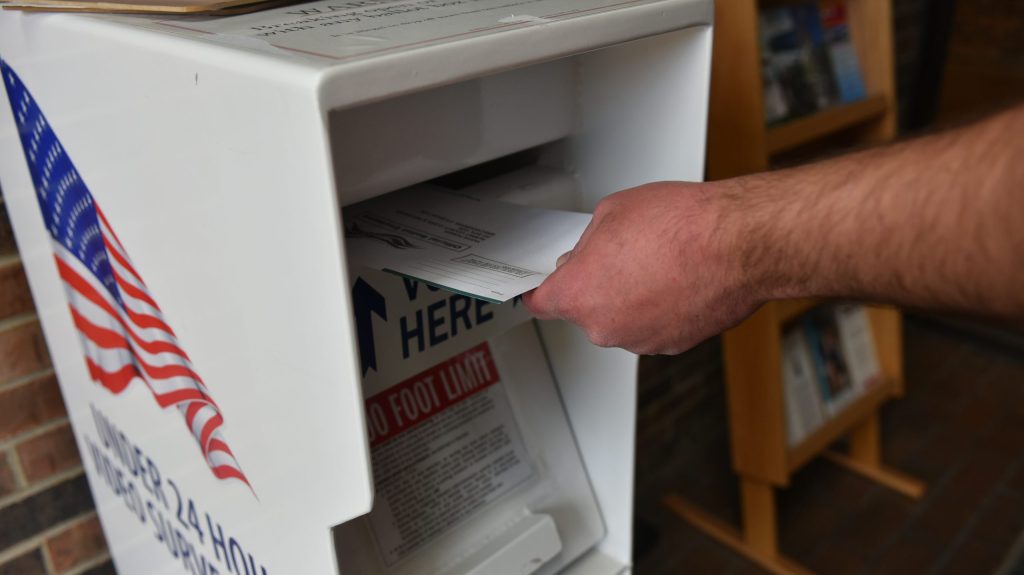
Colorado’s June 30 primaries saw a surge in voter turnout compared to past election cycles, buoyed by competitive races for key offices and a burst of energy for Democratic candidates.
More than 1.4 million ballots were cast in this year’s primaries, representing nearly 36% of the state’s 4 million active registered voters, according to unofficial results from the Colorado Secretary of State’s Office as of July 10.
That’s nearly half a million more votes than were cast in the 2024 June primary — the last presidential election year — and about a quarter of a million more votes than were cast in primaries during the last two midterm cycles in 2022 and 2018.
Matt Crane, executive director of the Colorado County Clerks Association, said it’s not uncommon for turnout in Colorado to be higher for primaries during midterm cycles compared to presidential election years.
That’s because major statewide offices, such as governor, attorney general and secretary of state, are being contested. This year also marked the first since 2018 that those offices didn’t have an incumbent running, which can make for more competitive primaries and election coverage that help juice turnout.

Support Local Journalism
Still, two major factors — turnout in populous counties and Democratic enthusiasm — helped drive this year’s surge compared to past midterm primaries, according to Rob Preuhs, a professor and chair of political science at Metropolitan State University of Denver.
“We saw turnout, particularly in the Front Range and Denver, increase dramatically,” Preuhs said.
Denver County saw a more than 10 percentage point increase in turnout this year compared to primaries in 2022, even as turnout decreased in some Western Slope counties. In Pitkin, Garfield and Moffat counties, turnout was down between 1% and 3% compared to 2022, while in Summit, Eagle, Grand and Routt counties, turnout was up between 3% and 5.5%.
Democratic voters largely drove turnout, with more than 879,000 ballots cast in the Democratic primary compared to just over 522,000 cast in the Republican primary, according to July 9 data from the secretary of state’s office.
“A lot of that can be attributed to this overall enthusiasm driven by a strong thirst for pushback against the Trump administration (and) desire for change within the Democratic Party,” Preuhs said.
That desire was on display in several high-profile races, most notably in Colorado’s 1st Congressional District, where Democratic socialist Melat Kiros defeated 15-term incumbent Diana Degette in Denver by more than 13 percentage points in the Democratic primary.
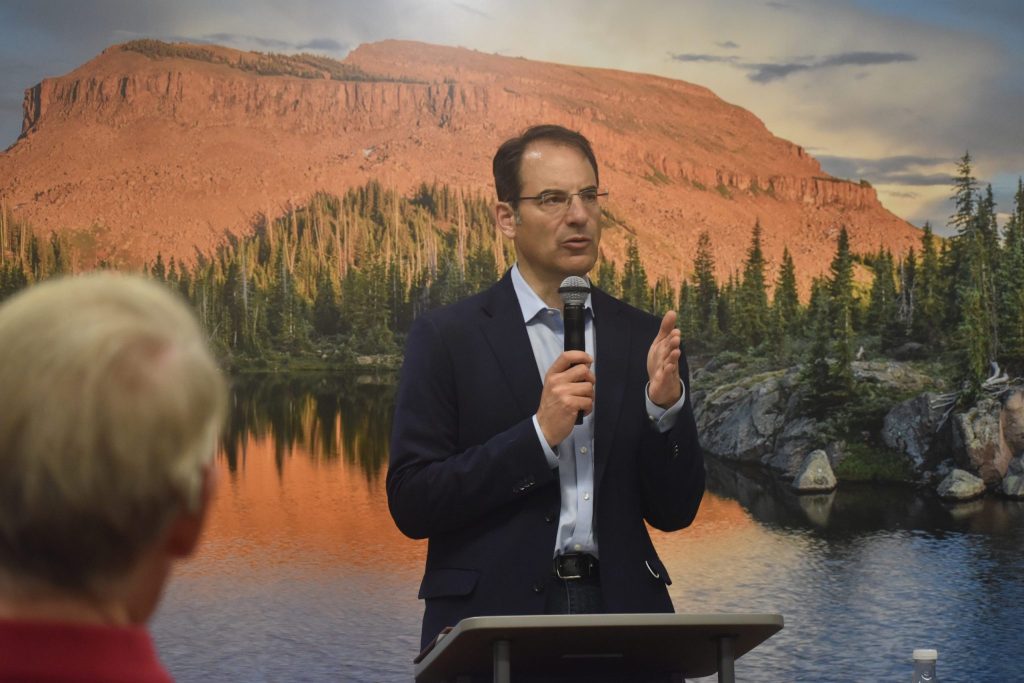
Colorado Attorney General Phil Weiser was also able to channel backlash to the Democratic establishment in his nearly 14-percentage-point victory over U.S. Sen. Michael Bennet for the Democratic nomination for governor. And Julie Gonzales, a progressive state senator from Denver, came within less than six percentage points of unseating U.S. Sen John Hickenlooper, a margin Preuhs called “remarkable, in a lot of ways, against an incumbent.”
“What we really suspect is that the level of discontent with the establishment candidates in the Democratic Party, in particular, drove a lot of voter turnout,” he said.
Democrats gain unaffiliated voters
Democrats were also aided by unaffiliated voters, who make up half of the active registered voters in Colorado, and who have the ability to vote in either party’s primary.
Of the more than 600,000 ballots returned by unaffiliated voters this year, 64% were cast in the Democratic primary, while 23% were cast in the Republican primary. Eleven percent of ballots from unaffiliated voters were still being processed as of July 9.
That represents a major turnaround from the 2022 primaries, in which 53% of unaffiliated voters cast ballots for Republicans, and could spell trouble for Republican candidates in November’s general election.
“The trend certainly seems to be that unaffiliated (voters) were participating by a wide margin more in the Democratic primary than in the Republican primary,” Crane said.
“That’s not altogether unexpected; usually they will go with the national narrative and, in the midterms, it’s usually against the party in the White House,” Crane added. “But I think what we saw this time may have been even more than what we’ve seen in the past, and I’m not sure that that’s a good sign for Republicans in the fall.”
Republicans could feel down-ballot effect of governor’s race
Preuhs said Democrats will also try to capitalize on Republicans’ divisive primary for governor by tying the GOP nominee, Victor Marx, to down-ballot candidates.
Marx won the three-way race after narrowly defeating his stiffest competition, state Sen. Barb Kirkmeyer, by just over 2,500 votes. He has been scrutinized for claims he’s made about his life, including that he was forced by his stepfather to kill a man when he was 7 years old.
Those controversies could impact not just Marx, but Republicans for other offices who will appear on the ballot with him in November.
“The candidates at the top are the ones that get the most money to send out their message,” Preuhs said. “They’re the ones that are the most visible to voters. And those cues of what that statewide office candidate is saying are used and kind of permeate down to the local and state legislative district election.”
Preuhs said the big question will be whether Marx’s candidacy hurts Republicans in key congressional races, including Colorado’s 3rd District, where GOP Rep. Jeff Hurd is running for reelection.
Hurd was elected to the Western Slope district in 2024 by five percentage points, and Democrats came within just over 500 votes of winning the seat in 2022 when it was held by Rep. Lauren Boebert.
“There’s no indicators to expect anything else but a blue wave election in November,” Preuhs said.
The unknown for Colorado Democrats is how far that blue wave reaches.