Is Colorado’s wolf population still experiencing normal levels of mortality?
This week, Colorado Parks and Wildlife announced the 12th death of the 25 wolves it has reintroduced

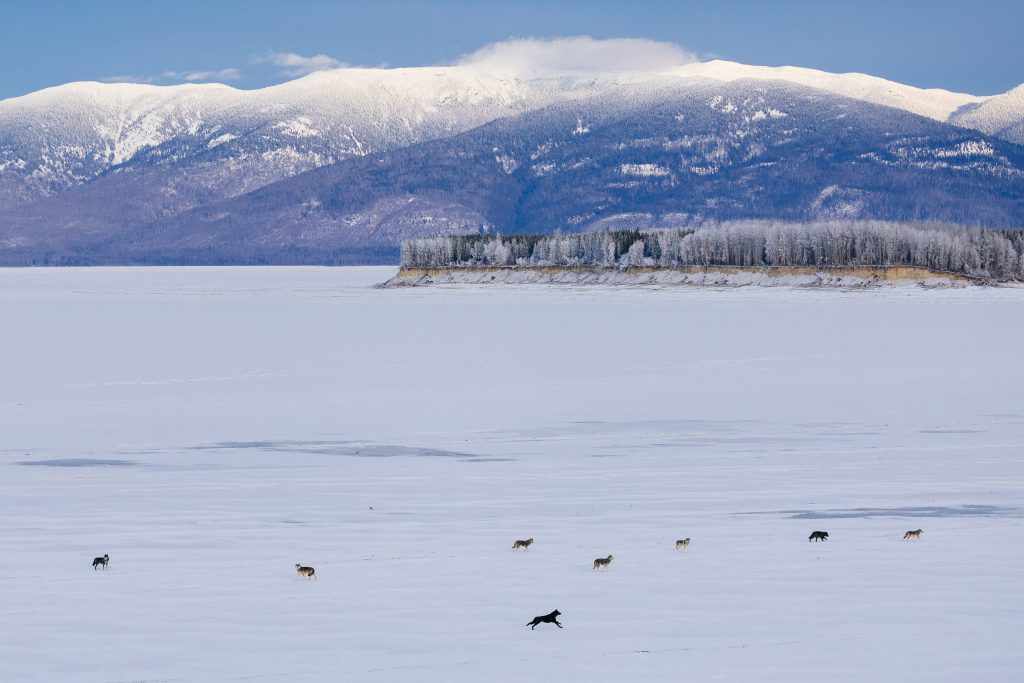
Colorado Parks and Wildlife/Courtesy Photo
Just over two years into Colorado’s wolf reintroduction effort, 12 of the 25 wolves brought from Oregon and British Columbia have died. Colorado Parks and Wildlife maintains that while the level of death was high last year, it’s not surprising given that many of Colorado’s wolves are not in packs.
How have the wolves died?
While a few of the deaths have occurred as a result of natural conflict with other predators — primarily mountain lions, and in one instance, another wolf — the vast majority have been the result of human interference or action.
This includes wolves that were legally hunted in Wyoming, killed in response to repeated attacks on livestock, as well as an illegal poaching incident, a vehicle collision and a legal coyote trap.
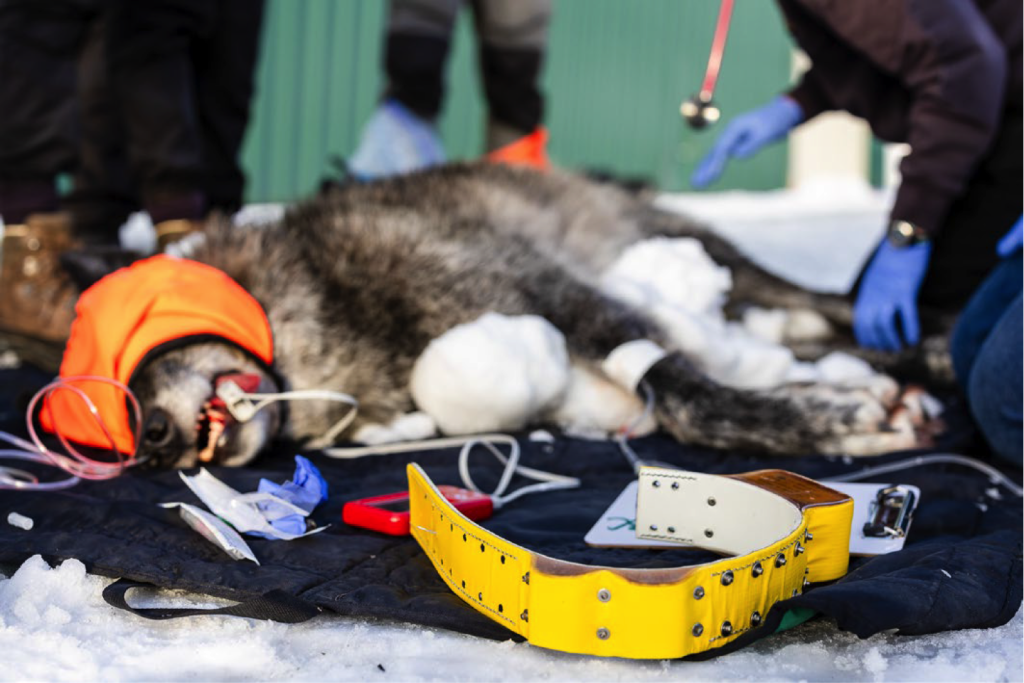
The most recent death on Jan. 28 of the King Mountain pack’s patriarch took place during a Parks and Wildlife capture operation. The wolf, tagged 2305, was among those translocated from Oregon just over two years ago in December 2023. The wildlife agency reported that operations were “routine” to replace low batteries on the GPS collars worn by the pack’s breeding pair.
Luke Perkins, the public information officer for Parks and Wildlife, said that while the typical battery life of the GPS collars varies — and depends on factors like how often a collar uploads GPS points — Parks and Wildlife aims to replace collars on individual wolves every two to three years. Aside from replacing batteries, no other maintenance is required, Perkins reported.

Support Local Journalism
“This was the second year that wolves that were translocated to Colorado had been recaptured to replace collars,” Perkins said.
By the numbers:
- Twelve of the 25 reintroduced wolves in Colorado have died, including seven of the 15 wolves from British Columbia and five of the 10 from Oregon
- One wolf born in Colorado since reintroduction began has died
- One out of the 10 wolves from Oregon died in the six months after their December 2023 release, marking a 90% survival rate
- Five out of the 15 wolves from British Columbia died in the six months after their January 2025 release, marking a 67% survival rate
Cause of death:
- The cause of two of the deaths (Oct. 30 and Jan. 16) remains under investigation, pending the final necropsy results from the U.S. Fish and Wildlife Service
- Parks and Wildlife has killed one wolf, a yearling born to the Copper Creek Pack in 2024, following repeated livestock attacks
- Three of the deaths occurred in Wyoming
- Three of the deaths in Colorado were the result of conflict with other predators
- Three of the deaths in Colorado (excluding the Copper Creek yearling) were the result of human-related activity, including a gunshot wound, a vehicle collision and a foothold trap
*As of Friday, Feb. 6.
Perkins reported that the agency has not conducted collaring operations this winter on any of the three other established packs in Colorado, but following the death has paused “all other wolf capture operations for this winter season.”
During the operation, the male was reportedly unresponsive when it was delivered to Parks and Wildlife staff after its capture and did not respond to resuscitation attempts.
“We are currently reviewing the circumstances around 2305’s mortality and determining if there is any need for adjustments and improvements in our process,” Perkins said.
The wildlife agency was able to successfully capture and replace the GPS collar on the pack’s breeding female, as well as collar one of the pack’s four pups born last spring.
What level of mortality was expected for Colorado’s wolf restoration?
Colorado Parks and Wildlife’s guiding management plan to establish a self-sustaining population of gray wolves — as mandated by voters in 2020 — gives some insights into what level of mortality was expected. To be successful, restoration should see “low mortality rates over the initial 2-3 years post-release,” it states.
Citing research from general population studies as well as specific studies from Canada, Alaska and Minnesota,he plan indicates that annual mortality rates from 22% to over 50% “may suppress wolf population growth.”
The plan’s technical working group reported that “wolf populations can sustain 25-30% annual mortality while maintaining a stable or increasing population.”
In 2024 and 2025, Colorado saw mortality rates of 25% and 27% — calculated using the number of wolves at the beginning of the year and the number of wolves that died during the year. The calculation does not include pups born during the calendar year.
When asked what level of mortality would bring concerns about the overall success of the wolf program, Perkins said it is based on a lot of factors, but primarily population growth.
“If the population demonstrates an unacceptable flat or negative growth rate, active augmentation — supplemental translocations — and evaluation of protocol and regulations may be needed,” Perkins said.
The only survival threshold that Parks and Wildlife includes in the plan is for the six months following a release. The plan recommends that survival of less than 70% in the six months after release will trigger a protocol review of the translocation process. The Oregon wolves had a 90% survival rate in the first six months. The British Columbia wolves had a 67% survival rate, for which the wildlife agency initiated a review.
Perkins said that the agency’s review of “the capture, transport and release protocols used for wolf reintroduction” determined “there is no need to modify any of these protocols.”
Throughout last year — up to the sixth death in 2025 — Parks and Wildlife reported that wolf survival and mortality were within a normal threshold in Colorado for the established population. In recent statements surrounding the population’s current status, officials have referred to the mortality in 2025 as “high.”
“Since the translocated wolves were essentially ‘dispersers,’ we can see that the amount of mortality we observed in Colorado in 2024 and 2025 is not particularly surprising,” Perkins said, when asked whether the mortality was still considered normal.
While dispersing wolves are typically young wolves that leave their birth pack in an attempt to find a mate, this is a role that all the translocated wolves automatically take on when relocated to Colorado.
Why numbers matter in Colorado’s current wolf population as releases pause
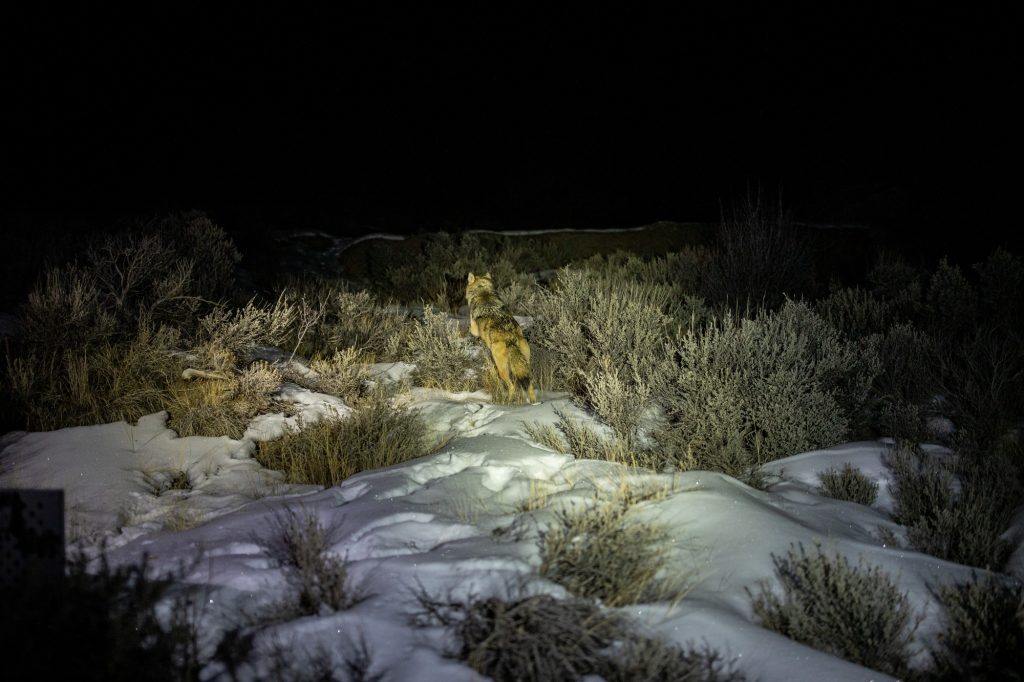
When creating a self-sustaining population of gray wolves in Colorado, numbers matter.
“The number of wolves in the state is important because we need to have enough individuals on the landscape so that they can locate one another, pair and breed in order to establish a self-sustaining population with appropriate genetic diversity,” Perkins said.
In packs, gray wolves experience a greater sense of security. Only two of Colorado’s reintroduced wolves that have died were members of a pack — this included the original Copper Creek patriarch, that died from a gunshot wound, and the recent death of the King Mountain patriarch in Parks and Wildlife custody.
“Across western North America, average wolf life expectancy is much, much lower than many anticipate,” Perkins said. “Though variable in the Rocky Mountains outside of highly protected areas like large national parks, wolves often only live to be approximately 3 years on average. When wolves do not live in a pack (i.e., while dispersing), some research shows that they are at an even higher risk of death.”
At a point when Colorado’s wolf population shifts from these lone, dispersing wolves to packs, “we may see a shift in patterns of mortality,” Perkins said.
Right now, however, Colorado has what Perkins referred to as a “fairly small” population, so “each mortality event has a seemingly large effect on overall survival.”
“CPW recommends caution while interpreting any survival and mortality metrics in the light of this small population,” he added.
Gray wolves are currently federally listed under the Endangered Species Act in Colorado. As such, when a wolf dies in the state, the necropsy and investigation into the death are performed by the U.S. Fish and Wildlife Service. Initial results from necropies have taken anywhere from 1 month to 4 months to be released by the federal agency.
April 18, 2024: The U.S. Fish and Wildlife Service confirmed the death of a male wolf in Larimer County. Initial necropsy results from the federal agency, released in May, indicated that a mountain lion attack was likely the cause of death.
Sept. 3, 2024: Four days after being captured and placed in captivity, the Copper Creek pack’s adult male wolf died from injuries sustained in the wild. The wolf was reported to be underweight, have wounds on its right hind leg as well as an infection related to the injury.
In January, Fish and Wildlife released the initial necropsy results, reporting that a gunshot wound was responsible for the wolf’s “poor condition” and death. As it is illegal to kill or harm a wolf in Colorado, the death is still under investigation by the federal agency.
Sept. 9, 2024: A male wolf died in Grand County. In November, the Fish and Wildlife Service reported that the initial necropsy results suggest the death was likely due to a fight with another wolf. The report also showed that the wolf had an old, healed gunshot wound.
March 16, 2025: A male wolf was killed by the U.S. Wildlife Services in north-central Wyoming. The wolf was killed by the federal agency after it was tied to the death of five sheep.
April 9, 2025: A male wolf was killed in Wyoming, where the species is delisted from the federal Endangered Species Act and state law allows anyone to kill a wolf in the majority of Wyoming without a license.
April 20, 2025: A female gray wolf died in Rocky Mountain National Park from a mountain lion attack.
May 15, 2025: A female gray wolf died in northwest Colorado. due to “an apparent secondary trauma from a lawful foothold trap used for coyote control,” according to an investigation.
May 29, 2025: Parks and Wildlife killed one of the male yearlings in the Copper Creek Pack in Pitkin County. The lethal action was taken after the pack was connected to multiple livestock attacks in the area over Memorial Day weekend, meeting the agency’s definition for “chronic depredation.”
May 31, 2025: A male gray wolf died in northwest Colorado likely from a collision with a car
July 24, 2025: A female gray wolf died after traveling to Wyoming, the third to die in the neighboring state.
Aug. 16, 2025: A male uncollared wolf that was chronically depredating in Rio Blanco County was shot, but officials could not confirm if the animal died.
Oct. 30, 2025: A female wolf that was brought from British Columbia died in southwest Colorado. The cause of death is under investigation.
Jan. 16, 2026: A female wolf that was brought from British Columbia died in Northwest Colorado. The cause of death is under investigation.
Jan. 28, 2026: A male wolf that was brought from Oregon in 2023 and the patriarch of the King Mountain Pack died in Routt County during a collaring operation.
Of the 13 surviving reintroduced wolves, seven are part of a breeding pair — including the surviving matriarch of the King Mountain Pack and breeding adults from the Copper Creek, One Ear, and Three Creeks packs. Nine are female and four are male. The four surviving wolves born to the Copper Creek pack in 2024 — three males and one female — have reportedly dispersed from their pack. This could mean there are at least 10 dispersing wolves in Colorado.
While Parks and Wildlife has not reported a minimum count for all four packs that had pups last year, it has reported at least four in the King Mountain pack and at least six in the One Ear pack.
February marks the start of the breeding season for gray wolves. As of Feb. 5, Parks and Wildlife “has not confirmed any additional breeding pairs,” Perkins reported.
“Every wolf is important to the restoration effort,” Perkins said.
This importance has been amplified by Parks and Wildlife’s announcement in January that it would not release any more wolves this winter, after its plans to secure additional wolves from British Columbia were impeded by a change in federal direction about where Colorado can source wolves.
No matter the births and deaths that come this year, Parks and Wildlife will continue to pursue the wolf plan’s goal of releasing 30 to 50 wolves in the first three to five years of the restoration, Perkins said.
“We continue to explore options for translocations in winter 2026-2027 and have every intention of fulfilling the translocation goals laid out in our plan,” he said. “Once we’ve achieved that goal, we will be able to evaluate if additional resources, which could include additional translocations, are needed to ensure that we have a solid population to manage going forward.”