Community completes 2026-2030 Eagle County Aging Well Roadmap
While Eagle County shepherds project, it is a community-wide effort, county staff says


Eagle County/Courtesy photo
Aging in Eagle County has historically not been easy, complicated by long drives to doctors’ offices, spaced out socialization opportunities and limited housing options. But a collective of community organizations and community members is working to make aging in place a little bit easier.
To that end, the group recently completed the Eagle County 2026-2030 Aging Well Roadmap, an analysis of the challenges facing the county’s older adults and a concrete plan to address them.
The number of older adults in Eagle County has increased over time, both overall and proportionately. In 2010, just 5.8% of Eagle County’s population were adults ages 65 and older. As of 2025, this group makes up 12% of Eagle County’s population. By 2035, that portion is expected to increase to 15%.
The Eagle County Board of Commissioners received a presentation of the finalized roadmap during its Feb. 10 meeting.
What challenges do older adults face?
Lee Rimel, an 85-year-old Eagle County resident since 1984, said he has seen friends move away as they get older due to an inability to access the limited resources available to older adults.

Support Local Journalism
Castle Peak Senior Life and Rehabilitation, Eagle County’s main senior center, which is supported by dollars from the county government, is often full to capacity. “Most people I talk with say they (Castle Peak) are failing us,” Rimel said. “To even get an appointment to go and have a tour of the facility is almost impossible.”
Rimel emphasized the need for housing built for the needs and price range of the county’s older adults.
“The focus is affordable housing, but you keep thinking working population,” Rimel said. “We worked. We gave our life to create this valley. … If we’re going to keep my generation here, there is going to have to be, somehow, a project that accommodates us.”
Rimel suggested the county’s team turn some of its efforts to providing housing specifically for older adults.
“Every single one of my generation would move in there in that location if we had a place to park our car and an elevator,” Rimel said of the new Colorado Mountain College Vail Valley at Edwards community housing units.
While Rimel focused on housing, the Aging Well Roadmap identified three additional priority areas in which Eagle County’s older adults need support: health and wellbeing, transportation and social connection.
History of the plan
Eagle County has been tackling challenges related to older adults since 2013, according to Carly Rietmann, the county’s healthy aging manager. “We are doing this work every day. We are on the ground, helping people try to live their best lives here as they age, and hopefully this plan will make that even better for our folks here,” she said.
The 2026-30 roadmap is the third of its kind.
“We have really come so far in the last 10 to 15 years to being a place where we have people that are actually staying here,” Rietmann said.
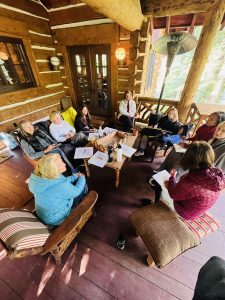
The latest plan, which has been in the works since spring 2025, came to fruition following 26 stakeholder interviews, three focus groups, two community conversations and a survey in Spanish that received 91 responses.
“This plan is everyone’s plan,” said Rachel Cohen, CEO of the project’s consultant firm, Aging Dynamics.
County staff have taken the lead on ensuring the plan operates as planned, despite the overall collaborative approach. “While it is a community-led plan, we are stepping in to make sure it stays on track, there is organization, there is coordination, there is communication happening amongst our partners,” Rietmann said.

The plan’s priorities
The plan aims to address its four priorities — health and wellbeing, housing, transportation and social connection — through specific, actionable steps in the short, mid- and long-term.
For health and wellbeing, the plan’s creators heard a lot from the community about access gaps, including long wait times to see specialists and the high cost of accessing care, both financially and in time and effort. A lack of bilingual and bicultural providers was also a problem.
While hiring more providers, particularly specialists, may be unrealistic, the plan includes a focus on strengthening and expanding care whenever possible. This includes collaborations between Eagle County Public Health, Eagle County Paramedic Services and Vail Health for things like mobile health care, expanded in-home support and larger support networks for caregivers of older adults.
“We can always do more, and we can always do better,” Cohen said.
For housing, the plan confronts challenges like affordability, suitability of existing homes that older adults own and inventory shortages if they attempt to move.
“We have to get creative,” Cohen said. “It’s one thing to say, let’s just build a bunch more housing … That’s not always feasible.”
The plan includes a pilot program for home sharing, in which an older adult who owns a home rents a room to a younger person who needs a place to live, providing rent and social stimulus to the older adult and building a stronger community. The plan also includes suggestions for policy shifts, such as updating the workforce housing policies to include the older adult population that may be retired.
On the transportation front, the plan suggests developing the resources and capacity to offer wheelchair accessible transportation to important locations and events like medical appointments. This includes working with existing public transit operations, like Core Transit, to build first- and last-mile transportation that gets older adults from their homes to bus stops, along with expanding volunteer driver programs and increasing the availability of Eagle and Minturn Healthy Aging Center shuttle services.
There are many nonprofits, along with the county, that provide opportunities for social connection for older adults.
“We have a very strong foundation,” Cohen said.
But gaining access to the programming can be difficult. The times of the activities are not always convenient for older adults who are still working.
The plan suggests expanding the county’s healthy aging meal programs from two days to three days per week across all three sites, allowing people the opportunity to connect with each other and learn more about other programming. The plan also includes a structure to build programming for older adults in Spanish, rather than simply translating English programming.
With the plan completed, the next step is to work through the implementation stage. With guidance from county staff, this includes working on each short-term step in the plan, along with creating a steering committee to evaluate the plan annually, along with smaller committees to focus on each smaller action step.
The plan relies on the participation of the community to come to full fruition.
“It’s not just led by government folks,” said Commissioner Matt Scherr. “It’s people that are part of our community.”
“I challenge the greater community to pay attention to this, to read this,” said Commissioner Tom Boyd. “If you are a citizen of Eagle County, this is of interest to you. … Some of these ideas in here are very large and require funding, and we have to start thinking as a community what we’re willing to pay for.”
The 2026-2030 Eagle County Aging Well Roadmap can be found on the Eagle County website under the Public Health and Environment header.