Despite low snow, global turmoil, foreign visits holding steady in Vail
Hotel occupancy held steady for holidays but that is changing

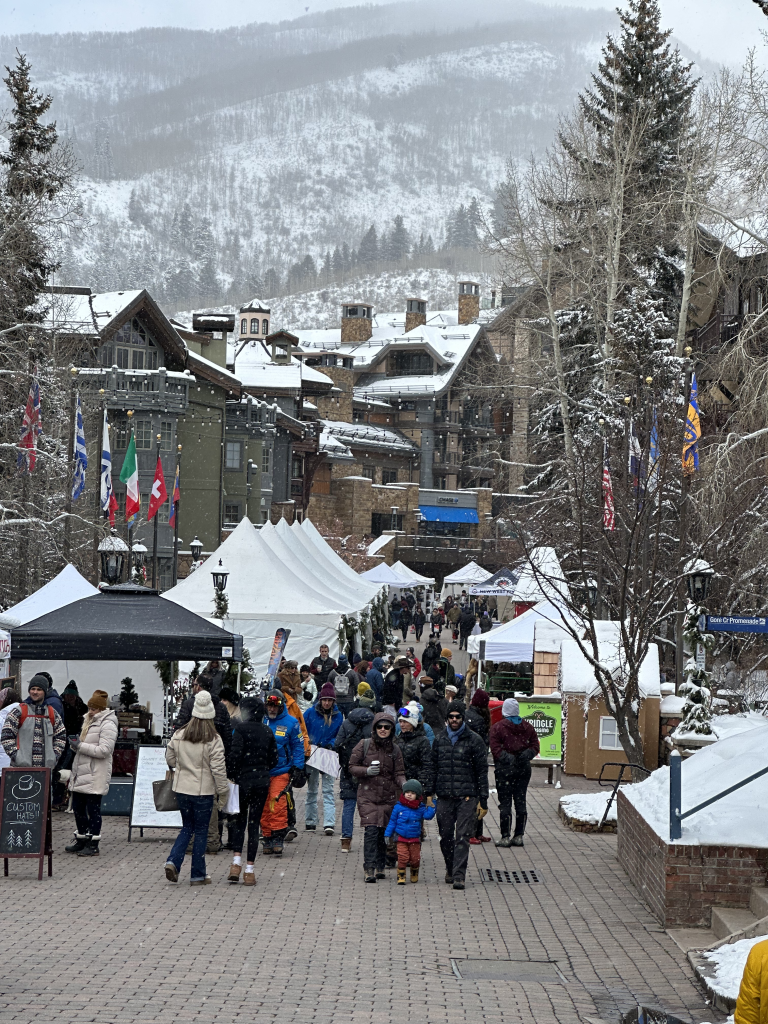
Sean Naylor/Vail Daily archive
While Vail Resorts last week reported a 20% decline in visits to its North American ski resorts during a bone-dry start to the season and the critical holiday period, its namesake ski area in Eagle County may not have seen quite so precipitous a drop, according to some key indicators.
Inntopia’s DestiMetrics analysis shows Vail’s hotel occupancy was up slightly in December (just under 1%) compared to the same month in 2024, despite one of the warmest, driest Decembers on record. And preliminary data from the Eagle County Regional Airport shows December traffic was 20% higher than the previous year, with several new flights doing well.
“The airport continues to be a success story. The folks at the airport indicated that there was a lot of international guests,” Vail Valley Partnership President and CEO Chris Romer said. “I was in town a couple of days over the holidays … and I swear it was 80% Spanish language. That seems to be a shared perception. I know that’s not a great metric or a number, but the international travel from Mexico sure seems as strong as it’s ever been.”
Latin America makes up the majority of Vail’s 10% international clientele, Romer said, and thus far, those guests don’t seem to be shying away due to U.S. threats against Mexico, military attacks on Venezuela, aggressive immigration policies or widespread imposition of tariffs.
“That is not affecting us thus far,” Romer said. “Our brand strength and the perception of Vail as a safe and welcoming community to our Mexican and South American guests is a significant competitive advantage.”

Support Local Journalism
Citing Colorado Department of Transportation statistics showing a decline in traffic through the Eisenhower Tunnel and property management companies indicating a decline in second home usage, Romer said Vail might be getting hit harder by a decline in in-state visitors.
“Colorado’s our number one market all 12 months of the year. And we don’t always appreciate the Front Range visitor and the Colorado in-state visitor, but they move us from a good year to a great year. I’m not going to paint a super rosy picture in that we are snow farmers at the end of the day, and this high-pressure system does us zero favors.”
So far January hotel occupancy in Vail is down 4% year over year, likely due to historically one of the worst snowpacks in the resort’s history, but some guests are moving their reservations to later in the season in hopes the snow will eventually come.
February reservations are up 4% year over year, March is up 9%, and April is up 4%, according to a VVP flash poll of lodges. In an interview last fall, Romer said visitation from Canada and Europe — a much smaller slice of Vail’ s clientele — appeared to be dropping off a cliff.
Vail Mayor Barry Davis, when asked how the town and the ski area should respond to global and domestic turmoil that’s impacting travel, replied: “My marketing brain just jumped into hyper-speed when I heard that (list of issues). That sounds like a great opportunity. Like, ‘Need a break from all of that? Our mayor’s probably missing a meeting to go snowboarding.’ We have a different set of perspectives (in Vail). Our perspective here is still hard work and focusing on what we are.”
What we are is a global and domestic tourism and outdoor recreation destination that has been welcoming the world since the 1960s. The last four Vail mayors, during the last tumultuous decade of immigration debate, have all praised the resort’s connections to Mexico and the rest of Latin America, from Davis to Dave Chapin to Kim Langmaid to Travis Coggin.
“The rest of the country could learn from Vail and Beaver Creek and Eagle County … that being a welcoming, safe community where people can come and be treated with authentic respect, be welcomed to spend their time and money, that that’s something that we’ve lost a little bit of, that sense of welcoming as a country,” Romer added.
Former Vail Mayor Rob Ford, in an interview last fall, said he thinks Mexican guests, visitors and residents have been carrying Vail economically and that national policies could change that.
“The only thing that I think has been saving our villages over the last few years has been the Mexicans. They are very wealthy Mexicans who love Vail, and they’re invested there. They own the majority of the real estate in Vail, and they love coming up here,” Ford said.
“Well, guess what? We’re sliding into a different kind of an economy. It doesn’t look to be one that’s all that favorable to a resort area,” Ford said. “And the Mexicans are getting hassled with all of this immigration stuff beyond any sort of thing you could possibly think would happen.”
Broomfield-based Vail Resorts owns and operates 42 ski resorts around the world, including in Canada, Australia and Europe, providing international ski travelers plenty of options, according to Vail Resorts’ Senior Director of Communications John Plack.
“Most guests who visit our destination resorts in the U.S. are domestic, and our international guest base from Australia, Canada, Mexico and the UK have the option to visit our international resorts, including Whistler Blackcomb — a key benefit of our diverse portfolio of resorts,” Plack wrote in an email statement just as ski season was starting to ramp up.
At the time, a hot topic was labor shortages some in the ski industry were anticipating due to slowdowns in J-1 visa processing due to consulate staffing shortages and stepped-up vetting for social media screenings and other reasons related to increased immigration enforcement.
“Employees with a visa make up a very small percentage of our employee base — just about 5% total — so we aren’t anticipating any notable impact to our staffing,” Plack said. “That being said, we are strong advocates of visa programs like J-1, given the cultural exchange they support.”
With the lack of snow limiting the availability of skiable terrain to 11% at its resorts in December, and the notable decline in visitation companywide, staffing has no doubt been a non-issue. The only thing that will turn around the trajectory of the season, experts agree, is a shift in the jet stream, a breakdown of the high pressure, and a few really good snow storms.