Where the locals go | Part 3: From housing to après, what’s happening to Vail’s Euro vibe?

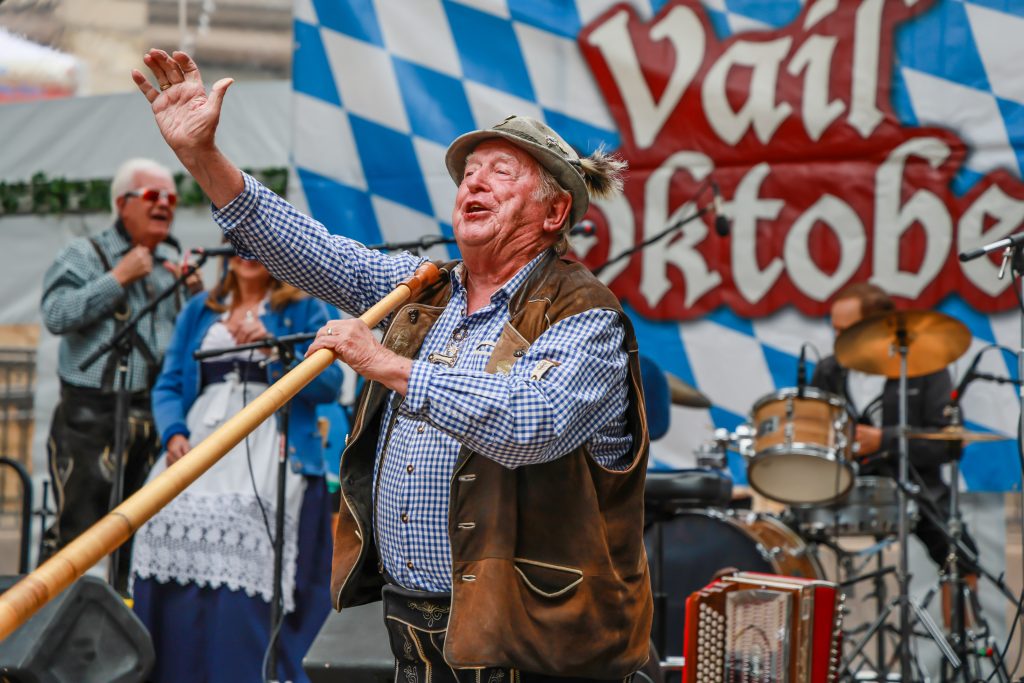
Chris Dillmann/Vail Daily
Note to readers: This is the third installment in an ongoing series on the vitality of Vail (for the first and second installments, click here and here). As iconic buildings erected in a hurry in the early ’60s boom days require renovation, developers are looking to high-end retail to pay the way, sometimes forcing out iconic local businesses that can’t afford the rent. The town of Vail is looking for ways to keep Vail’s fun, funky stores, restaurants, bars and clubs in town as it adds hundreds of new residents with its massive investment in local housing.
As Vail searches for its “vibrancy DNA” amid a workforce and local housing boom and redevelopment of many of its iconic commercial spaces, it’s worth examining the ski town’s roots in the 1960s as a European-style resort destination high in the Colorado Rockies.
Yes, Vail founder Pete Seibert was a U.S. Army 10th Mountain Division veteran who was badly wounded battling the Nazis in the mountains of northern Italy during World War II. But perhaps more formatively for Seibert in his visioning of Vail and his quest to fund that dream was a stint in Europe in the 1950s, ski racing and studying hospitality in the Swiss Alps.
But while Vail’s founders succeeded spectacularly in architecturally emulating the great European resorts as the town rose rapidly from a sheep pasture ahead of opening day of skiing on Dec. 15, 1962, there was one key area where Vail did not follow the Euro model.

“If there’s a criticism that I have of Vail, from the beginning, we didn’t think to accommodate the people that we needed to run the resort,” said former Vail Mayor Ludwig Kurz, speaking recently to the Vail Daily as part of an ongoing Vail Public Library oral history project. “In retrospect, it should have been mandated that anybody that starts a business or builds a lodge provides for a certain number of affordable housing (units) in close proximity to where you are so you don’t end up with traffic issues, transportation issues.”

Support Local Journalism
That requirement is now set in the stone of town code to the tune of at least 50% of a major new development’s employees being housed on site, while the other 50% must be housed within the town of Vail. But that was not a requirement from the get-go.
Kurz, born in Italy, raised in Austria and a ski instructor immigrant to Australia’s Perisher when he was 19, met Swiss Olympic ski-racing gold medalist Roger Staub and was told to check out a fledgling ski area in Colorado where Staub (of Roger’s Run fame at Vail) would become ski-school director in the 60s. Thirty years later, Kurz would serve as Vail mayor from 1999 to 2004.
His greatest accomplishment during his tenure? Pushing back against stiff resistance from high-end homeowners who opposed the 142 units of affordable rental housing at the original Middle Creek project in 2003, when the community development director at the time, Russ Forrest, presciently said, “Any large project in the town of Vail is a very difficult process.”
Now town manager, Forrest is harkening back to Vail’s European roots as the council struggles with maintaining its Euro-centric vibe while simultaneously bringing upwards of a thousand residents back into Vail to occupy 642 units of new, taxpayer-funded housing units between Southface, the Residences at Main Vail and Timber Ridge Village, at a price tag of $254 million.
Those original 142 units of Middle Creek housing cost $16.6 million just 23 years ago.
“The first major employee housing that we built, Middle Creek, is an example of where we worked well with Vail Resorts and with the community,” Kurz said. “That project had a tremendous amount of opposition from some very prominent, specifically Spraddle Creek, homeowners, at the time. We had more letters to the editor about that project than anything else, and we were close to abandoning that project because of the pressure that we got.”
One of those opponents, Kurz recalls, was the late Austrian ski-racing great Pepi Gramshammer, renowned in Vail for his namesake hotel, bar and ski shop he and his wife Sheika opened in Vail’s formative years.
“Pepi wasn’t a political animal, but he followed the thinking of some of the people that were opposing (Middle Creek),” Kurz said, adding that years later Pepi relented. “He said that I was right, and he apologized for opposing that project. To me, it was phenomenal, because, as a business owner with a lot of staff, you would think that there was a certain level of empathy for employee housing. But, you know, people have different priorities.”
At European ski resorts, Kurz added, it’s far more common for hotels, restaurants and stores to house and feed their employees closer to town, where there is generally less private homeownership.
For Johannes Faessler, whose family hails from Germany originally and runs Vail’s iconic Sonnenalp Hotel, fostering a European culture of hospitality and a truly alpine ski-town vibe starts with workers and providing them with a decent place to live. The Sonnenalp offers numerous housing options.
“The ’employee perspective’ is the most important part of our hospitality vision,” Faessler wrote in an email when asked about the Sonnenalp’s partnership in the new Prima Residences. “It is the foundation on which everything else is built. It includes housing, quality of life, opportunity for growth and other critical elements that are essential for making working for Sonnenalp and living in Vail a desirable career choice, rather than just another seasonal job. And yes, I do believe that as community we need to find a way to do this well. We cannot build a vibrant and welcoming future for our town and valley without it.”
More than bringing warm bodies back into town and providing affordable housing options for full-time, longtime workers who will become critical voting members of the community going forward, Forrest now says the European resort model also illuminates a path toward Vail’s future vibrancy for guests.
“This is probably an oversimplification, but I think of skiing in Europe where you have each sort of bar, restaurant with its own thing going on, and they’re all just going off,” Forrest said. And it’s almost more part of why you’re there (even though) the skiing may not be all that great …”
That’s a familiar refrain for Vail this ski season as it suffers through historically warm, dry conditions. For Kurz, he obviously believes in bringing European ski vibes and the legendary après-ski aesthetic of the Alps to the Colorado Rockies – something he’s done his whole life and is embodied in the soon-to-turn-25 ski-town partnership with Lech-Zürs, Austria.
But Kurz isn’t 100% sure what the key is to maintaining Vail’s vibrancy going forward. And he’s a little worried, despite championing one of Vail’s first big housing projects, that the town may be on the verge of overdoing it.
“I wish I could give you the blueprint, but I can’t,” Kurz said. “We might be going a little bit overboard with those numbers, and I have a concern that if it doesn’t work the way that is envisioned, that some of the properties that are being built will not be used the way that is anticipated. For instance, if you can’t hire, you can’t rent out the spaces that we have, you need to do something with them. And what would that look like?
“So, we might be moving a little fast at the moment, I think, but I must also say that I like the idea that the last couple of councils have at least looked at things and are taking a couple chances rather than sitting back and not doing anything.”