Have streamflows in Eagle County already peaked for 2026?
Water managers say March 26-27 peak was a false summit

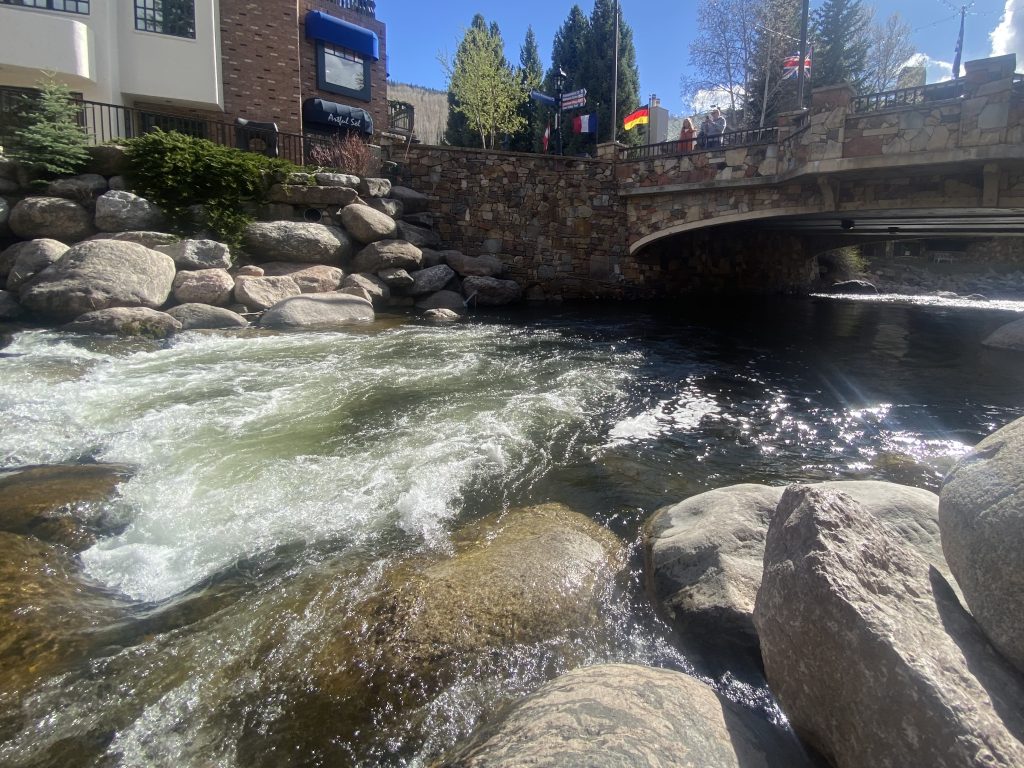
John LaConte/Vail Daily
The March heatwave that hit the West had devastating consequences for snowpack, especially in Eagle County, where the gauge measuring snow-water equivalent on Vail Mountain reached 0.0″ in March for the first time in its 47-year history.
The result could be seen by anyone with a view to the mountains, as brown slopes replaced white snowpack quickly and completely in elevations below 10,000 feet. By early April, the snow had disappeared from all south-facing slopes below 11,000 feet.
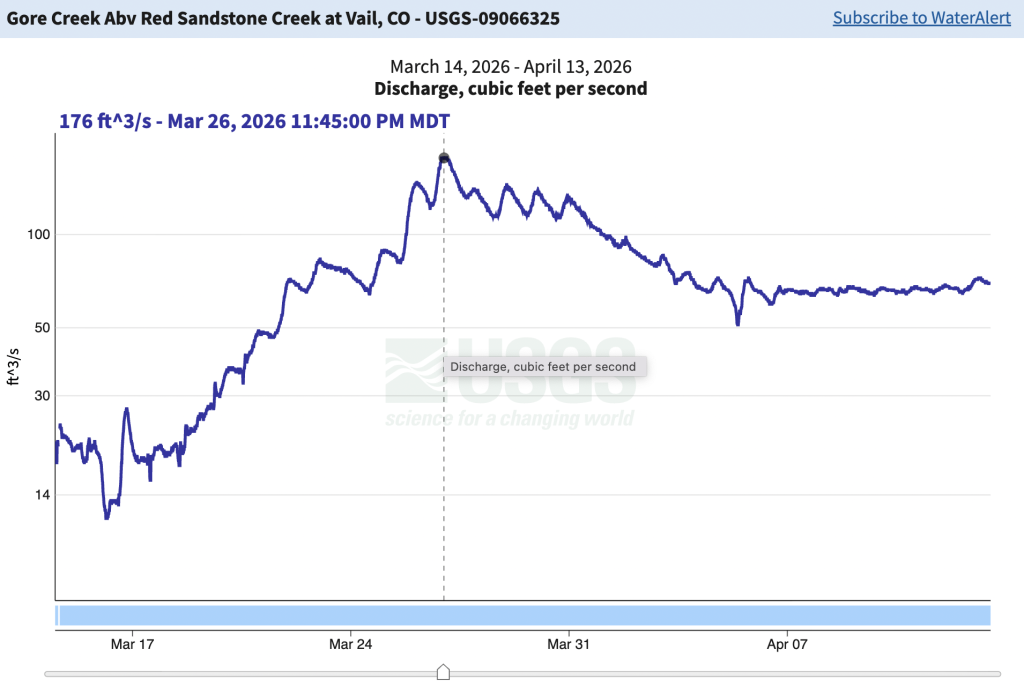
The melt was also visible to anyone with a view of nearby creeks and rivers, which saw unseasonably high flows in March. In Vail, Gore Creek saw a spike on its graph on March 26, measuring 176 cfs above Red Sandstone Creek. It has since come back down to reach an average flow of about 70 cfs.
The same story could be told downvalley, where an early peak flow recording for the Eagle River in Avon occurred on March 27, when the gauge showed water moving through the area at 468 cfs. By April 3 it had dropped below 200 cfs, where it has remained since.
Flows this year are expected to be about 40% of what they should be in a normal year, said Justin Hildreth, a water resources engineer for the Eagle River Water and Sanitation District. That would put the Eagle River at Avon at about 800 cfs during its peak, as opposed to the approximately 2,000 cfs that would be considered average during the peak runoff.

Support Local Journalism
This year’s numbers are so much lower than years past that it can be difficult to make a comparison — the year that has seen a winter most similar to this was 2012, which was the second-lowest year in terms of snowpack behind this season.
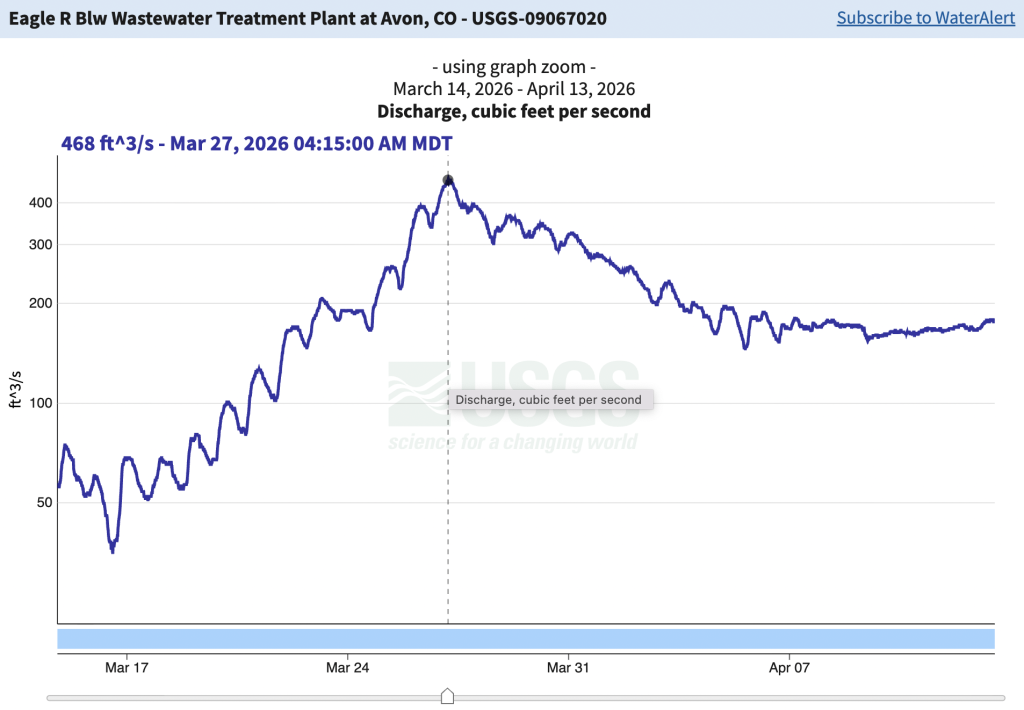
In 2012, the Eagle River recording station in Avon peaked on May 23 at 1,020 cfs. In an average year, the peak would occur around June 7, but 2012 did not see a March surge, like this year, which will affect the peak. In 2012, the Avon station did not record a reading above 300 cfs until April 1, and did not reach higher than 400 cfs until April 23. This year, the Avon gauge was above 300 cfs from March 25 to March 31, peaking at 468 cfs on March 27.
“That surge takes away from what could flow later in the year,” said Tim Friday, director of water and utility resources for the district. “Water in the form of snow is like money in the bank, and it all depends on the weather from this point forward how it runs off.”
But Friday says he thinks the March 27 peak was likely a false summit of sorts, and he expects another peak to come yet this spring.
“We got an early spike about a month in advance of the normal runoff,” Friday said. “It settled back down because the weather changed; I don’t think this was the peak we’ll see this year.”