How will the weak snow year affect Vail Resorts pass sales next season?
Pass sales are currently down about 10%, but the company is expecting that to change as we get closer to next season

John LaConte/Vail Daily
Vail Resorts’ advance commitment pass sales for next season, since launching in March, are significantly lower than they were during this same selling period last season.
That’s something company executives aren’t surprised to see, given the fact that this season saw the lowest snowpack in recorded history in Colorado, but CEO Rob Katz, in an earnings call on Monday, said the company is keeping a close eye on those numbers nonetheless.
“We do believe, based on our own results and the broader market data, that a portion of the decline is likely due to delayed purchase decisions, rather than reduced overall intent to ski next season,” Katz said.
Pass product unit sales through May 26, for the upcoming 2026-27 North American ski season have decreased approximately 10%, translating to an approximate 5% decline in total sales dollars as the pass has increased in price for most consumers.
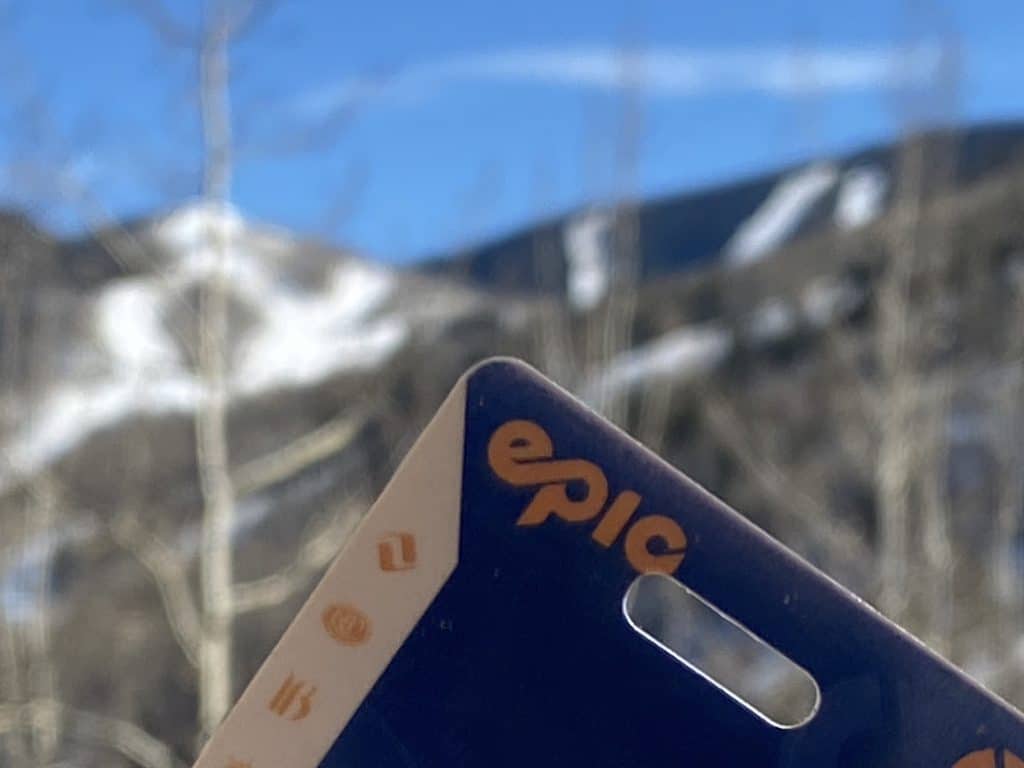
The Epic Pass, which offers access to 37 ski resorts in North America, was launched at $1,089 for adults, an increase of about 3.6% compared to last year’s price. With the launch came a new promotion from Vail Resorts, with skiers and riders under the age of 30 receiving a new 20% discount, lowering the price to $869.

Support Local Journalism
That promotion has been well received, said CFO Angela Korch.
“The new young adult product introduced this year saw results pacing well ahead of other age groups,” Korch told investors on Monday.
Korch said some of the evidence suggesting the slow pass sales has been weather-related comes from the fact that “the weakness has been most pronounced in our more weather-impacted destination resorts — including Colorado, Utah and Lake Tahoe — as well as among destination guests who typically travel to the Rockies, which all saw low double-digit unit declines.”
Meanwhile, Korch added, “we saw much stronger performance in our Eastern U.S. markets, and at Whistler, where pass units were down low single digits.”
Katz said those numbers “really tell us that this was a conditions impact from last year as opposed to some broader structural impact.”
Looking into past seasons that have been weather impacted, Katz said the company is planning on making a full recovery, assuming there are normal weather conditions next year.
“Looking back over the past several decades, U.S. ski market data indicates that visitation typically fully recovers following a season with poor conditions if the subsequent season has normal conditions,” Katz said.
One of the regions where the company pulled this data is Lake Tahoe, which saw several drought-affected years in the 2010s.
“If you look at two years during the drought that we had in Tahoe, and then you look at the year that had normal conditions, we see every indication that visitation comes fully back and in some cases even surpasses the bad year,” Katz said.
That can be due to “pent up demand which gets created during a season like the one we just went through,” which could very well be the case for Rocky Mountain skiers this season, Katz said.
“We don’t think this is about people saying that they’re not going to ski next year,” he said. “We think it’s about people not willing to make that commitment today.”