At the I-70 tunnels, CDOT fire brigades are training to be ‘ready to go at all times’
One of the main goals of the fire brigade is to protect the Eisenhower-Johnson Memorial Tunnels that bridge the Front Range and the mountains

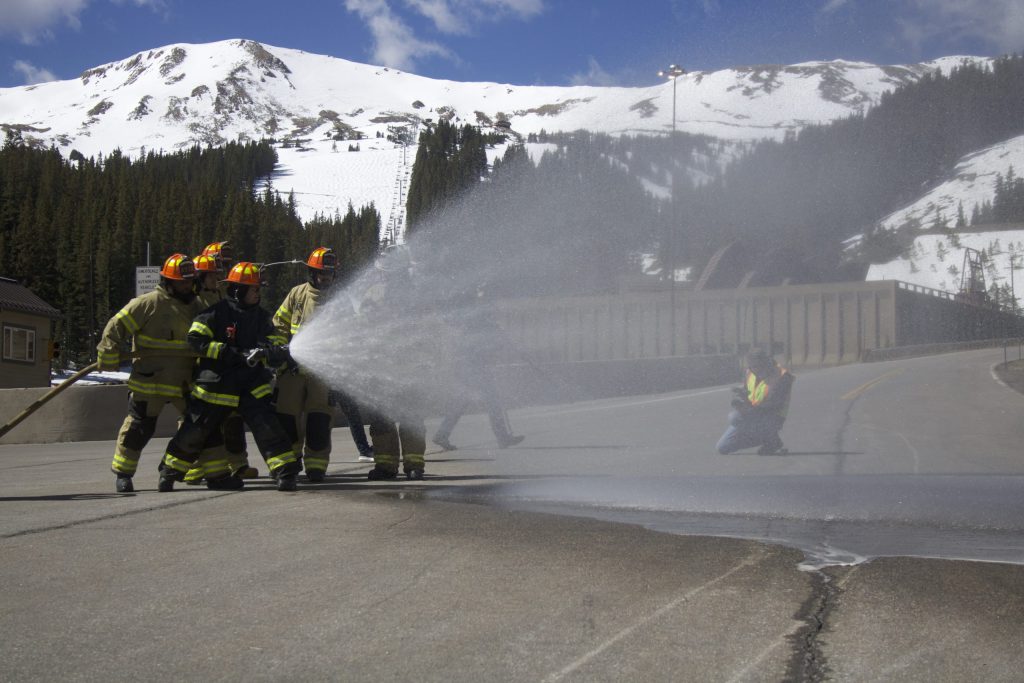
Ryan Spencer/Vail Daily
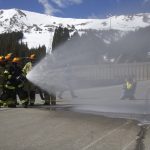
As cars and trucks whizzed in and out of the Eisenhower-Johnson Memorial Tunnels on Interstate 70, firefighters in a nearby parking lot rushed to deploy a hose and spray an arc of water.
There was no fire, and this was just a training exercise, but there was a look of seriousness on the faces of the Colorado Department of Transportation employees involved in the fire brigade practice on Wednesday.
“We’re here to protect the tunnel asset,” CDOT Tunnel Superintendent Paul Fox said of the fire brigade. “We need that building in one piece. So, we’re here to keep people safe and protect CDOT’s assets.”
Unbeknownst to most Coloradans, the state transportation department has its own firefighting teams on I-70: One stationed at the Eisenhower-Johnson Memorial Tunnels and one at the Hanging Lake Tunnel in Glenwood Canyon.
At the Eisenhower-Johnson Memorial Tunnels, which crosses under the Continental Divide, the fire brigade has 22 members. CDOT Fire Program Manager Peter Igel noted that all of these firefighters also work in other jobs at tunnels, including in maintenance or as snowplow drivers, but will jump at a moment’s notice to respond to an emergency.

Support Local Journalism
If a fire were to occur in the more than 1.5-mile-long tunnel, Igel said the transportation department’s fire brigade would be the first on scene with the goal of quickly extinguishing the blaze to prevent damage to the infrastructure. The brigade also has mutual aid agreements with Summit Fire & EMS and Clear Creek Fire Authority, and will respond if there are vehicle fires or wildfires along I-70 near the tunnels, he said.
“They’re protecting the infrastructure of the tunnel itself as well as the people moving through it,” Igel said. “So there’s a huge life-safety component, and that’s always No. 1 in our priorities, is to make sure everybody is safe.”
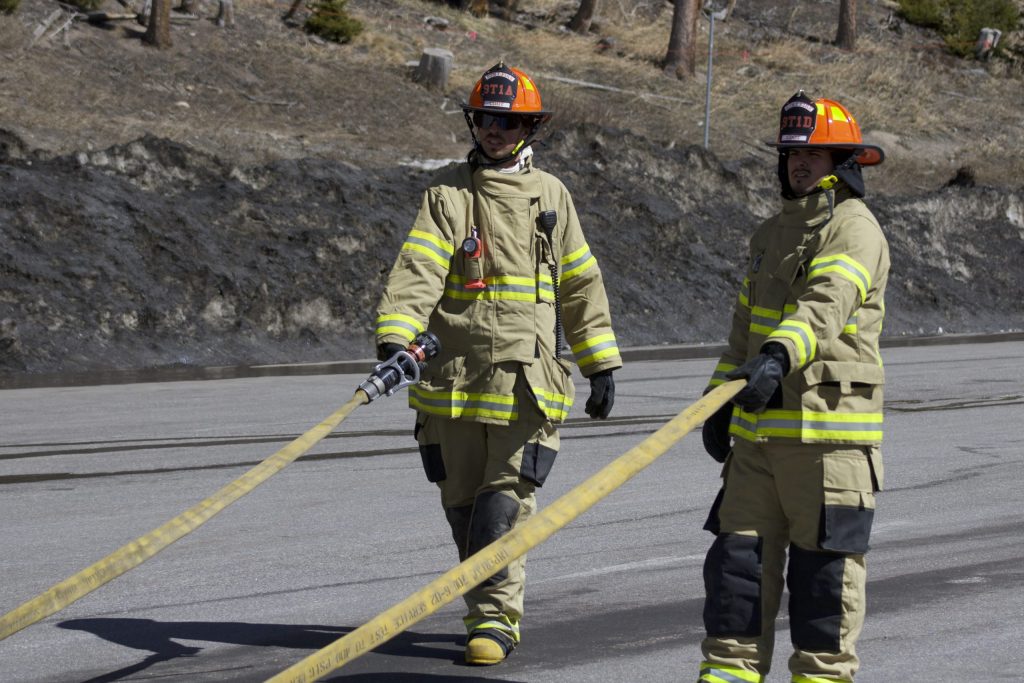
CDOT spokesperson Stacia Sellers described the Eisenhower-Johnson Memorial Tunnels, which see an average of about 35,000 vehicles pass through each day, as critical infrastructure along I-70. The tunnels are not only the gateway from the Front Range to the mountains, but are also a pinchpoint along one of the main east-west routes for freight moving across the country, she said.
The Colorado Department of Transportation estimates that for every hour I-70 is closed, the state’s economy takes an almost $2 million hit, so a long-term closure of the tunnels due to a fire could have ripple effects.
“There’s huge impacts if there’s damage to the actual infrastructure,” Sellers said. “You’re talking potentially millions of dollars in repairs. We want to prevent that. Then, of course, if there is damage to the infrastructure you have to close down the interstate and that has economic impacts.”
Fox noted that a fire occurring in the tunnels isn’t a hypothetical situation — it’s something that’s happened five times during his nine years overseeing the tunnels. Most recently, a van caught fire in the tunnel in July 2023. He also noted that the brigade also typically responds to about one to two fires a month started by vehicles experiencing mechanical failures around the operations center at the tunnel.
When a fire sparks in the tunnel, CDOT Office of Emergency Management Program Manager Jori Ernst said the interstate is “going to come to a screeching halt in a hurry.” Fire suppression units in the tunnels will quickly kick on and fans will activate to push smoke out, Ernst said. He estimated that it would take the fire brigade less than 10 minutes to be on scene, working to extinguish the blaze.
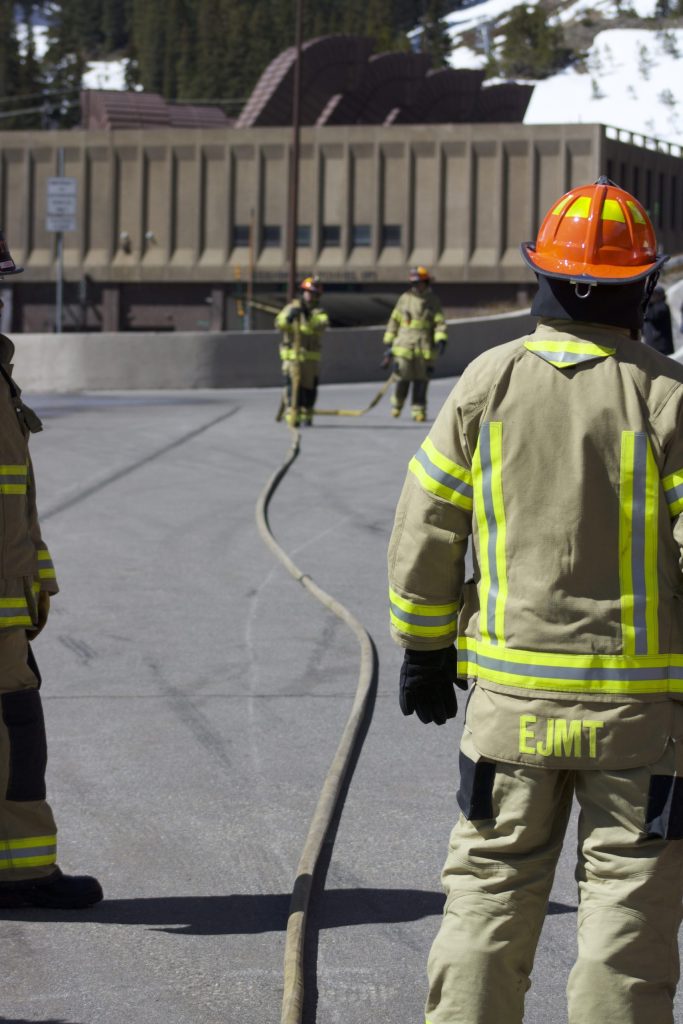
Ernst noted that the fire brigade trains monthly throughout the entire year to stay sharp on their skills. With widespread drought conditions and a historically low snowpack across Colorado, he said that the transportation department’s fire brigade is another team that will be ready to respond if a wildfire breaks out near the tunnels.
“With the limited snowpack this year, there is a high concern for wildfires,” Ernst said. “So, we’re going to have these trucks ready to go at all times to respond.”



Rails to Vail? Competing visions collide in debate over Colorado passenger rail revival
Colorado passenger rail advocacy groups are on very different sides of the tracks when it comes reviving passenger rail service through Eagle County, even as the rest of the state’s rail community was extremely focused on big news from the Front Range on Monday.