In ‘Women of Vail,’ female pioneers share their stories

ALL |
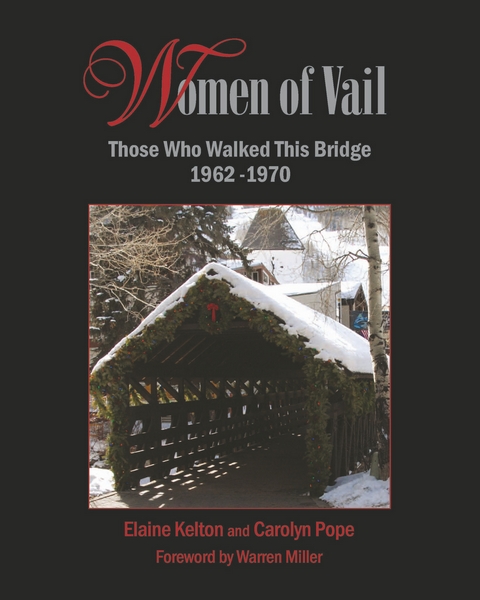
VAIL – Reading “Women of Vail” is like listening to old friends telling stories and thinking, “someone should write this down.”
Someone has. Your old friends did.
“The Women of Vail” is an anthology; it’s anecdotes, it’s history, but mostly it’s fun.
The stories are in their own words. Some are funny, some are more factual. All are engaging.
“We’re the anthologists, not the writers,” said Carolyn Pope, who along with Elaine Kelton, spent eight years collecting the tales.

Support Local Journalism
“Vail became what I never had before – a home. It’s my home, the only home I ever had. It opened its arms to all of us, embraced us with such a force, and such love, that you cannot help but being happy and in love with this town.”
– Sheika Gramshammer
Pope and Kelton are friends with each other and have been for years, and now they’re friends with most of the women in their book.
They’re friends with Dick Hauserman and read his book, “The Making of Vail,” and with Pete Seibert and studied his book, “Triumph of a Dream.”
Both engaging and accurate histories, Pope said, but …
“They chronicled the building of the business, but not the lives,” Pope said. “The women who came here in the 1960s were an amazing breed of adventurous women. They gave up a lot to become part of something that was growing.”
Vail in those days was a rough and tumble place with dirt streets.
No telephones, no TV, no hospitals, no education.
“None of the things you think of that make a community,” Pope said.
So, like the ski business they were helping build, they helped build the community around it.
“They came into that trying to build a community, understanding that there were needs,” Pope said.
“I think we had the best of times in this valley. We were the generation with no prior experience, who created a town, a set of rules, built schools and hospitals, and raised children to become solid citizens. We created an enticing way of life called Vail that had started with a sheep meadow. And we’re still alive to tell about it. I doubt it could happen again, ever – anywhere.”
– Carolyn Teeple Swanepoel
They have 137 women in the book, and they didn’t get to everyone. Pope calls that her only regret about the project.
“It’s been a labor of love,” Pope said.
Christie (Blanche Hauserman) Hill opened one of Vail’s first ski shops. You’ll notice that it’s still in business around the valley. She was on the cover of Life magazine four times, but in those early Vail days she used to sleep with her sleeping bag pulled up to her head to keep the mice out.
“I don’t feel that I gave up anything moving to Vail. There was nothing difficult at all about it; it was an adventure. I thought it was wonderful, and I never thought of leaving.”
– Christie (Blanche Hauserman) Hill
Bunny Langmaid is now close to 100 years old. She lives back East at a lower altitude. She raised some of the women who’ve grown up here. One of them runs the Walking Mountains Science Center.
Vi Brown raised children and now grandchildren. She helped transform the annual community rummage sale from a gigantic pile of stuff into one of the most beloved and biggest annual charity events.
Marge Burdick and her husband owned the Red Lion, Vail’s first restaurant and lodge. Up the street was Donovan’s Copper Bar.
You could ski down to their front doors in those days and people often did. Marge and her children would mount horses where the Vista Bahn is now and ride into the mountains. They’d be gone for days.
Sheika tells about when she and Pepi were building Gastof Gramshammer, Marge and others pitched in and even gave them some curtains.
Flo Steinberg was instrumental in helping create the Vail Valley Medical Center.
The list could be endless, but they had to end it somewhere. So they picked 1970.
“They had to live here full time. They have to be here building lives,” Pope said.
“If Vail was a family, then the Copper Bar was its living room.”
– Diana Donovan
They built businesses, families, a community and continuity.
“We were a collective of opposites: self-sufficient as a community, but totally interdependent,” Kelton said.
Psychiatrist Victor Frankl defined storytelling as “a way of thinking about something,” not a strict history, but the telling of lives lived in the same place, differently.
Like this one.
“I opened the Emporium and sold gifts, antiques, and flowers … Some weeks, my house looked like a funeral parlor…. Once someone bought a bouquet with the message, ‘May I please come home?’ Another order was a rose with the message, ‘Tonight?'”
– Sally Hanlon
Staff Writer Randy Wyrick can be reached at 970-748-2935 or rwyrick@vaildaily.com.