Vail Resorts reports drops in skier visits, revenue amid ‘worst-case weather scenario’ in West, but CEO sees ‘meaningful stability’
While other resorts in the West struggled, CEO Robert Katz said one Colorado ski resort outperformed the others

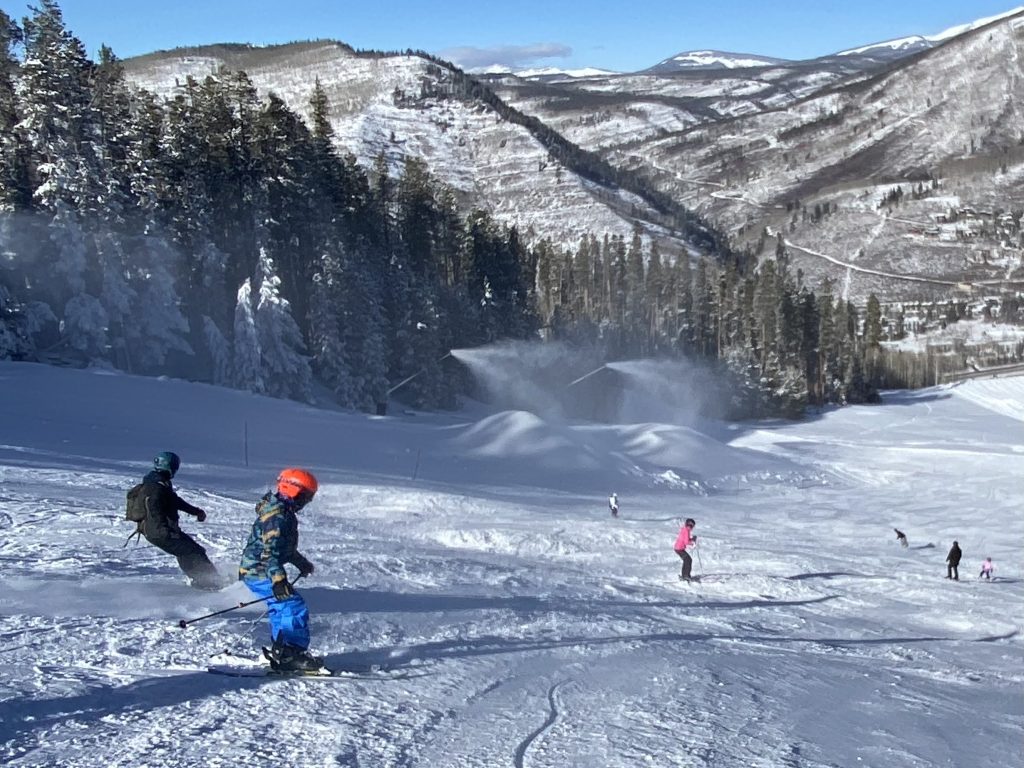
John LaConte/Vail Daily
Vail Resorts Chief Executive Officer Robert Katz told investors this week that skier visits and revenues are down amid “the most difficult weather environment in the Rockies we have ever seen.”
Skier visits to the company’s 37 North American ski resorts were down about 12% through February due to the “unprecedented weather challenges in the Rockies,” Katz said Monday during the company’s fiscal second quarter earnings conference call. But he said sales of the Epic Pass in advance of the season helped to minimize weather impacts.
“The Rockies are the largest driver of resort revenue for the company, and as such, the poor weather had an outsized negative impact on our results this year,” Katz said. “While these conditions weighed on our results, they also underscore the importance of our advanced commitment strategies.”
Across the West, this season is among the worst on record for snowfall — worse even than the 2011-12 winter season, which Katz said was previously the worst the ski resort conglomerate had faced. He noted that this winter has also been the warmest winter on record in Colorado, where temperatures through February averaged about 9 degrees warmer than normal.
This season saw the latest opening of Vail Mountain’s Back Bowls and Breckenridge Ski Resort’s Imperial Express, the highest lift in North America, Katz said. Through February, he said most of the company’s resorts in Colorado and Utah had only 70% to 80% of skiable acres, far less than usual for this time of year.

Support Local Journalism
Despite “what many would consider a worst-case weather scenario,” Katz said in a statement that Vail Resorts saw only “modest declines” in lift revenue of about 3% compared to last year. He said this is because pass holders who purchase their lift access ahead of the season now make up about 75% of Vail Resort’s annual visitation — up 55% from a decade ago — providing “meaningful stability, especially in a year like this.”
The company has also expanded the geographic diversity of its portfolio, buying resorts in the Northeast and Midwest in the past decade, helping to mitigate weather impacts, Katz said. He noted that while the West has had one of its worst seasons on record, the Northeast has had one of its best seasons.
“We have purposely built a model that has been designed to withstand challenging weather years through regional diversification, pre-commitment of roughly 75% of visits through our pass products and continued investment in snowmaking,” Katz said.
While skier visits and revenues were down at resorts across the West, Katz noted that Keystone Resort “had a strong year” and outperformed other resorts in the region. He chalked this up to changes Vail Resorts made to off-peak ticket pricing at Keystone and investments into the snowmaking there in recent years.
Even with the poor conditions across the West, Katz also noted that guest satisfaction scores are up this year, including in Colorado and Utah. He said that is a reflection of the emphasis Vail Resorts has put on its local resort employees in recent years.
“When conditions aren’t good, usually we see that go down,” Katz said. “So that fact that we’re seeing it up, we really say, ‘Yeah, that’s the whole system working well, which really starts and ends with the people on the ground who have the connection to our guests.'”
With the poor conditions this season, Vail Resorts mountains in Colorado were among those that reduced the hours of some staff members due to the lack of available work.
Katz noted that Vail Resorts has launched Epic Pass sales for the 2026-27 season with a price increase of about 4% compared to years past. He took several questions from investors who asked about the company’s decision to offer a 20% discount off adult Epic Pass prices for those under the age of 30.
Young adults ages 18 to 30 were “our most price-sensitive guest,” Katz said. While other age groups of customers grew, he said young adults were “showing the most struggles” as Epic Pass prices have increased over the past four years.
Katz said that he expects the discount to help get more young people involved in snowsports, helping to provide “long-term value” to the ski industry. Now that Vail Resorts has shifted away from relying on daily lift ticket sales in favor of the stability offered by advanced season pass sales, he said it can employ a “sharpshooter” strategy to optimize its products.
“It isn’t necessarily that the strategy that we’re going to take is about discounting,” Katz said. “I think what you’re going to see from us is constantly looking at where we think we can optimize price, optimize features and benefits and performance. We’re going to make whatever moves we think are the right moves for the business.”