Opinion | Romer: Lessons to be learned from ‘the season that wasn’t’

There’s a particular kind of regret that only shows up in hindsight — the quiet voice that says “we had the chance, and we let it pass.” In business, those moments become case studies. In communities like ours, they should become catalysts.
Consider a few familiar examples. Blockbuster declined to acquire a small startup called Netflix. Kmart, once a retail giant, lost its footing by chasing too many directions at once, while Walmart stayed disciplined and customer focused. Kodak invented the digital camera but failed to embrace it, clinging to film as the world moved on. Yahoo had opportunities to buy both Google and Facebook and declined to see the future impacts of search and social media.
These weren’t failures of intelligence or resources. They were failures of recognition. The opportunity was there. The moment was real. But it didn’t feel urgent until it was too late.
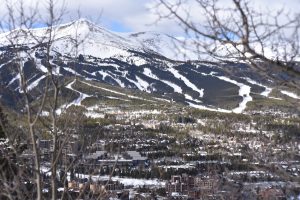
That’s the lens many of us are now applying to the winter of 2025–26 across the West: the ski season that wasn’t.
Whether driven by snowpack variability, economic headwinds, geopolitics or some combination, this past winter disrupted expectations in ways we haven’t seen before. For regions like ours, built on the reliability of winter tourism, it felt like the ground shifted beneath us. The question now is simple but critical: Do we treat this as an anomaly to endure, or a signal to learn from?

Support Local Journalism
History suggests the answer matters.
The organizations that endure aren’t the ones that avoid disruption. They’re the ones that reinterpret it. They ask better questions. They move sooner. They challenge their own assumptions.
If Blockbuster had seen streaming as inevitable, its story might be different. If Kodak had leaned into digital, it might still define how we capture memories. If Yahoo had acted decisively, it might still shape the digital landscape rather than be a smaller player.
So, what does that mean for us?
It means this winter shouldn’t just be something we recover from. The lessons learned this winter should drive action. We need to analyze what happened, apply those lessons and adapt both business models and community strategies for greater resilience.
Are we diversifying our visitor base beyond traditional winter travelers? Are we investing enough in shoulder seasons, in arts and culture, in group business, in experiences that aren’t dependent on snowfall totals (such as unique music events and village activations)? Are we using data and technology to better anticipate and respond to changing consumer behavior?
The communities that thrive in the next decade won’t be the ones clinging to the past. They’ll be the ones willing to evolve while protecting what makes them special. That’s the balance: not abandoning identity but strengthening it by adapting around it.
There’s also a human side to this. For business owners, employees and families, the impacts of this winter are real. Lost revenue isn’t theoretical. Jobs affected aren’t abstractions. Any conversation about “opportunity” must begin with that acknowledgment.
But resilience is built in moments like this, not just through grit, but through reflection and adaptation. The 2025–26 ski season could ultimately become something more than a tough year. It could be a turning point. A moment when the ski industry and our communities chose not to wait for normal to return, but to redefine what normal could be.
Because the real risk isn’t disruption itself. The real risk is failing to act on what we’ve learned.
And unlike the missed opportunities of the past, this one is still in front of us.