Salomone: Tricky Tricos
The Trico hatch can be challenging for anglers, but trout love to eat the mayfly in a variety of presentations
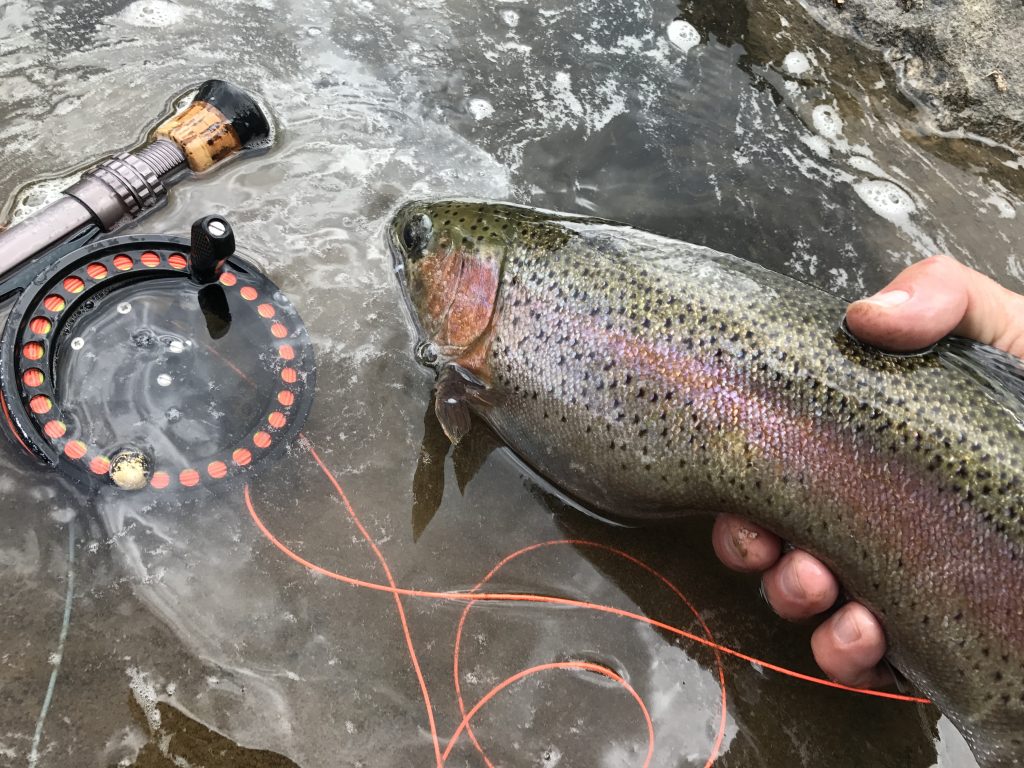
Michael Salomone/Courtesy photo
Tricos, the smallest mayfly anglers imitate, are small, fleeting and often misunderstood. There seems to be only two choices: like them or dislike them. The only people indifferent about Tricos are the ones who don’t know about them. One constant factor about Tricos is that trout eat them as nymphs, dries or dead.
Anglers who struggle to decipher the entomological puzzle feel discouraged by the Trico hatch. The tiny insects are difficult to imitate, present and even tie on. Tricos are often found in minuscule sizes. As adults, the insects rarely exceed size 20. A size 18 Trico pattern is on the larger size. However, upsizing your fly when the spinners have fallen is a good bet.
A Trico follows the egg, nymph and adult life cycle progression. A large majority of a Trico’s life is spent in the nymph stage. The immature insects live under rocks along the bottom of the river. Water temperature drives the insect emergence. When river temperatures reach the 60s, the insects emerge.
As nymphs, the insects are small and thin. Trico nymph flies are sparse and most often found in black. The insects are growing in the nymph stage but never eclipse size 20. Your fly selection should mimic this fact at all stages. Go small.
The nymphs emerge by pushing through the surface of the water. The newly hatched adults need to dry their freshly formed wings before setting to flight. Trout will key in on crippled or injured emergers when the hatch begins. Riverside vegetation is where the adults gather to molt a second time into breeding adults. Then the air dance begins.

Support Local Journalism
Adult males emerge first in the early morning. Females hatch shortly after. The two mature adults then perform an aerial courtship by bouncing up and down in a very recognizable pattern. Their long tails extend below the flying adults, giving the insects a very identifiable silhouette. This is the last hoorah for the males. After mating the males fall dead upon the water, creating the first spinner fall of the Trico hatch.
Females will gather in the vegetation to allow the egg sac to form. After the egg sac develops, the females will return to the water to disperse the eggs. The females then fall dead onto the water, creating the second spinner fall of the Trico hatch. This later spinner fall is predominantly females, whose olive color lightens when they die.
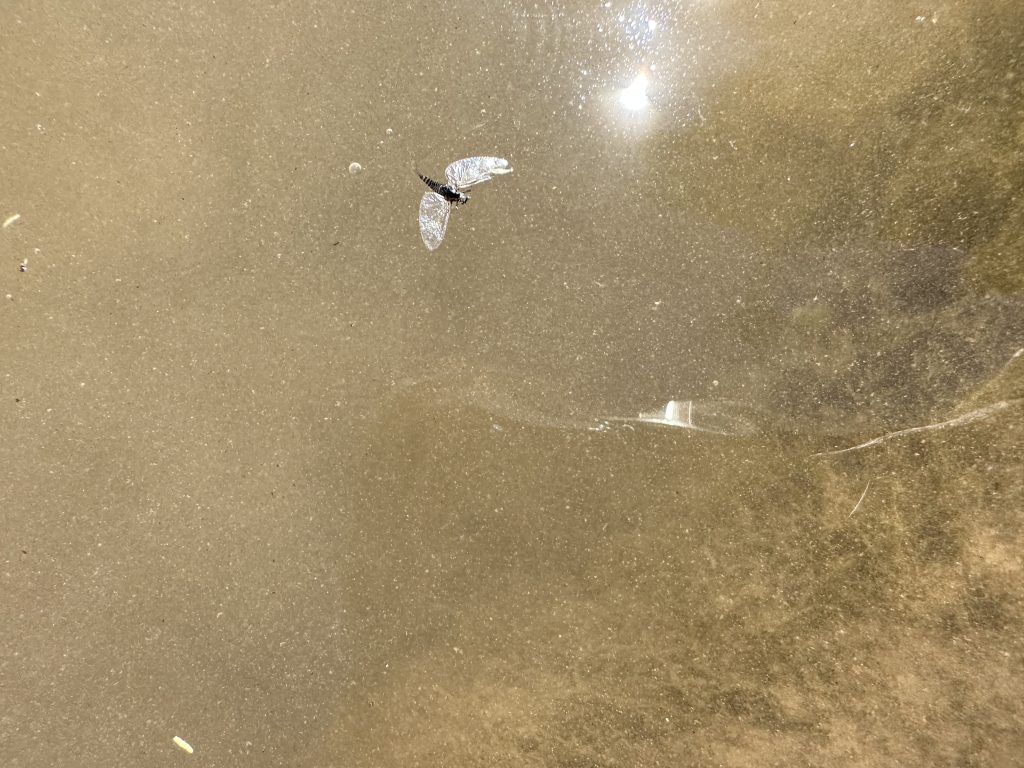
The spinner fall during the Trico hatch is the key to capitalizing on the emergence. Trout will eat the new adults. But the dead bugs are where the true feeding occurs — first with the dark males and then with the green females. Dead bugs have no locomotion — they don’t fly or swim. Instead, they float with their wings laid out to the side in the position of a dragonfly.
Because of the nature of the spinnerfall, trout will become finicky about their feeding. The dead spinner must drift in a tight lane to be tempting. Trout keyed into feeding on the dead will want the insect right in their face. Fish will not move much from side to side when feeding on Tricos. Spentwings are easy meals that require no effort to obtain. This is where the frustration occurs in anglers who repeatedly receive rejection. The drift has to be executed with care, without micro drag and in the precise feeding lane where the trout is working. Purposely introducing slack to gain a smooth, drag-free drift is critical to achieving success with spinner patterns.
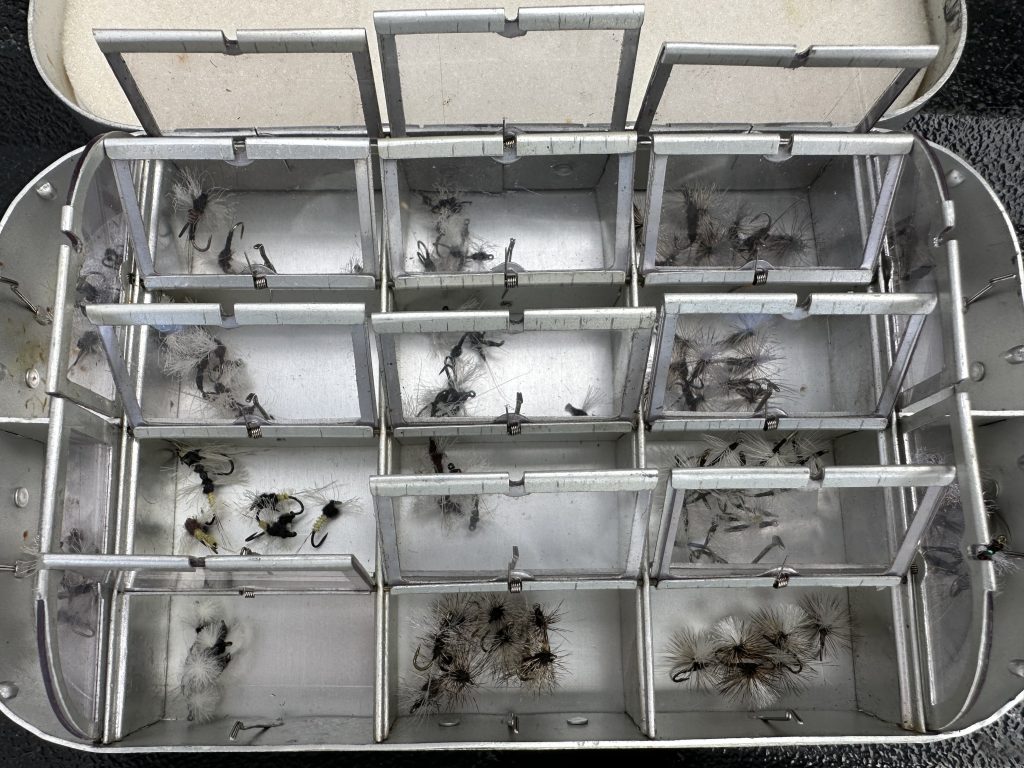
Trico nymphs are small and thin. Think of a slimmed-down pheasant tail and you are getting close. A small black or green RS-2 in sizes 18-26 mimics the Trico in the emerger stage. Small dry flies such as the Tails Up Trico dry fly holds the bug in a natural position on the surface of the water.
The best way to fish Tricos is with spinners, the dead bug representation. Dead Tricos fall on the water and float until they are washed under, become caught up in river vegetation or get eaten. A sunken spinner pattern triggers strikes regularly. And throwing a spinner in the foam can lead to great action. Spinner patterns lead to slow motion takes where the chance of pulling your fly away prematurely increases. Slow down on your set.
Fishing the Trico hatch can be challenging. One thing for certain is trout love to eat Tricos — nymphs, dries or dead.