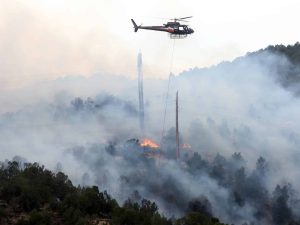
Colorado lawmakers have ‘deep concerns’ about federal government’s wildfire preparedness amid drought
The members of Congress want agencies like the U.S. Forest Service and the new Wildland Fire Service to publicly disclose how many firefighters have been hired

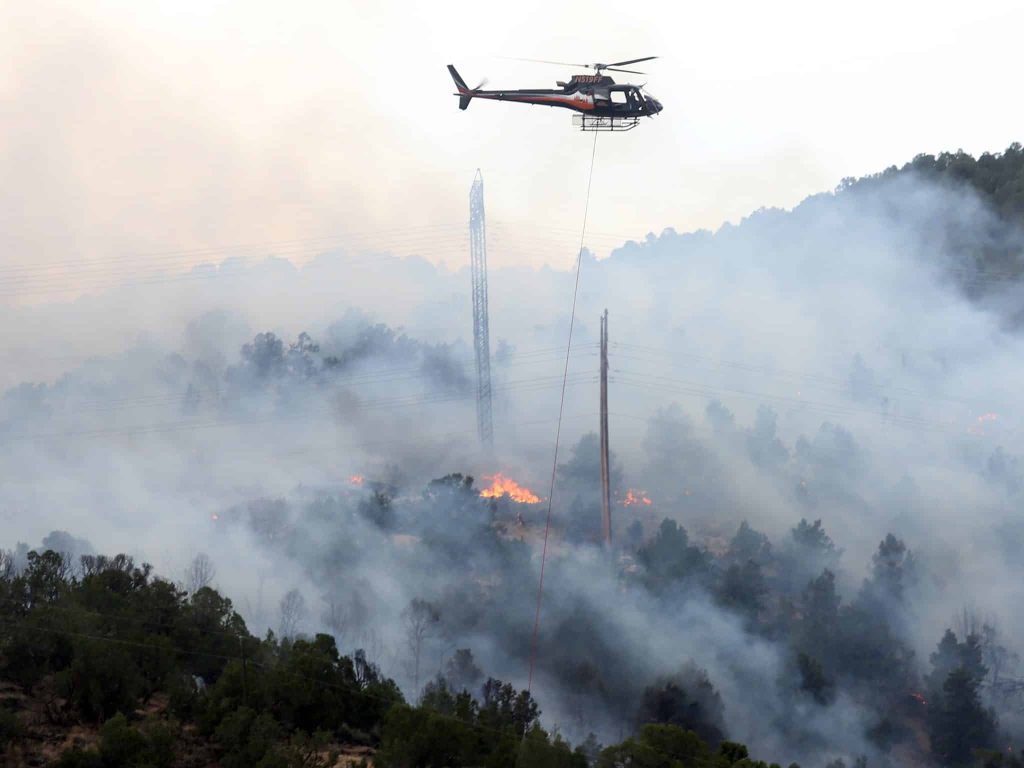
Austin Colbert/The Aspen Times
Colorado members of Congress want answers about how prepared federal agencies like the U.S. Forest Service are for the elevated wildfire risk this year.
U.S. Sen. Michael Bennet and Rep. Joe Neguse sent a letter in April to Agriculture Department Secretary Brooke Rollins and Interior Department Secretary Doug Burgum, emphasizing that the widespread drought and historically low snowpack across the West are expected to fuel wildfire risk.
“As we approach the summer months, we write to express our deep concerns about these conditions and respectfully implore your agencies to take immediate actions to better prepare for unprecedented wildfire risks,” the lawmakers wrote.
The Department of Agriculture houses the Forest Service, which has the nation’s largest wildland firefighting force, while the Department of the Interior houses the Bureau of Land Management and the newly-established U.S. Wildland Fire Service.
Neguse represents Colorado’s second congressional district, which includes parts of northwest Colorado, where drought conditions are among the worst in the country. Colorado wildfire leaders have raised concerns that the widespread drought conditions could make the northwestern part of the state a “bullseye” for fire activity this summer.

Support Local Journalism
In the letter, the lawmakers requested that the federal departments increase cooperative preparedness efforts with local and state governments and proactively position resources in the West where drought conditions are the worst.
The letter also calls on both departments to publicly release staffing levels for the coming wildfire season, including the number of firefighters that have been hired and how many staff have incident management qualifications — better known as “red cards” — that allow them to assist on wildfires.
Rollins published a memo on April 29 stating that the Department of Agriculture plans to prioritize initial attack and use a “full suppression strategy” this wildfire season. The Forest Service can mobilize 28,000 wildfire responders and “over 22,000 contracted resources” to respond to fires, she said. The memo did not state how many firefighters the department has hired ahead of the coming wildfire season.
The Interior Department employed about 5,700 wildland fire personnel last year and “anticipates a similar staffing level to this year,” the department said in an email Tuesday.
The Department of Agriculture did not immediately respond Tuesday to a request for comment on the lawmakers’ letter.
Both Neguse and Bennet have previously raised concerns that the Interior and Agriculture departments lost hundreds of red-card holders last year when President Donald Trump’s administration axed thousands of jobs and offered early retirements to employees across the federal government. Just weeks after the cuts, Forest Service Chief Tom Schultz called for red-carded employees to “come back” to the agency.
The lawmakers’ letter also seeks more information about how the administration plans to prevent ongoing reorganizations at both federal departments from impacting preparedness for the wildfire season.
The Forest Service last month announced that it will undergo a “sweeping restructuring” that will relocate its headquarters from Washington, D.C., to Salt Lake City. Meanwhile, Burgum in January ordered that firefighting forces across the Interior Department be consolidated into the new Wildland Fire Service.
Both Burgum and Rollins have claimed that the reorganization efforts will not impact the coming wildfire season.
“The unification of the Interior Department’s wildland fire management programs is being implemented in deliberate phases to ensure continuity of operations and readiness for wildfire activity in 2026,” the Department of Interior said in a statement. “Current firefighting capabilities remain fully in place, and there will be no gap in response capacity.”
In February, Bennet called for Burgum to “halt” the formation of the Wildland Fire Service. Both he and Neguse have also called on the administration to ramp up its wildfire mitigation work ahead of the coming fire season, after an analysis of publicly available data published late last year found that wildland mitigation efforts in the West have declined by 38% since Trump took office.
In their latest letter, Neguse and Bennet wrote that the Agriculture and Interior departments are “integral partners” in responding to wildfires.
“We urge you to take immediate steps to maximize early detection of wildland fires and reduce any delays to ensure that federal resources are prepared to respond efficiently,” they wrote.