Holy Cross Energy rates rising April 1 as ‘everyday costs’ keep climbing


Walking Mountains Science Center/Courtesy photo
The Holy Cross Energy (HCE) board of directors last week approved a rate increase starting April 1 to cover an anticipated 5% spike in the cost of providing power in 2026 for the member-owned electric co-op based in Glenwood Springs and servicing most of Eagle County.
The rate increase introduces a new $1-per-kilowatt demand charge for “Small Residential” and “Small Commercial/General Services members,” customers whose monthly peak usage, or “demand,” is less than 50 kilowatts. That’s the vast majority (99%) of HCE’s more than 45,000 members, or customers.
“Large Residential” and “Large Commercial/General Services” members have already been paying demand charges, and those charges will also increase slightly on April 1.
“The demand charge is designed to better align electric rates with the costs associated with each member’s share of electric grid capacity,” according to an HCE press release “It is based on the single highest 15-minute period of electricity usage a member demands (or requires) during the month, information which is already present on members’ current electric bills.”
Holy Cross customers can now calculate and monitor their peak demand in order to offset charges by spreading their electrical use throughout the day. An extensive explanation of the new demand charges is available on the Holy Cross Energy website.

Support Local Journalism
Asked if the increase in Holy Cross costs is due to changes in federal policy, a Holy Cross spokesperson said rates are going up because the cost of everything is going up.
“The need to raise rates is really a reflection of inflation and rising everyday costs,” HCE vice president of member and community relations Jenna Weatherred wrote in an email. “The cost of building, maintaining, and upgrading our electric grid (things like poles, wires, transformers and substations) has risen significantly in recent years.
“The co-op is also facing significantly higher charges for the transmission services and power we purchase from Xcel Energy, beginning in 2026,” Weatherred said, adding HCE staff has reviewed budgets, deferred non-essential capital projects and cut every possible cost that doesn’t jeopardize safety or grid reliability. But overall costs just keep going up.
Weatherred said the HCE shift to cleaner energy sources (some months hitting 90% renewable) has actually helped to soften some of the increases that are occurring all over the country.
She cites 100 to 150 megawatts of power from a new wind farm built for HCE and designed to seasonally fit the area’s unique, winter-peaking load profile; 30 megawatts of bulk-system photovoltaic built for procurement by HCE and other Colorado cooperatives in eastern Colorado; and three local, distribution-cited, solar-plus-storage resources built in HCE’s own territory at 10 megawatts each.
“We are fortunate that we moved to new renewable projects when we did, because with the changes in federal policies … we wouldn’t be able to afford to build these projects today,” Weatherred said. “We still own 8% of the Comanche 3 coal plant in Pueblo, which is owned by Xcel. It is currently out of commission and not expected to begin running again until sometime mid-year. It is expected to be retired at the end of 2030.”
By then, state officials hope a new administration will put the federal focus back on renewable energy, which in some cases is far cheaper than coal and, in all cases, far less polluting. Colorado Attorney General Phil Weiser last week joined California and several other states suing the Trump administration for canceling, in Colorado’s case, $600 million in clean energy grants passed by Congress and signed into law by former President Joe Biden.
“This executive branch seems to think they have the power of the purse, that they get to decide what’s funded. That’s not how our constitution works,” Weiser said on a call with reporters last week. “That’s why we’re in court for Colorado for the 54th time (suing the administration). Colorado is committed to a clean energy future, protecting our land, air and water…”
Police say feds never contacted them about Epstein’s Vail property
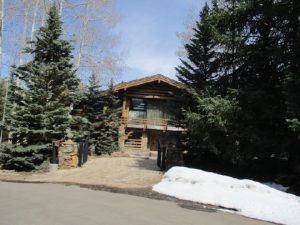
Local law enforcement officials on Monday told the Vail Daily they are not aware of any federal investigators ever contacting them over the years regarding a property in Vail previously owned by the late convicted sex criminal Jeffrey Epstein.




Police say feds never contacted them about Epstein’s Vail property
Local law enforcement officials on Monday told the Vail Daily they are not aware of any federal investigators ever contacting them over the years regarding a property in Vail previously owned by the late convicted sex criminal Jeffrey Epstein.