Housing nonprofits hopeful new state law will streamline government approval process

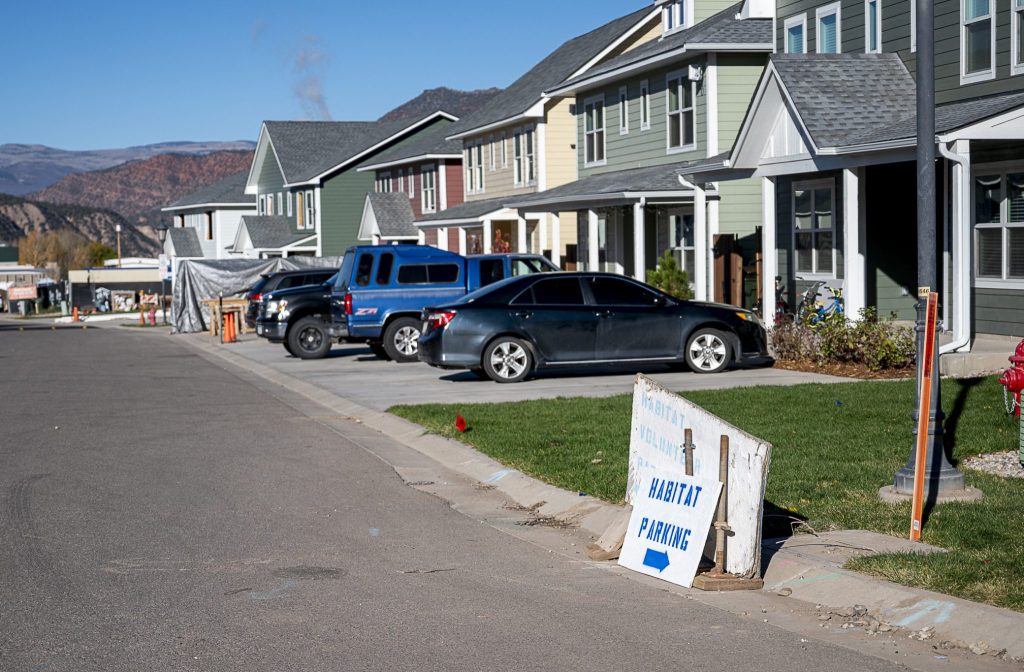
Ben Roof/Special to the Summit Daily
If even five or six months could be trimmed from the typical government approval process for affordable housing projects in Eagle County, it would save time and money and produce exponentially more homes for local workers, according to a leading housing nonprofit.
“Get us to market faster because anytime you can have a more predictable, streamlined approval process, you are saving money and you’re saving time,” said Elyse Howard, VP of Community Affairs and Philanthropy for Habitat for Humanity Vail Valley. “If you look at how long it took us to get the Adam’s Way neighborhood (in Eagle) approved, it was probably 18 to 24 months in all the various steps. And so we are hopeful that this legislation will make that faster.”
“This legislation” is HB26-1001 (Housing Developments on Qualifying Properties), which was signed into law by Gov. Jared Polis late last month. While it doesn’t take effect until 2028, the new law allows qualified nonprofits, school districts, colleges, transit agencies and housing authorities to bypass local zoning codes and build affordable housing on land that they own.
“There’s wide consensus and agreement amongst all the various housing advocates in the state that this is going to help us,” Howard said, adding the law’s “administrative review still allows for local control and is at least 28% faster.”
Even getting review times down to a year would be “a miracle,” Howard said, adding, if “we can have less lead time, we can get through with spending less money on all of these things.” And that will translate to more affordable homes for teachers, first responders, health care, hotel and restaurant employees, and all of the many types of workers needed in a resort economy.

Support Local Journalism
Howard said there was some division over rentals versus home ownership models among the many housing nonprofits in Colorado last year when the legislature failed to pass a bill that would have similarly streamlined the zoning and approval process for churches and nonprofits.
There was more consensus this year when the groups testified in favor of the bill, she said. Every project is different, but Howard said Habitat often winds up as the landowner.
“In the example of Adam’s Way, the school district sold us that land for a dollar, and then we did the entitlement process,” Howard said. “So, it depends on the project, but in the case of Timber Ridge (in Vail), we never own that land until the homeowner buys the unit.” In other projects, such as Adam’s Way, Stratton Flats and IK Bar in Gypsum, Habitat is the landowner before approval.
What matters in your community, delivered daily.
Sign up for our morning newsletter at VailDaily.com/newsletter
Habitat for Humanity Vail Valley is one of the most successful chapters in the state, but in a place where the cost of land and construction is so high, anything that trims approval costs and time will only improve on the nonprofit’s success rate of 187 homes across the Eagle Valley to date.
Habitat’s strategic target is 200 homes by the end of this year, and it has another 60 homes in the pipeline on school district property in Minturn (33 in the first phase), another 10 on tap on school district land in Gypsum at IK Bar, and the possibility of the first-ever Habitat Homes in Avon in the coming years.
“We submitted a letter of interest to the town of Avon,” Howard said of the Traer Creek property in Avon. “Basically, what is now on that parcel is up to 24 units, and so our letter just stated that we have experience working with the town of Vail and Triumph Development and the Eagle County School District, and that our role is to bring affordable homeownership 80% AMI (area medium income) and below.”
All of these new homes chip away at a needs assessment study from last year that put the deficit of affordable homes in the Eagle River Valley in the thousands. Habitat has been convening collaborative events among the many stakeholders in the affordable housing space, with the next one scheduled for June.
Avon Town Manager Eric Heil points out that people opposed to affordable homes in their neighborhood should be supportive of the town’s approval process, which allows for as much community input as possible, because he said that in 2028, HB26-1001 will be a gamechanger.
“A bill just passed that we can build a 45-foot tall multifamily with administrative approval,” Heil said. “That’s where the state legislature is right now. That’s just a little microcosm of an example of why, and it’s not just Colorado, why more and more state legislatures are usurping local land use control to say, ‘Yeah, we don’t care if you don’t like projects next to you. We’re just going to say that they can be built.’ I mean, it’s basically what Polis tried to do last session.”
Beverly Stables of the Colorado Municipal League laments all of the scorn being heaped on town governments for getting in the way of housing development when in fact the state is pulling back voter-approved affordable housing funds in the midst of the growing state budget crisis.
“We have had years of these land use preemptions without local government input or buy-in,” Stables said. “And then in this budget, they are cutting $130 million worth of affordable housing funds just for this year. It’s a tough budget year, but those funds were approved by voters. They were for a very specific purpose. And if we really are serious as a state about affordable housing, we have to be investing in it. We cannot just keep blaming local government land use.”
Stables said it is unfair to continually point the finger at Colorado’s cities and towns for the lack of affordable housing.
“It’s just really disappointing to see all this rhetoric blaming local governments and then taking away such a huge investment,” Stables said of the recent and looming state cuts. “We’re going to feel this lack of investment for many years. We were finally making some progress … and there were cuts last year too. So we’re talking multiple years of underinvestment in this space.”