US Forest Service’s forest thinning project in Eagle and Summit counties draws criticism
kkampner@vaildaily.com
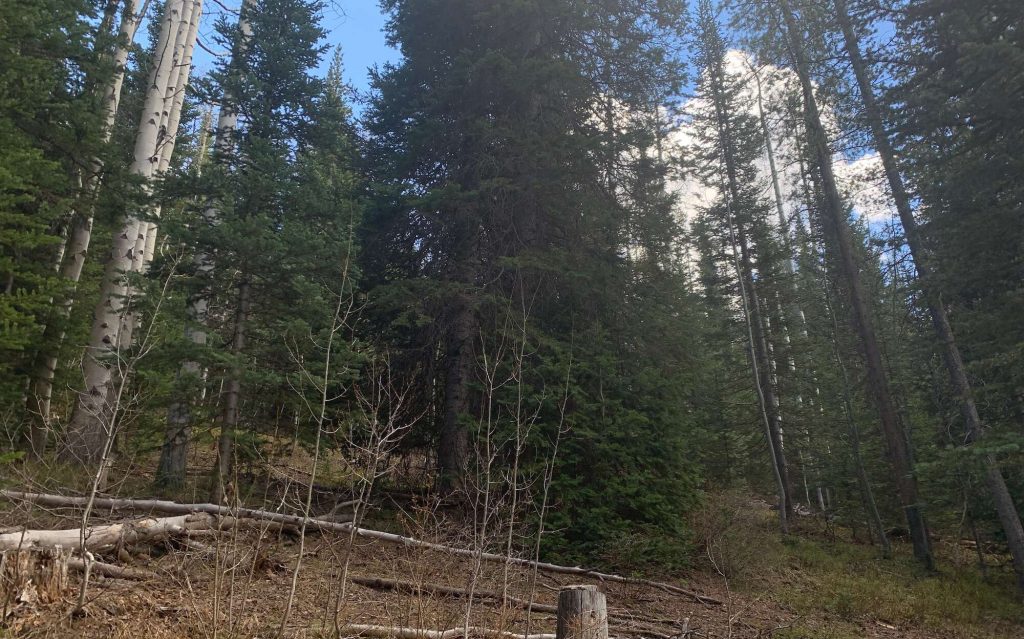
U.S. Forest Service/courtesy photo
The U.S. Forest Service hosted two informational sessions last week on proposed forest thinning projects in Eagle and Summit counties. The stated goal is to maintain forest health and reduce fuel for fires in the area.
However, at a time when both counties are at high risk for wildfires, some critics questions the effectiveness of thinning and want more attention directed towards home hardening and the building of defensive spaces against wildfire attacks.
The selective tree removal process is a part of a larger project in the 2.3 million-acre White River National Forest. The White River Health and Fuels Project was approved in 2021 as a plan to reduce the numbers of lodgepole pines from 2,500 trees per acre down to 150 to 1,500 trees per acre, with the project being capped at 10,000 acres overall. A decision memo by the U.S. Forest Service stated that the White River National Forest will implement these projects to protect private property, community infrastructure and national forest resources, and to provide for firefighter safety.
One thousand of 10,000 acres are in Summit and Eagle counties, according to a statement released on June 8 from the U.S. Forest Service. In Eagle, treated areas would include Tigiwon and the No Name area near Camp Hale — a spot that was affected by a 2010 mountain pine beetle epidemic. In Summit, the treatment would happen at Red Tail Ranch, Farmer’s Corner and Swan Mountain Road.
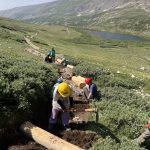
While specific dates have not been set, a representative from the U.S. Forest Service said the thinning could start sometime this summer. The fuel, forester Shelby Limberis said, will be rearranged around roads and trails, and some will be left on the ground.

Support Local Journalism
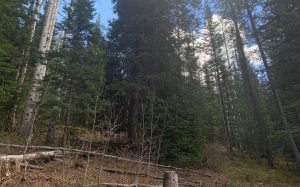
During the meeting, Limberis explained that lodgepole pines thrive in the chaos — they’re the first to come in after a disturbance, such as a fire, she said. “Because they are a sun-loving, fast-growing, pioneering species, they come in really dense.
“They’re just overstocked and they’re competing for resources, and if you give them more light, more access to water and nutrients, they’re just going to be healthier, more rigorous trees that will be able to withstand drought, insects, things like that,” she said.
Leanne Veldhuis, the Eagle-Holy Cross Ranger Station district ranger, shared a similar sentiment: “We try to achieve diversity within this tree type so that they’re not all the same size or the same spacing,” she said, adding that a healthy forest has trees of all shapes and sizes. She also argued that the added openings where the trees would be removed from can act as potential fuel breaks for advancing fires.
“If we thin it, you’re kind of creating spaces between those trees so that maybe it doesn’t get that big ball, a burst of flame that can carry, and then we are putting the fuels on the ground … so they burn fast, and they are more amenable to ground fighting firefighting,” Veldhuis added. “Part of our work is keeping the longer-term, bigger picture in mind of how it’ll be good for the remaining trees to help them reach their full potential while simultaneously reducing fire risk.”
Limberis doubled down on the necessity of the project.
“By not doing a project like this, it can make the forest more vulnerable to a higher level of catastrophic fire,” she said. “There’s some short-term gains and losses versus some long-term gains and losses, and so it’s really about rearranging that fuel and there are tradeoffs.”
Thomas Veblen, a forest ecologist and retired distinguished professor emeritus of geography at the University of Colorado Boulder, argued against the effectiveness of thinning as a fuels reduction project. He said the thinning itself doesn’t often have much of an impact on fire severity and fire spread. When thinning is followed by controlled burning, Veblen said, it does have an impact on fire spread under low or moderate weather conditions. During the meeting, however, Limberis said there is no plan to do prescribed burns as part of the project.
When it comes to what works in preventing wildfires, Veblen said people are not asking the right questions. “Most of this debate has been about whether fuel reduction reduces fire severity, whereas the general public is much more interested in methods of saving their homes,” he said.
Howard Brown, a Summit County local with experience in environmental policy analyses, said thinning lodgepole stands is “the absolute wrong thing to do.” He said that the mix of dead and living lodgepoles will allow for a better climate for more vegetation to come in.
He also said it’s going to be too sunny underneath the leftover trees and what might grow under them — rather than more vegetation — is more lodgepole. “You just perpetuate the monoculture, which is the last thing you want,” he said.
Despite both sides taking a strong stance, the executive director of the Department of Natural Resources, Dan Gibbs, said it’s not one or the other.
As a certified wildland firefighter himself, Gibbs has seen what forest thinning can do in some cases. “We see many examples in Eagle County and Summit County where you have thousands of stems per acre, and it’s just so tight,” he said. “If you only have home hardening and you let the forest, just let nature, take its place, there is no room for firefighters to go”.
“You do the best you can to try to help forests that are healthier, that have more aged tree classes where it’s not just a monoculture, where all the forests are 100 years old, and nothing’s been done. So you want to have new growth and old growth, all connected together,” Gibbs added.