Western Slope communities are implementing fire restrictions amid an ‘uptick’ in wildfire activity
Above-average temperatures and dry conditions are expected to continue for at least the next week, according to the National Weather Service

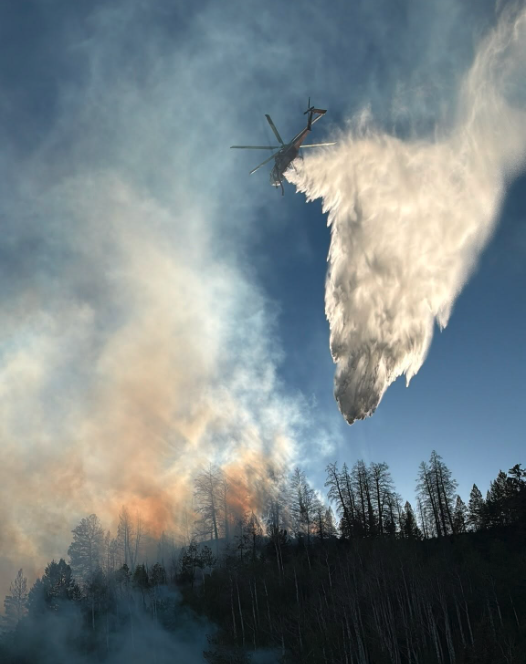
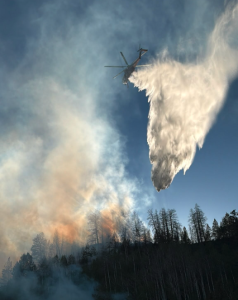
U.S. Forest Service/Courtesy photo
A hot start to June is increasing the risk of wildfires and prompting more Colorado mountain communities to implement fire restrictions.
Colorado Department of Fire Prevention and Control public information officer Tracy LeClair said there has been an “uptick” in wildfire activity since June 1. With above-average temperatures forecasted across the state, LeClair said she expects more people to be recreating in the mountains and urged everyone to follow local fire restrictions.
“Be safe this weekend,” she said. “I think we’re going to see things continue to dry out for the foreseeable future — and conditions can change quickly, especially if we have a wind event.”
Colorado’s mountains are continuing to face severe drought conditions after the record-low snowpack this past winter.
Hot, dry conditions this week prompted Grand, Eagle, Pitkin and Garfield counties to issue fire restrictions. Even areas that have not yet entered fire restrictions, like Summit and Routt counties, are warning of heightened risk.

Support Local Journalism
Temperatures across most of the Western Slope have been five to 10 degrees Fahrenheit above average over the past week, according to the National Weather Service’s office in Grand Junction.
On Friday, National Weather Service forecaster Brooke Scholtens said temperatures in the mountains could approach records. In Aspen, for example, Scholtens said the high was forecasted to hit 84 degrees, which would tie the all-time high record for June 12.
There is no precipitation in the forecast for Colorado’s northern and central mountains for at least the next week and long-term forecasts suggest the hotter-than-normal weather will continue through the summer, she said.
“It seems to be trending that way for the rest of the summer,” Scholtens said. “So we’re hoping to be forecasting some precipitation soon for the area.”
Several wildfires burned on the Western Slope this week
After weeks of wildfire officials warning that June would bring heightened fire danger, several wildfires ignited on the Western Slope this week.
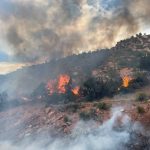
Discovered on Tuesday in the White River National Forest, the Spring Creek Fire continued to burn on Friday across nearly 20 acres near the border of Eagle and Pitkin counties, according to the U.S. Forest Service. As of Friday, fire crews had contained about 20% of the fire, but mandatory evacuations remained in place for a few roads in the rural area.
Earlier this week, the Paradise Creek Fire in South Canyon near Glenwood Springs closed Interstate 70 in both directions for several hours, with multiple small fires also breaking out in Glenwood Canyon. Firefighters have since contained all these fires.
Also this week, a quick-moving structure and wildland fire near Rifle destroyed four apartments. A man driving in Summit County stopped a possible wildfire when he quickly hopped out of his car and stomped out flames ignited by a sparking powerline.
Where to find information on fire restrictions in Colorado
In Colorado, LeClair explained that “home rule” authorities give local governments and county sheriffs, who serve as fire wardens under state law, the power to decide when to implement fire restrictions. Because of this, fire restrictions can vary from place to place with different rules and limitations.
She said local governments and sheriffs use a number of factors, including short- and long-term weather forecasts, the amount of moisture in the vegetation and “human factors,” such as whether it’s a holiday weekend, to determine when to implement fire restrictions.
“It’s that time of year where we’re after the green-up, and we’re starting to see things dry out,” LeClair said. “Temperatures are higher than is normal for this time of year, so I think we’re seeing restrictions going into place a bit earlier than a typical snowpack year.”
The Colorado Department of Fire Prevention and Control website has a map showing which counties are under fire restrictions, LeClair said. But she said it is best to check with the local authorities because there can be delays between when fire restrictions start and when they’re updated on the map.
Anyone who is having a campfire where they are allowed this weekend should be sure to keep the fire under control, monitor it at all times and completely extinguish it — until the coals are cool to the touch — before leaving, LeClair said. She said drivers should also ensure that no chains are dragging and should be careful not to park where dry grass could be touching the hot undercarriage of their vehicle.