Vail Resorts CEO Katz, 20 years on, talks pass products, crowding, acquisitions and growth

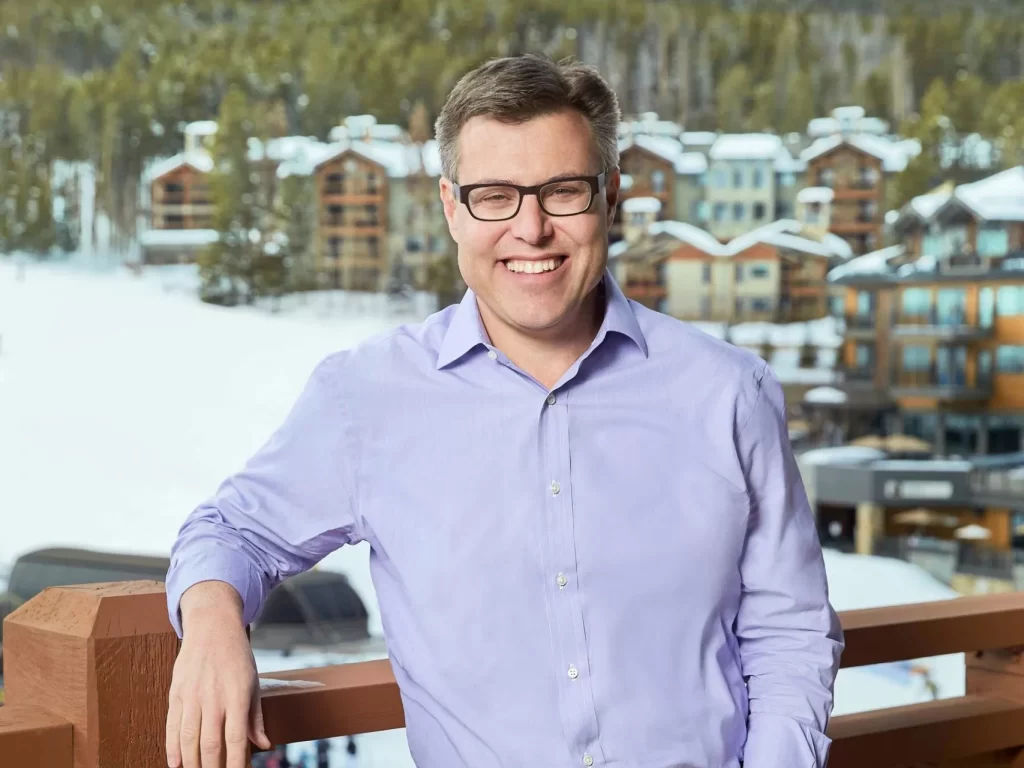
Vail Resorts / Courtesy photo
Editor’s note: This is the first of a two-part, exclusive conversation with Vail Resorts CEO Rob Katz, who remains bullish on the company as he marks the 20th anniversary of taking the helm.
Feb. 28, 2026, came and went without much fanfare in a ski industry suffering through one of the worst snowpack seasons in modern memory in Colorado and across the West, but it was the noteworthy 20th anniversary of the day Rob Katz was first named CEO of Vail Resorts.
Besides announcing on day one that he planned to move the company headquarters from the Seasons Building in Avon to somewhere on the Front Range (it wound up being Broomfield), Katz started laying the groundwork for season pass products that would change skiing forever.
In an exclusive phone interview with the Vail Daily on Tuesday, Katz talked about his return to the helm of the ski company last year after stepping aside for three and a half years — “definitely did not bring any good luck to the ski season,” he joked of the poor snow this season — and what he’s accomplished in the industry since taking over as CEO in 2006.
“No doubt that I do feel proud about how the company was able to lead this transformation around advanced commitment and the introduction of the Epic Pass and then having other ski resorts, both in North America and around the world, kind of follow along,” Katz said.

Support Local Journalism
When he first took over Vail Resorts, the company that first went public in 1997 owned and operated Vail, Beaver Creek, Breckenridge, Keystone and Heavenly, California. Its market capitalization at the time was about $700 million, Katz recalls. It has grown to 42 ski resorts around the world, with a pre-COVID market cap that peaked near $13 billion — coming back to earth in recent years at around $5 billion today.
Season ski passes in 2006 cost nearly twice the amount they do today, for far fewer resorts.
“In a season like this, (the Epic Pass) obviously provided tremendous stability, not just for the company, not just for other ski resorts, like through the Ikon Pass, the Indy Pass or the Mountain Collective, but it’s also provided a lot of stability for the communities because people buy in advance; they’re much more apt to still come on vacation,” Katz said. “And even if they ski less days, they’re still in the community. So, it really provides a broad base of support for everyone.”
In Vail, for instance, Katz is hopeful sales tax numbers won’t drop off as precipitously as the 12% decline in skier days Vail Resorts as a whole has endured so far this season due to historically low snowpack, because he thinks season pass holders provide market stability.
As for all the acquisitions over the years, owning and operating ski areas on four continents provides geographic diversity and therefore better chances of good snow somewhere, but mainly he says they’re all about the season pass product.
“I really saw the acquisitions not to make the company bigger, but to make the pass better for people,” Katz said. “And so that was one of many things we did to have the Epic Pass be successful. But having the company be bigger has been … there are a lot of challenges that come with that.”
And that strategy is one of the main reasons Katz said it was imperative to move the company out of the Vail area and 100 miles east into suburban Denver, even though it kept the Vail name.
“We certainly have folks who are working on the mountain; they obviously need to be near the mountain,” Katz said. “But for a lot of our corporate folks, it wasn’t easy to hire and be able to expand because some people love living in a mountain community, and some people don’t.”
Katz famously took heat for the move from some of Vail’s founding fathers. Vail’s first local realtor and former mayor Rod Slifer, in the Vail Daily book “Rod Slifer & the Spirit of Vail,” recalled getting a tour from Katz of the new corporate offices in Broomfield and telling him, “Well, these are really nice, you’ve done a really good job, but you can’t see Vail from here.'”
Katz recalled that conversation in the book, and to this day he wouldn’t have done it differently.
“It wasn’t just the person you were hiring, but often their spouse and their family,” Katz said of the company’s growth strategy. “So we really felt like we needed to be in a bigger city to really develop and build the corporate group that could scale with the company.”
Asked if there have been unintended consequences of the multi-resort season pass strategy — more crowding, safety, parking, housing, labor issues — Katz is quick with his answer.
“I don’t think season passes are creating crowding,” Katz said. “And every indication that we have is that actually, if anything, it is smoothing visitation out throughout the season so that actually where our visitation has grown, when we have shown growth, has been in off-peak periods. And as you know, Vail is a great example because, obviously anytime we go over 20,000 visits, we have to report that to the Forest Service and the town.”
So far this season, as one would expect in such a low snow year, town of Vail officials confirmed Vail has not exceeded the 19,900 skier-day number that triggers notification to the landowner Vail Resorts leases from, the U.S. Forest Service, and the town. Last season’s steady drumbeat of negative press about massive lift lines, unsafe slopes, ski patrol strikes and more, ignored the basic fact that crowding means enthusiasm for the sport, Katz said.
“In the end, what I do think the industry and our communities have to get comfortable with is that we’re really saying that there are people who want to ski and we want to tell them no,” Katz said. “Because what I typically hear from people is they don’t want the crowding at their mountain, but they don’t really say, well, where should those people go if they want to ski, if they want to kick people off the mountain?”
Katz remember big lift lines on fixed-grip chairlifts when he first started skiing Vail in 1991. He remembers even bigger lines skiing at Hunter Mountain in New York as a kid. Terrain expansions, high-speed quads, six packs and gondolas can meet those challenges, he adds.
“(Reducing skiers), that’s just the wrong premise that we should be looking at this on,” Katz said. “Look, this is never going to be a fast-growing sport no matter what, but we want to keep some level of engagement and enthusiasm. Because if you don’t, I think you can see it go the other way very quickly.”
Michael Childers is an associate professor in the history department at Colorado State University, specializing in the modern American West and the environment. Author of “Colorado Powder Keg: Ski Resorts and the Environmental Movement,” he grew up skiing in Grand County.
“Putting (Katz) into the larger context of the industry, there’s no doubt that he reshaped the ski industry and has a huge role in reimagining how the business side of this thing works,” Childers said in a phone interview. “I think what happens next when you asked about a tipping point … they’re increasing the number of skiers going to these different multi-day mountains. And then that’s allowing them to have the capital and then the need to do on-mountain improvements.”
Childers envisions a wave of expansion that led to political pushback against the industry in the 1970s that ultimately cost Colorado the 1976 Winter Olympics.
“So we’re getting the gondolas and the high-speed chairs and all that on-mountain development. Then we’re going to see terrain expansions to meet this increasing demand. And that’s exactly the same model that happened in the 1960s and 70s that led to all the political backlash,” Childers said. “Vail was kind of the bad guy in that story as well. That was the beginning of these mountains are getting too big, they’re causing too much development, too much gentrification. And it feels like Vail Resorts is back driving that bus yet again.”
Next: Rob Katz addresses environmental concerns facing the ski industry, the need for diversification of the ski company’s customer base, what he’s most proud of over the past 20 years, and how the company will partner with Utah for the 2034 Winter Olympics.