Staff picks: A year in Vail Daily news
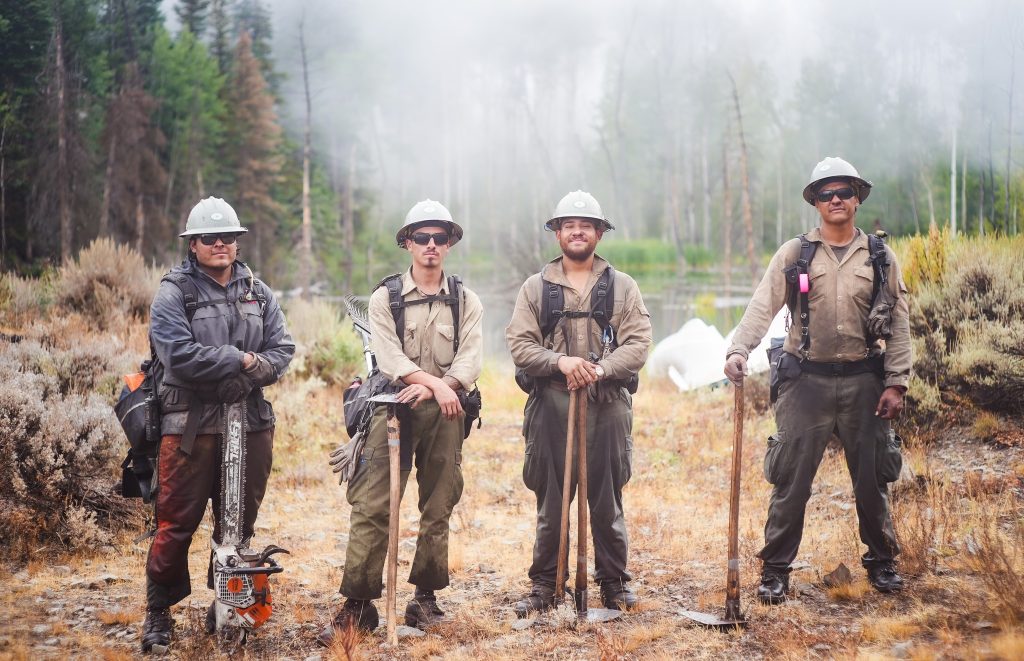
S.Rawding/Derby Fire.
To commemorate 2025, Vail Daily staff members handpicked the work from this year that they are most proud of, to share with readers one last time before welcoming a new year.
Run rabbit, run
When your beat ranges from Lindsey Vonn to prep volleyball to Vail trail series events and doctors and dentists who climb 8,000-meter peaks, it’s hard to select a story you’re most proud of or inspired by.
From a professional perspective, I feel my most valuable days for the folks who pick up a paper come when I unveil a fun feature on the morning of Birds of Prey and then bang out a gamer — fueled by Talons restaurant cocoa — on deadline in the afternoon. But I also relish running alongside members of the community at VRD races and interviewing them after for a story. I’ve realized in both environments that whether you’re a World Cup athlete competing on home soil or a motivated mom who manages to maintain their endurance chops alongside a full-time job, everyone who lives here has a really interesting sports story.
Alas, Jon Harrison’s shocking 100-mile performance at Run Rabbit was one that stood out for me this year.
His story captured what sports’ sanctifying personal journey is all about: friendship, family, determination, patience and ultimately, redemption. Jon and his wife, Genevieve, met Erin Clark — the “other” protagonist of the piece — through running. Both runners towed their kids (literally) along for the training sessions and races, indoctrinating them in the applied theology of trials and miles. Through ups and down, Jon stayed the course, adjusting his goals but stewarding his talents through each season of life. Then, 13 years after posting a DNF at the Steamboat-area century run, the unsponsored athlete bagged a cool $8,500 for his runner-up finish this fall, beating all but one of the pros as he set a three-hour personal record for the distance.

Support Local Journalism
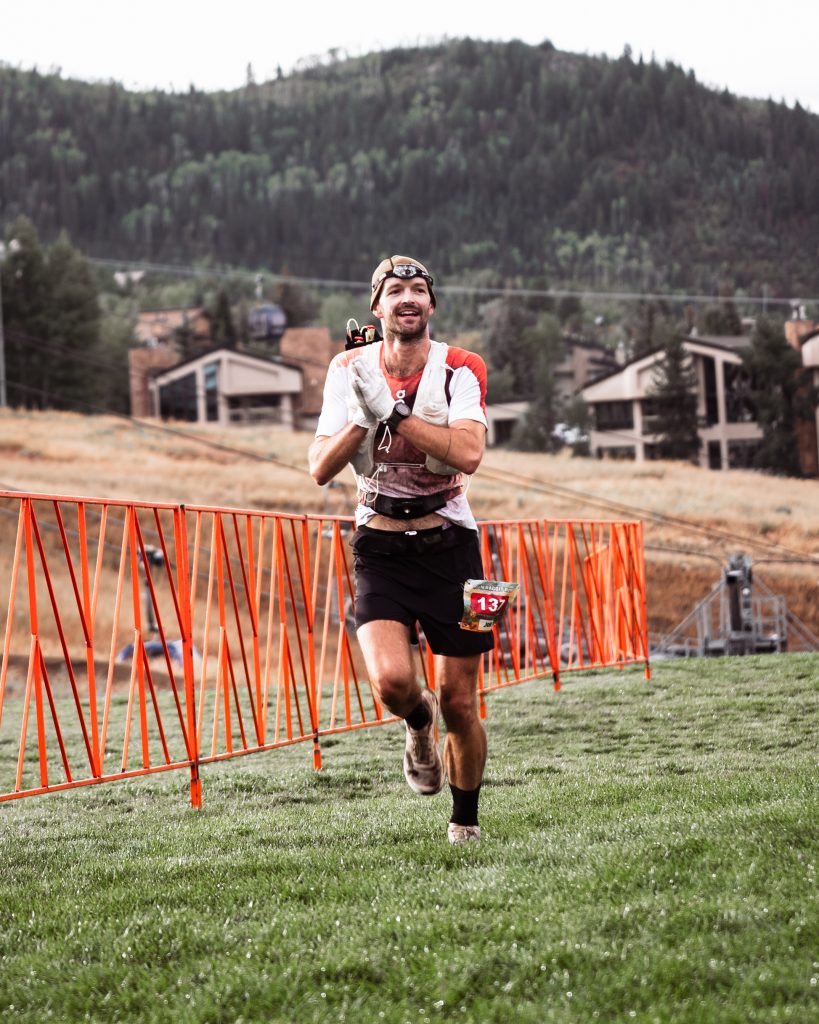
When I spoke with Jon, I was encouraged by the infectious enthusiasm for running — and life — evident in his voice. His spark for putting on a bib is alive and well. As a father-athlete myself, I sometimes doubt whether high-level sport is compatible with raising children. It often feels like a pointless enterprise. But at the core of every “grown up” job or passion project is a childlike joy, a sense of play and the freedom to dream big. For me, Jon’s story was a reminder to keep that shining. It also showed that being diligent, stacking bricks and putting one step in front of the other is not only the way we get somewhere in life — it’s also how we enjoy it.
I love how his wife — a champion ultra runner in her own right — remarked, “(if you) keep showing up, eventually you’ll find yourself in the middle of something extraordinary.”
So, raise a glass for a toast to the new year: Whatever chapter your unique story is in, here’s to believing the next big breakthrough is right around the corner.
– Ryan Sederquist, sports and outdoors reporter
Shedding light on health care challenges
Of the 188 articles I worked on in 2025, there is one that stands out to me. The piece, published Sept. 11, is a powerful, honest and terrifying look into Eagle County’s health providers’ ability to provide health care to those in need in the wake of the Trump Administration’s H.R. 1 bill and statewide budget cuts. I say that as the writer, referring to the interviews I conducted to assemble the article.
In the months following the announcement of these changes, there were ripples of uncertainty community wide — about health care, but also about other topics: food insecurity, school funding, immigration, the stability of small businesses.
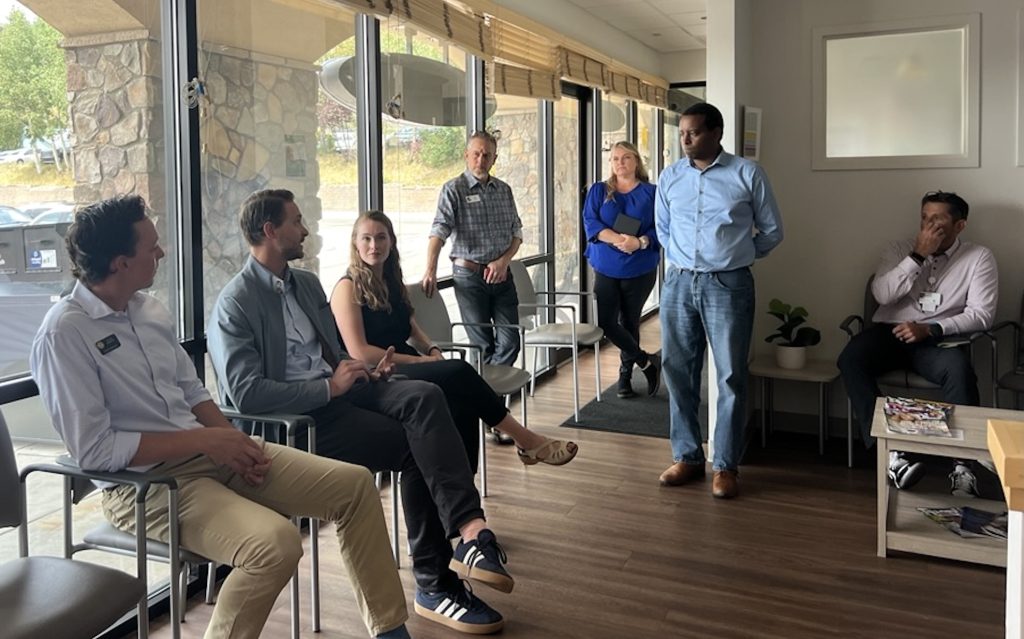
It was during a tour of Mountain Family Health Centers’ Avon clinic with Congressman Joe Neguse, Sen. Dylan Roberts, Vail Health leaders and more in August that I learned about how the clinic maximizes Medicaid payments, provides behavioral health and dental services to those who would otherwise not receive them and that the end of the enhanced premium tax credits, an Affordable Care Act support that brought down the price of marketplace insurance, might spell disaster for many Eagle County residents and Americans at-large.
I had 16 family members in town the day of the tour, and I arrived at our scheduled afternoon activity — skeet shooting — sweaty, late and scandalized.
Health care is not a basic human right in the United States. But what happens in Eagle County when it becomes more difficult to access? I needed to know more.
When people ask me what I do for a living, I sometimes tell them, “I ask questions.” One of my favorite parts of my job as a journalist is getting to talk to people who know more than I do.
Dustin Moyer, CEO of Mountain Family Health Centers, the local Federally Qualified Health Center serving Eagle, Pitkin and Garfield counties that provides primary medical, dental and behavioral health care to 16,500 patients, is one of those people.
During our conversation in early September, he shared with me that even without insurance, people living and working in Eagle County will receive health care. But the strain on Mountain Family Health Centers, which serves everyone seeking care, regardless of their ability to pay, is poised to go through the roof.
Unlike some of my colleagues, I didn’t train in college as a journalist. I studied English literature, wrote some articles on the side, and came to the Vail Daily with a passion for sharing information with my community. I had never reported on the subjects that now make up my weekly schedule: local government, education, water, transportation, and, yes, health care.
Two-and-a-half years later, I’ve learned that my job here is to celebrate the community’s successes and shine a light on the areas where things are not going as well, an opportunity for change to be made.
This story is far from over. In fact, it is just beginning.
As a journalist, I report on topics that are difficult, sometimes heartbreaking. It’s perspective that affects whether I find these subjects depressing or inspiring. In this case, I choose to believe that shedding light on the subject opens it up to change.
As I have heard — and seen — time and again since moving here, and even more since beginning to cover the county government in July, the Eagle County community has a unique ability to come together to support its own. I look forward to continuing to follow this story, and seeing what comes next.
–Zoe Goldstein, reporter
Honoring a legend
As the arts and entertainment reporter for the Vail Daily, I certainly encounter a multitude of interesting and fun stories each year. Looking back on 2025, it’s been a joy to reflect on what has transpired over the past 365 days.
From Vail Mountain Coffee & Tea Company turning 35 to Yeti’s Grind opening up a new coffee shop in conjunction with The Kind Bikes in West Vail. Tavernetta at the Four Seasons has been a welcome addition to the culinary scene while the valley said goodbye to a long-standing slopeside restaurant and bar, Los Amigos. I tried the best wines and caviar at Taste of Vail and even dined on a fairway on hole number four at Red Sky Ranch at the Beaver Creek Culinary Farm to Fairway dinner. But one story that stands out this past year is a piece of art that was dedicated to an icon of the Vail Valley, Helmut Fricker.
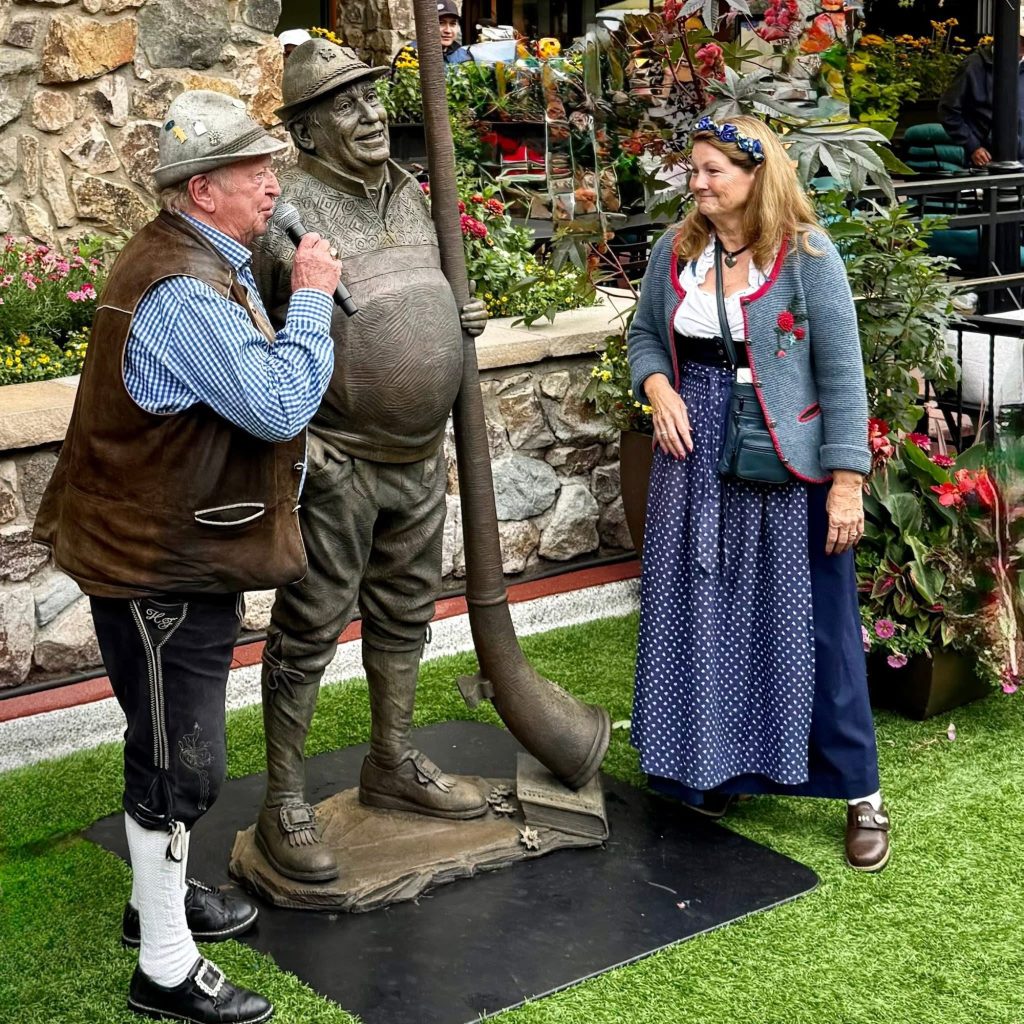
Fricker has worked at Beaver Creek for almost half his life. To honor this beloved entertainer from the Black Forest mountain range in Germany, Beaver Creek revealed a life-sized statue simply titled “A Bronze” at the annual Oktoberfest celebration over Labor Day Weekend.
The Beaver Creek Resort Co. and the Beaver Creek Property Owners Association commissioned artist Steven Whyte to produce an 11-foot bronze statue that depicts Fricker in his signature lederhosen, knit sweater, pins on his hat, buckles on his shoes and his tall alpenhorn in hand.
The normally chatty Fricker was speechless when he saw it.
“First of all, I have no words. I could not believe it. I looked at the statue, and it looked just like me, 100% like me. I’m honored to have it displayed here in Beaver Creek,” Fricker said.
–Tricia Swenson, arts and entertainment reporter
Telling their stories
When I was studying journalism in college, a real-life reporter once lectured our class about how gratifying of a career it can be.
If you like conducting interviews and doing research, he said, you’ll find one of the most rewarding parts of the profession to be writing obituaries.
I nearly dropped out of school right then and there.
But now, as a reporter, I often think about how right he was. Getting to learn about people’s lives, tell their stories and preserve their legacies in print is often what I find to be most fulfilling, although I never look forward to doing it. I’d call it a type-2 kind of edification — painful while it’s happening, but satisfying upon completion.
This year we lost several key members of our community, some of whom I was able to profile immediately, others I’m still composing.
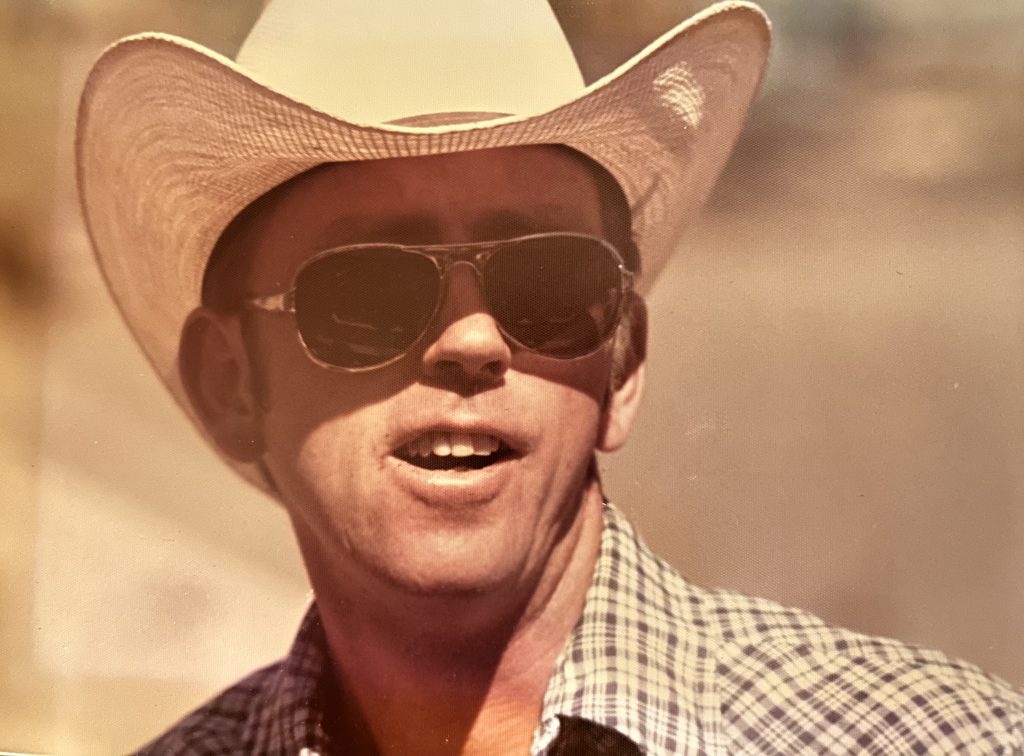
Two people stand out in my mind as being lost too soon — Frost Creek superintendent Derrick Dreyer and ski media public relations professional John Dakin. Dreyer died in a car accident and Dakin had Parkinson’s disease.
I knew both of these men personally but had never met any members of their families, and that was a treat in itself. Dakin had two nieces who confirmed something that those who knew him got to experience — he was especially adept in deploying his dry sense of humor in the right situations.
But Dakin’s niece Stephanie Spehar said something interesting about his sense of humor that stuck with me.
“It wasn’t a tool,” she said. “It came from a truly genuine place.”
And in the end, “that’s what attracted you to him,” she added. “He was straight from the heart.”
With Dryer, his family also confirmed something those who knew him had assumed: He had always thrived in the outdoors.
Dryer grew up in Michigan near the shores of Lake Michigan, where he spent a lot of time with his older sister, Wendy, and her husband, Joe Cossey.
“You could always find Derrick outside, usually by the water, swimming or fishing,” Cossey said.
Two individuals we lost later in 2025 had lived longer lives than Dreyer and Dakin, though their passing was no less deeply felt — Luc Meyer, the legendary Vail restaurateur who founded the Left Bank, and John Donovan, the dedicated public servant for whom Donovan Park is named.
Meyer’s life revolved around family and cooking. On one memorable vacation, those passions were combined as Meyer treated his family to a new snack.
“Luc said he had heard about a place that had square hamburgers,” said his wife, Liz. “The place was called Wendy’s.”
His son, Hugo, said that when Meyer tried to order a Wendy’s burger medium rare, the cashier looked at him like he was crazy.
“So he went behind the counter and spoke to the cook, and showed him how long he wanted it on the grill and when to flip it,” Hugo said.
Donovan was Vail’s longest consecutively serving council member, sitting on the Vail Town Council for 14 years straight. Throughout his time as an elected official, he was concerned about Vail’s growth.
Sensing a booming real estate industry was creating rapid growth, Donovan was instrumental in getting Vail’s real estate transfer tax in place. Probably his most radical act as an elected official was to insist that the transfer tax should be passed by ordinance because, he “didn’t have confidence in the voters,” the Vail Trail quoted him as saying in 1980.
“He was chastised for that remark, but he never tried to retract it or apologize for it,” the story added.
Donovan’s bold leadership is one of many things that made him such a legend in town.
As we close out 2025, I find myself working on two more posthumous profiles, which we will publish in the coming weeks — Jim “JC” Clark, who was an original member of the Vail ski patrol and helped plan Beaver Creek and Arrowhead; and Sybill Navas, who moved to Eagle County in the 1970s, worked for the town of Vail for nearly her entire career, and helped to develop and enrich events like the GoPro Mountain Games and the Bravo! Vail concerts.
-John LaConte, reporter
The challenges are what bring us together
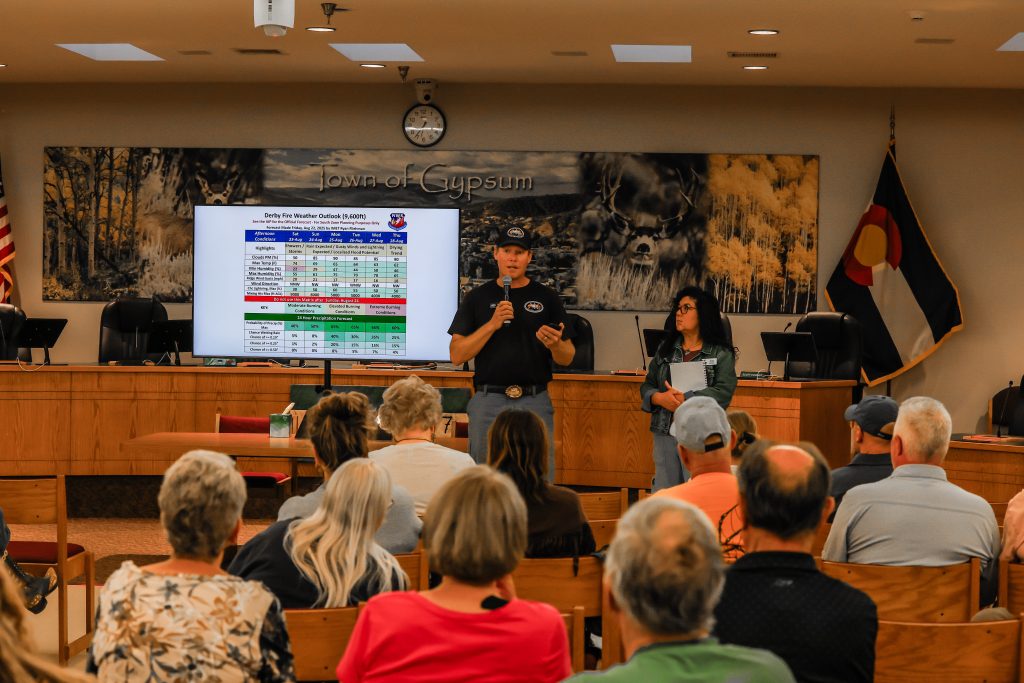
This summer, the Derby Fire burned 5,453 acres in Eagle and Garfield counties. It threatened homes and livelihoods but also brought out the best in the community as people banded together to support those in need.
The lightning-ignited fire was first detected on a cliff above the East Fork of Red Dirt Creek on Aug. 17. A few days later, it was about 100 acres, but quickly grew larger. Four days after it was first spotted, the fire measured at 1,713 acres, according to the Northern Rockies Complex Incident Management Team that was in charge of the controlling the blaze.
The management team was extremely active on social media, and responded quickly to questions, helping keep the public informed as the very visible fire burned a few miles north of Interstate 70.
Evacuations and closures were enforced, leaving residents in the Sweetwater Lake area to find safe havens for their animals, belongings and selves. Enter, Eagle County. The community did not hesitate to offer any support.
Members of the Salvation Army’s Emergency Disaster Services team set up an evacuation center at Two Rivers Village in Dotsero on Aug. 20. Members of Eagle County Sheriff’s Office, Eagle County government and Vail Health Behavioral Health were all on-site to provide additional resources.
While most residents with livestock managed to move or relocate their animals on their own, Connie Melzer with CSU Extension in Eagle County was on hand to help with relocation efforts.
Less than a week after it began, the Derby Fire was 4,000 acres, displacing 400 residents and was the No. 1 priority fire in the country due to the fire’s proximity to communities and its growth pattern.
Fire danger soon deflated and rain helped crews slow the growth of the fire. By Sept. 3 the fire was 41% contained and the final update came on Sept. 8.
The Vail Daily team provided daily updates and stories, ensuring the latest information was available and clear to anyone who sought it out. Fires are terrifying forces of nature, but always bring out the best in communities and newsrooms.
– Shelby Valicenti, digital engagement editor
Vail brings the party home
Yeah, we’re not having a great snow season.
Such was the case this past April in Austria, where me and five of my best friends traveled for an EDM festival atop Solden. What we found there, in lieu of incredible skiing conditions, were incredible party conditions. Instead of dropping cliffs, Steve Aoki and Martin Garrix dropped beats while we danced in our boots in front of a most picturesque Alps backdrop, with the sun beating on our smiles.
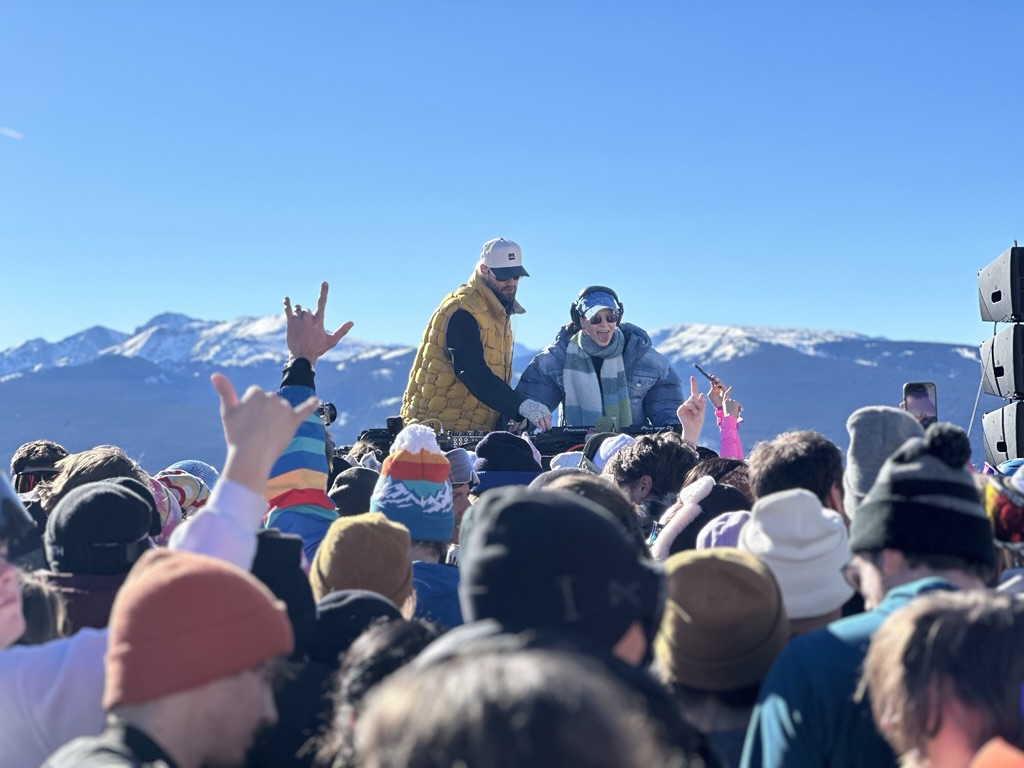
Fast forward to December, and suddenly I’ve found myself in a similar scene, but this time it was right down the street in Vail, where Sofi Tukker led concertgoers on a cross-mountain après crawl, starting with a mountaintop performance at Eagle’s Nest in Lionshead and ending with an epic pyrotechnic-fueled finale in Ford Park, with a whole lot of fun stops in between. We only got one top-to-bottom lap in that day, which is not too different from days I’ve had in Solden, Stubai, Ischgl, Chamonix, Zermatt, Verbier, Cervinia and Madonna Di Campiglio, where the party ultimately took precedent.
There are days when I like my job, and there are days when I love my job. The ability to live that full European après feeling — complete with endless views, beats thumping and an Aperol spritz in hand — this close to my home, certainly puts covering these events in the latter of those categories.
As someone who likes vibes as strong as they are good, they were plentiful throughout this majestic day on Vail Mountain.
A friend recently joked that Vail can’t “techno their way out” of poor snow conditions — to which I laughed … ending with a hint of “au, contraire.”
In her defense, she wasn’t there that day to see what I saw.
– Sean Naylor, interim editor
In closing, we raise that spritz to you — our readers. We thank you for supporting us, we are proud to serve this community and we look forward to doing more of it in 2026.
See you next year.