‘An olive branch to producers:’ Colorado’s range rider program seeks to decrease wolf conflict, rebuild trust
Colorado Parks and Wildlife hosted a five-day training for 15 range riders who will spend the next 5 months working between wolves and livestock

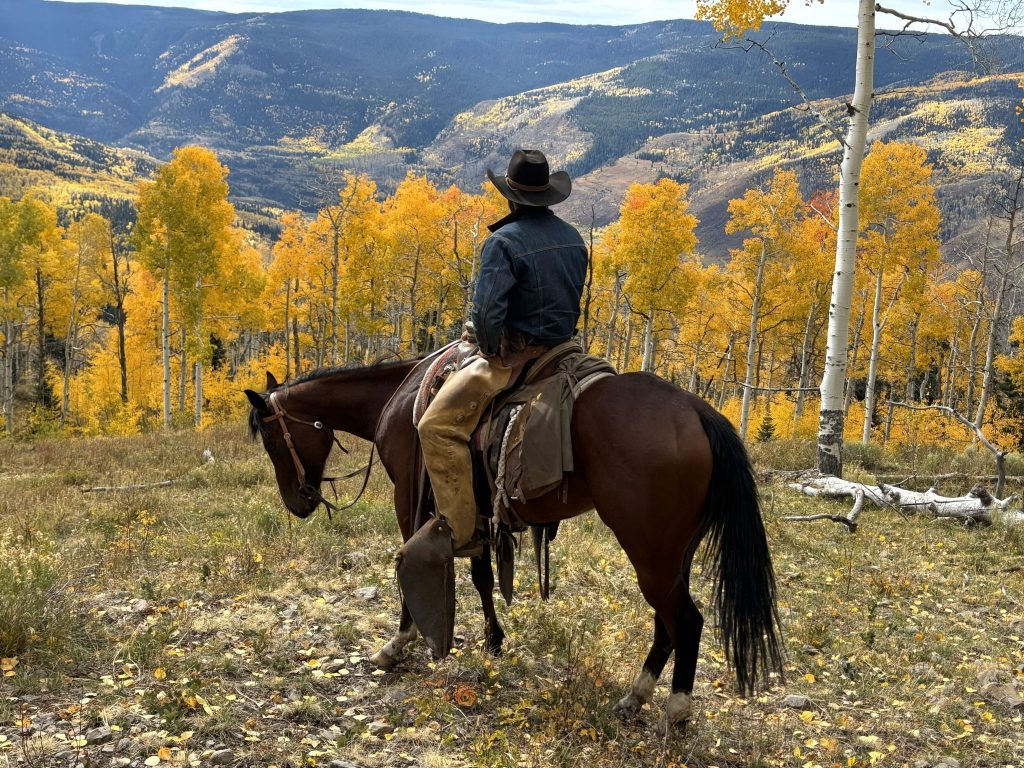
Colorado Parks and Wildlife/Courtesy Photo
GRAND JUNCTION — Be curious. Go out every day and earn trust. Watch the birds. Persistence is better than intensity when it comes to hazing wolves. Don’t panic and take a deep breath. Stay safe. Keep predators uncomfortable. Livestock comes first. Tell the truth. Don’t think like a human. Learn patterns.
These were just some of the pieces of wisdom, advice and instruction handed out to Colorado Parks and Wildlife’s 15 range riders during a five-day training in Grand Junction as the agency prepares for the second year of its program.
“Keeping livestock producers on the landscape is the goal,” said Rae Nickerson, Colorado Parks and Wildlife’s wolf damage and conflict minimization manager. “I hope that in five years, whether the range rider program is still 15 people or 40 people or five people, that the outcome is the same, which is that we haven’t lost any of our producers because they couldn’t keep up with every other challenge they’re facing, and now they’ve got wolves on top of it.”
Nickerson was tapped to join the state wildlife agency in December, in part to help coordinate the range rider program, after leading Colorado’s training last year. Drawing on a career immersed in wolf conflict in Washington, Arizona, New Mexico and Arizona, she is currently getting her Ph.D. from Utah State University, defending a dissertation on the effectiveness of range riding.
Parks and Wildlife, in partnership with the Colorado Department of Agriculture, launched the range rider program in spring 2025, aiming to help reduce conflict between wolves and livestock in the second year of the state’s restoration effort. While 11 riders were hired, only eight completed the full five-month season. The Department of Agriculture also has two staff range riders — one in the northwest and one in the southwest — who support the program. It is primarily funded by the “Born to be Wild” wolf license plate.

Support Local Journalism
Now, in its second year, Colorado is coming in with new plans for communication and coordination, double the number of riders (seven of whom are returning), new riders setting up in the southwest and five-year contracts.
It’s a contracted position that draws individuals with knowledge of livestock husbandry — many of them producers themselves — backcountry, tracking and wildlife experience, solid communication skills and connections with local communities.
“Everybody is doing it because they’re passionate about it, and we’re doing it because we want to help and make an impact,” said Emma Baker, one of the agency’s returning range riders who is stationed in Eagle County. “We do have to put so much into it in terms of what all we have to provide in upfront costs, and I think that shows how dedicated all the riders are to making a difference.”
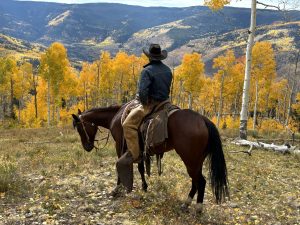
While Parks and Wildlife provided the riders with Garmin InReaches, five game cameras and a work phone, the riders are responsible for providing much of the equipment required to ride. This includes providing their own horses (or ATVs), trucks, trailers, saddles, camping gear, insurance and more.
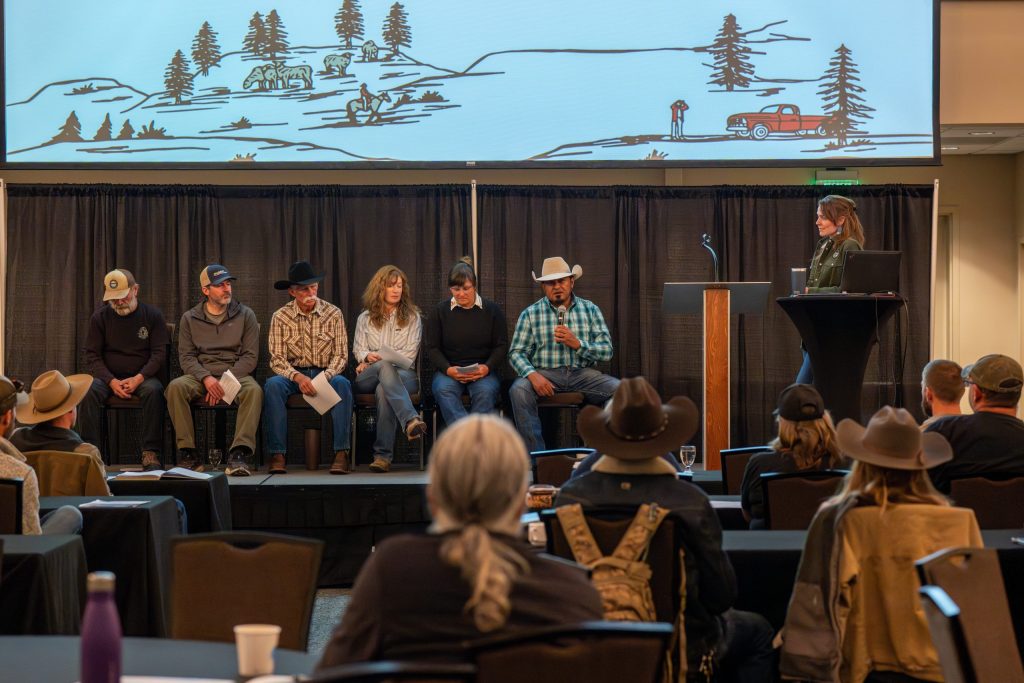
This year, Colorado’s 15 range riders will be placed across the state, primarily in areas where producers have experienced or are experiencing conflict, overlap between wolves and livestock and where packs are establishing dens and territories. It is also based on producer requests, wolf collar data and rider availability.
The riders are contracted from May to October, working up to 22 days a month. New riders will be paid $30 an hour up to 10 hours a day, returning riders up to 12 hours. With the new five-year contracts, riders may also be called upon in the winter and shoulder seasons, should conflict or a need arise, addressing a concern raised by some producers that the current five-month period doesn’t cover calving.
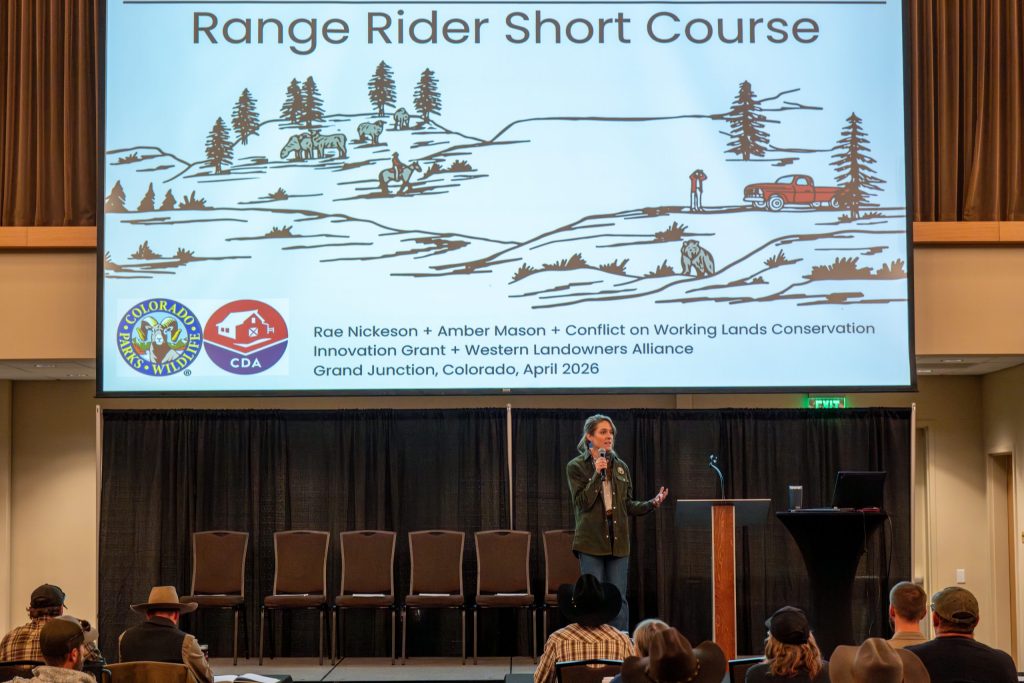
This year’s training kicked off on Monday, April 27, with a session open to the public followed by two days of classroom training for the range riders and two days of track and sign certification. Throughout the first three days, producers and range riders from other Western states shared their expertise and knowledge with wolves and other large predators. Representatives from the Colorado Wool Growers Association and the U.S. Department of Agriculture Wildlife Services also presented.
The training covered everything from backcountry first aid and de-escalation training to learning about cattle and sheep — and how they react to predators — allowable wolf hazing techniques, data reporting requirements and tools to be productive and effective range riders.
“All this is so new for Colorado,” Nickerson said. “The way that we do the training here, it looks really different from the way that we do the training in other states, because those folks have been handling predators for longer, they’ve been riding for longer and there’s more of a culture around it than here. So here it feels like we’re doing a lot of work to get people to have a really practical and realistic idea of what’s possible.”
What are range riders?
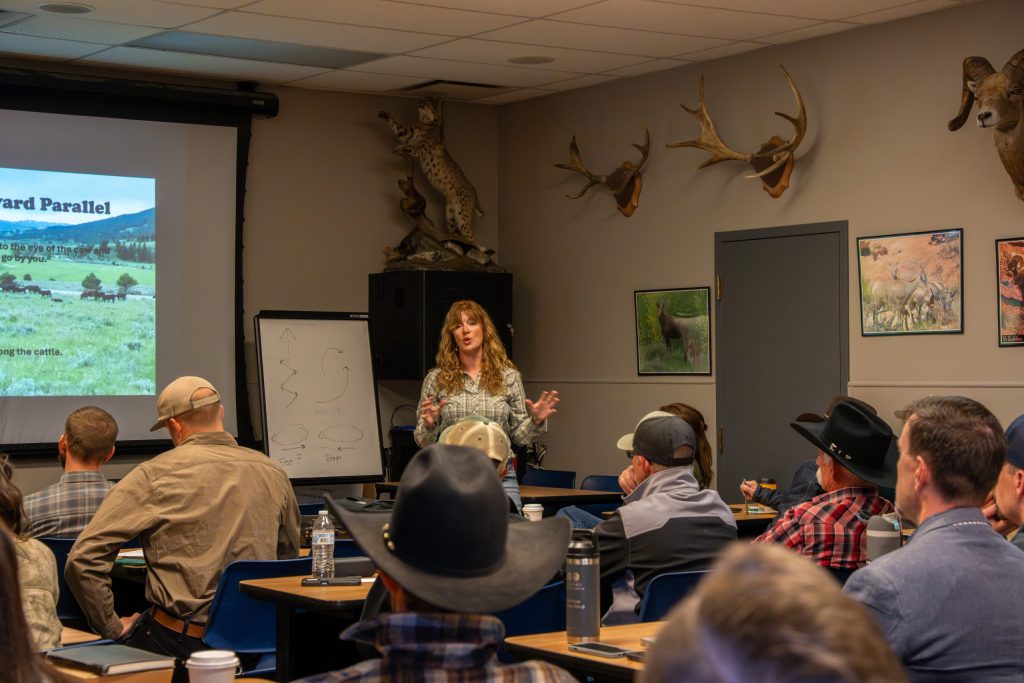
At the simplest level, Nickerson defined range riding as “the use of human presence, monitoring and management to help reduce conflict between livestock and carnivores.”
“Range riding is not a silver bullet tool,” she said. “And it’s less a nonlethal tool in and of itself, and more of an effective way to deploy nonlethal tools, because riders understand the context of what’s going on on allotment.”
While range riding has emerged as a new term in the era of predator reintroduction and conservation, it’s not a new job.
“The old school term is a person who tends livestock, especially cattle and sheep. We can be ranchers, cowboys, sheepherders,” said Amber Mason, a livestock producer in Montana’s Centennial Valley. Mason shared insights on low-stress livestock handling, cattle health and her experience with wolves and grizzlies.
“Nowadays, there’s the new term of range rider, and it’s a person whose main goals are to mitigate livestock and wildlife interaction, and hopefully depredation. They work around livestock, but they mainly focus on wildlife movement, collecting data and the general larger picture,” she added.
During the April training, the experts shared skills and tips for successful range riding, from the obvious to the less obvious.
“In the places I’ve worked that have successful rider programs, the producers aren’t measuring effectiveness 100% on whether or not they have reduced conflict,” Nickerson said. “It’s that being able to sleep better at night, the relationship building with the agencies, the communication with other producers in their watershed — there’s a lot that a rider does that is beyond just reducing conflict.”
How do range riders spend their time in Colorado?
In 2025, Colorado’s range riders rode more than 14,800 miles and over 4,000 hours for 34 producers. They detected 15 wolf depredations or livestock injuries, according to Nickerson.
How riders spend their time often differs from the “romantic narrative” that they “are out on the landscape, chasing wolves night and day, engaging in wolf warfare,” Nickerson said.
“Sometimes conflict does get that intense that you are spending a lot of time hazing wolves,” she said. “But if you’re not having high levels of conflict, focusing on predators for the most part is a huge waste of time.”
“Wolves are incredibly elusive,” Baker said. “We spent weeks trying to get close enough to want to hit it with the rubber slug and couldn’t … they’re tricky and smart.”
Skylar Fischer, one of the state’s returning range riders, works in the Yampa Valley near her family’s cattle ranch in Toponas. She was riding in an area where the King Mountain Pack denned and was rotating through frequently, and yet, “I never saw a wolf last year,” Fischer said.
“I got plenty of pictures of them on my (game) cameras. I knew they were there,” she said.
Day-to-day, a range rider’s job is more about making observations and collecting data.
“Your job is to learn patterns — the patterns of your livestock, the patterns of your wildlife and the patterns of your landscape — like back your hand, so that when something shifts, that could be signaling to you that a conflict is brewing or something else is going on, you can catch it while you still have time,” Nickerson said.
In Colorado, the reintroduced wolves are collared, providing GPS location data to Parks and Wildlife. The agency receives four locations every 16 hours. By collecting signs of wolves — scat, fur, tracks and depredations — range riders help provide a larger picture of the predators’ activities not illustrated by the collar data.
“The wolves loved hanging out on one piece of our property, and the collar data never showed that they were there, but you got these big old footprints,” Fischer said. “(The collars) only pick up so much information, so there’s gaps of time.”
The information “helps all of us —the producers, (CPW and CDA) as agencies — help make better decisions about conflict and how we prepare so that we’re being proactive instead of reacting as much as possible,” Nickerson said.
That information becomes more valuable the longer a rider spends learning the landscape. Nickerson said most producers report it takes one to two years for a range rider to understand the area well enough to be effective. With Colorado’s five-year contracts for riders, part of the goal is to help establish that stability.
“We have to have that continuity and that knowledge base from year to year,” said Bonnie Eddy, executive director of Colorado Wool Growers Association. “To start over with a new range rider every year, in some cases, it’s almost a waste of time.”
While it wasn’t every day, riders last year did spend time hazing wolves out of heavily-conflicted areas and running night watches.
Baker was one of those riders. While based in Eagle County, she floated around to help in Pitkin, Grand and Routt counties. When she was physically between the wolves and cattle, Baker said she really saw the tangible purpose of her work.
“Being face to face with the people who are being affected by this reintroduction makes it a lot more real, and just being able to listen to them and hear their perspectives and try to support them made it feel a lot more tangible and real,” Baker said. “The fact that (there were moments where I knew) me being here is probably preventing wolves or other predators from wanting to spend time here, that made it feel tangible to me.”
Describing a typical day, Baker said she “would try to ride a different route every day, even if it was only slightly different, just to kind of keep myself kind of unpredictable for the wolves.”
“It’s definitely not all about the wolves,” Baker said. “We’re trying to make the livestock the priority… We can prevent a lot of conflict through watching the livestock, if they’re sick or stressed in some other way, observing their behavior can tell us if wolves have been around.”
How range riding fits into Colorado’s wolf reintroduction
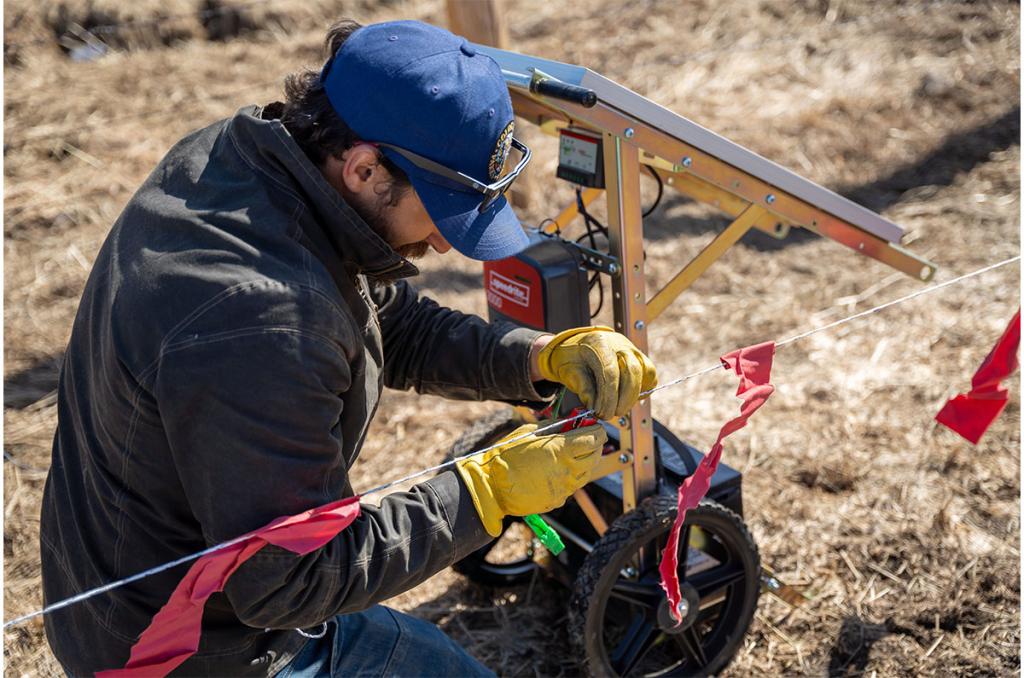
In Colorado’s nascent wolf restoration, Parks and Wildlife’s range riders are not only playing a critical role in the agency’s biological work, but also in the more complex social and political elements.
Colorado’s wolf reintroduction has been controversial since it was mandated by a 2020 ballot measure. The measure — which was rejected in 51 of Colorado’s 64 counties, including all but five Western counties — left many Western Slope producers feeling like wolves were forced on them. During the training, the range riding program was described as a bridge, or the glue, between Parks and Wildlife and producers.
“It’s definitely a bit of an olive branch to producers,” Fischer said. “It’s sunk in that wolves are here. We’re all just dealing with it now, but if you can get a range rider that producers trust and know, that helps bridge the gap, because my ranchers and CPW are not seeing eye to eye right now and probably won’t for a little while.”
Fischer said she was “voluntold” to join the range rider program last summer by her community.
“All of the private land in our area, pretty much, is a no-go zone for CPW still. It’s gotten a little looser, but once all the wolf stuff started coming in, we weren’t getting enough information and everybody stopped letting CPW come on their property,” she said.
When Parks and Wildlife started asking around the community for anyone interested in range riding, at least three producers threw Fischer’s name in the ring.
“It was mutually beneficial for the community to have somebody that they knew and trusted and also for CPW to be able to get somebody out there because I’m kind of walking the line between both of them,” Fischer said. “It helps if you have somewhat local riders or somebody who producers already trust because you’ve got one foot in the door. Ag is a very tight community.”
Her existing relationship with the community not only allowed producers to reach out when they had questions or needed help, but it also kept things in perspective for her.
“It’s very easy to get wrapped up in the data of it all and the CPW side of it being a job,” she said. “But then I go home and the wolves walk next to my chickens, cows and yard dogs and it definitely keeps it in perspective that while I might also be doing this job, I’m also living on the landscape with these animals.”