Pain at the pump: Colorado High Country residents adjust routines as gas prices spike
As gas prices surpass $4.50 for several Western Slope counties, drivers may start cutting trips and rethinking summer travel

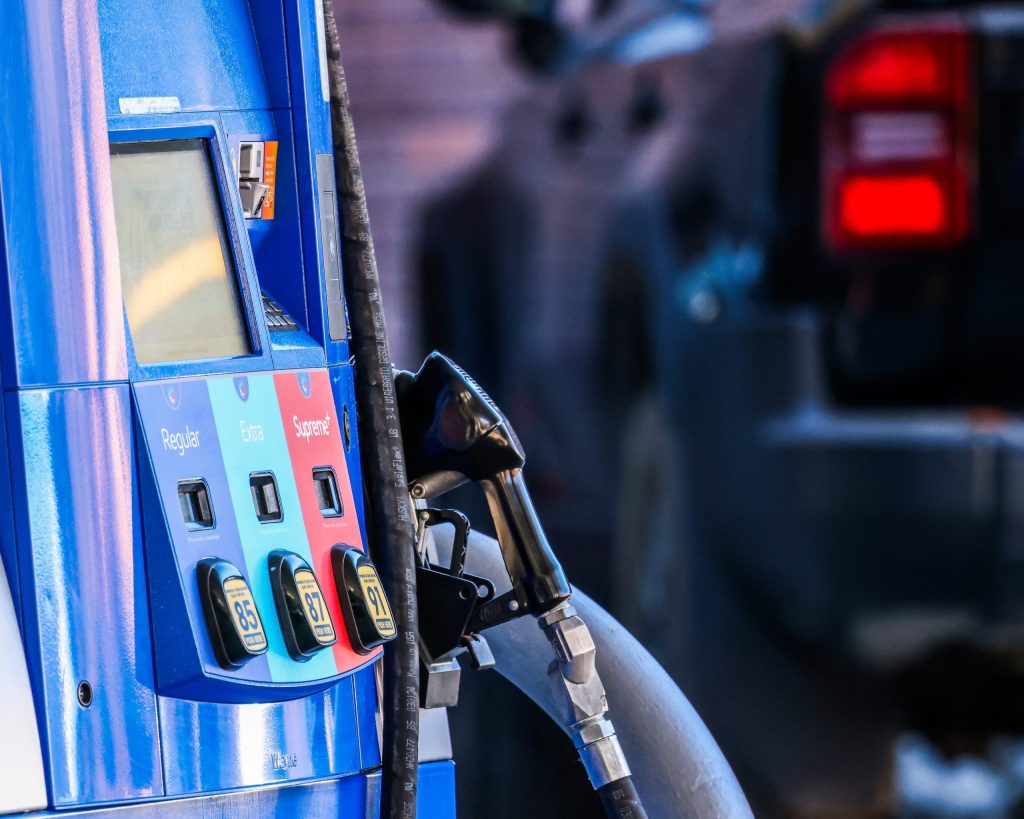
Austin Colbert/The Aspen Times
As gas prices in Colorado mountain towns soar past the $4.50 mark, residents are starting to adjust their driving behaviors — and potentially, their summer plans.
Average gas prices in the U.S. are up more than 30 cents from one week ago, and roughly $1.32 from one year ago as of May 5, according to data from the American Automobile Association.
The $4.48 national average comes as the U.S. explores efforts to reopen the Strait of Hormuz — a major global shipping route through which 20% of the world’s oil is transported. West Texas Intermediate crude oil prices are trading roughly between $101 and $103 per barrel as of May 5, up more than 75% compared to May 2025.
“It is going to be an expensive summer,” said Skyler McKinley, the Colorado regional director for AAA. “Budget for $4.50 gas for the foreseeable future, budget all the way up to $5 gas, and let’s hope that that budgeting goes far enough.”
Average gas prices in Colorado sit six cents lower than the national average at $4.42 — up $1.36 from one year ago and almost 60 cents higher than in early April.

Support Local Journalism
The average price per gallon for regular unleaded gasoline is inching closer to the highest average price on record for Colorado, which reached $4.92 in June 2022. The previous record was attributed to a combination of factors, including heightened post-pandemic demand and supply constraints driven by Russia’s invasion of Ukraine.
The cost is worse for rural Western Slope towns, where prices range from $4.50 in Grand County to $5.79 in Pitkin County as of May 5, according to the American Automobile Association.
On May 5, the association reported the following average gas prices across the Western Slope:
Pitkin County: $5.79
Garfield County: $4.60
Grand County: $4.50
Routt County: $4.53
Summit County: $4.53
Eagle County: $4.70
McKinley said gas prices are typically elevated in the High Country because of the labor and equipment required to transport gas through the mountains, as well as the lack of competition between stations.
The town of Vail, for example, hit an average regular gas price of $4.64 on May 5, roughly 23 cents more than the Denver average. Vail’s gas prices are 45 cents higher than one month ago and $1.13 higher than May 2025. Diesel has seen a greater uptick in prices, jumping more than $2 over the span of one year to $5.68.
“It’s deeply frustrating for anybody, regardless of income level, but doubly so for Colorado working families to go pay $4.50 at the pump,” McKinley said. “One thing that’s also true is that prices spiked in a similar fashion in 2022 and, while that was unpleasant, we did get through it. … In the moment, it really hurts. In the long term, we tend to accommodate and make do and get through it.”
In the past, climbing gas prices have led to notable changes in consumer behavior, such as drivers going out of their way to find cheaper gas stations or adjusting their vacation plans.
The American Association of Automobiles conducted a broad-based survey in 2022, which identified $4 as the “tipping point” where most U.S. consumers begin adjusting their behavior to respond to heightened prices.
Last time prices spiked this sharply, McKinley said, roughly two-thirds of Americans said they made meaningful changes, while a quarter said they made major ones. Eight in 10 Americans said they would cut trips first when faced with rising gas prices.
“The most consistent finding in our data is that driving less is the first thing that people are going to do to the extent they can control it. It’s the easiest lever to pull,” McKinley said. “That’s exactly what you’d expect, and we’re going to start seeing that bear out, especially as we verge on $4.50.”
In the High Country, residents might be more inclined to consolidate errands into single trips to avoid unnecessary commutes on Interstate 70. Younger drivers are also more willing to carpool, the survey showed, though it’s not as common.
“This has an impact on traffic and retail patterns,” McKinley said. “Older drivers do this a lot — they combine what used to be multiple trips into one … because you’re already coming down the hill, or you’re already going to EagleVail. You’re probably going to not travel to an errand when convenient, but rather when strategic.”
Rising prices from the ongoing war with Iran also line up with a natural increase in gas prices. According to Consumer Energy Alliance, gas prices are typically higher in the spring and summer due to increased demand and the switch to more expensive “summer-blend” fuel. Drivers typically begin noticing an uptick in prices around February or March, peaking around May and remaining elevated through the summer travel season.
“The open question for the High Country is the extent to which people will change vacation or travel patterns. Most Americans say they’re still going to go on vacation, and do still go on vacation,” McKinley said. “That’s true at $4, it’s true at $4.50, is it true at $5? My God, I hope we don’t find out, but anything is possible right now.”
He added that, as the country’s travel economy becomes more expensive and airfare goes up, driven by fuel prices, many Coloradans might consider road trips as a vacationing alternative.
“When it comes to traveling and vacationing (in) 2022, 42% of our survey respondents said they wouldn’t change vacation plans regardless of price. I don’t know the extent that that holds true,” McKinley said. “I wouldn’t be surprised if we see a disproportionate share of Coloradans in the High Country this year compared to out of state travelers.”