Ballot proposal seeking to enshrine Colorado’s right to hunt and fish clears hurdle
Opponents of the measure are concerned it could limit wildlife management flexibility and spur legal challenges

Howl for Wildlife/Courtesy Photo
A group seeking to establish a constitutional right to hunt and fish in Colorado has cleared a major hurdle on its way to the November 2026 ballot.
On July 8, supporters of what’s currently known as Initiative 302 submitted over 180,000 signatures to Colorado’s Secretary of State.
“This commitment by the people demonstrates the energy behind preserving our heritage here in the Centennial State this November,” said Dan Gates, founder of Coloradans for Responsible Wildlife Management, in a news release. “Now it’s time to get it across the finish line and codify this in the state constitution so current and future generations of sportsmen and women and science-based wildlife managers can know that hunting and fishing can be sustained in perpetuity.”
For a citizen-led measure to make the ballot in Colorado, organizers must get their measure approved by the Title Board and collect around 124,000 signatures from Colorado registered voters. Following its submission, the secretary of state’s office has until Sept. 2 to review every signature submitted for Initiative 302 and certify it for the ballot. At that point, it will also receive its official proposition number.
The proposed measure is backed by the International Order of T. Roosevelt, a Wisconsin-based organization with a stated mission of protecting the North American Model of Wildlife Conservation, and supported by Coloradans for Responsible Wildlife Management, Howl for Wildlife and the 76′ Group.

Support Local Journalism
Opponents of the measure argue that Initiative 302 is not only unnecessary but could have long-term consequences for how the state manages wildlife.
What does the ‘right to hunt’ measure propose?
As written, it proposes adding language to the state’s constitution establishing a “right of the people of Colorado to hunt, fish and take fish and wildlife including by traditional methods.”
It also includes provisions that hunting and fishing “shall be the primary and preferred means of responsibly managing fish and wildlife populations,” and clarifying that it does not limit the authority of the Colorado Parks and Wildlife Commission and state legislature to regulate hunting, fishing and wildlife, so long as “any such regulation must be reasonable and necessary” for scientific management, public safety or preserving hunting and fishing opportunities.
As a constitutional amendment, it would require 55% of the vote to pass.
Proponents see it as a proactive measure to protect hunting, fishing
Charles Whitwam, founder of Howl for Wildlife, a digital advocacy platform designed to mobilize against anti-hunting legislation, said the measure is necessary “because the opportunity to hunt and fish should not have to survive one political crisis at a time.”
Howl is based in California and does advocacy work across all 50 states and in Canada.
Whitwam said Proposition 127 — a failed 2024 citizen-led ballot measure that sought to ban the hunting of mountain lions, bobcats and lynx in Colorado — is the clearest recent example of why the state needs the right established in its constitution.
“Colorado voters rejected it, but conservation groups had to spend millions of dollars to correct an emotional and misleading campaign about mountain lion management,” he said. “The right to hunt and fish helps make sure future attempts to rewrite wildlife policy through the ballot box face a higher standard, especially when those efforts would undermine a constitutionally protected opportunity.”
In establishing a constitutional right, Whitwam said, future efforts like Proposition 127 would face a higher threshold to pass — requiring 55% of the vote rather than a “simple 50% plus one” majority.
“It does not make hunting untouchable; it makes the opportunity harder to erase,” he added.
While like Proposition 127, the initiative is a citizen-led effort, Whitwam said it differs from these “ballot box biology” measures in that it does not impact Parks and Wildlife’s ability to manage hunting, fishing and wildlife.
“It does not eliminate seasons. It does not eliminate licensing. It does not eliminate bag limits. It does not eliminate method-of-take regulations. It does not change private property laws. It does not authorize trespassing. It does not prevent closures when closures are needed. It does not prevent regulation for conservation, public safety or the future of hunting and fishing opportunities,” he said.
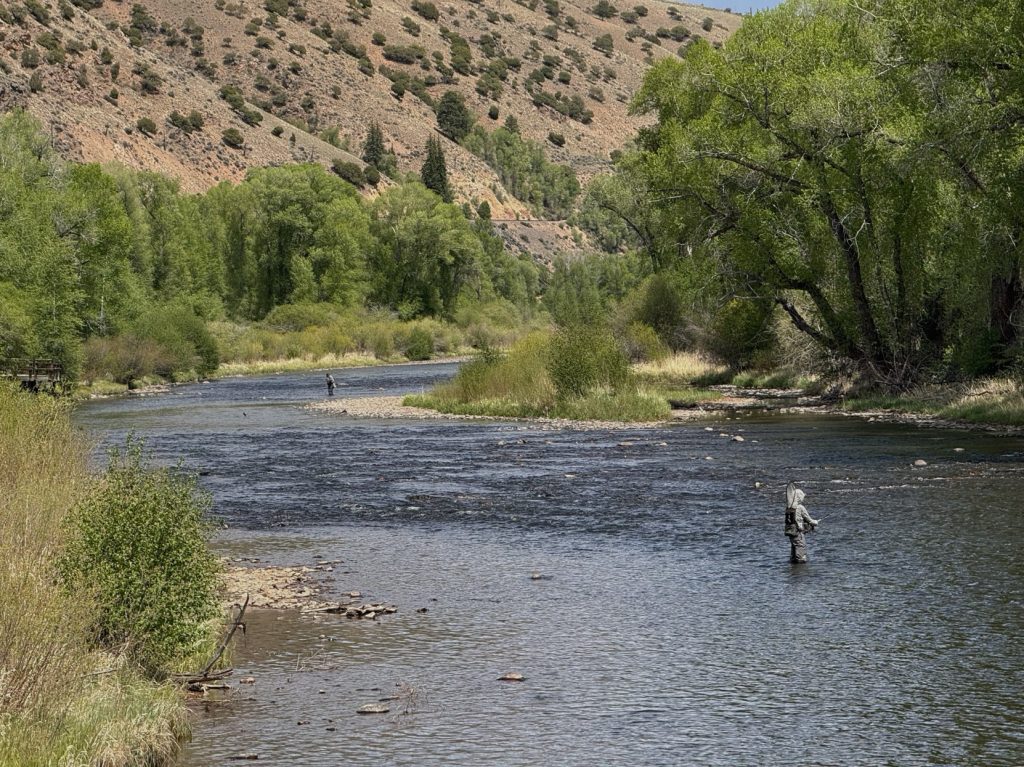
Hunting and fishing in Colorado contribute $3.25 billion to the state economy annually and support 25,000 jobs, according to the Colorado Wildlife Council. Hunting and fishing licenses provide 58% of Colorado Parks and Wildlife’s annual revenue, amassing around $150 million that goes toward its wildlife work.
The groups supporting the measure are aiming to make Colorado the 25th state to establish a right to hunt and fish. Vermont was the first state to do so in 1777, and Florida was the most recent, after the International Order of T. Roosevelt led a successful ballot measure there in 2024. According to the Secretary of State campaign finance filings, the organization has already contributed $1 million to the Initiative 302 effort in Colorado.
Opponents see it as an ‘unnecessary’ measure with long-term consequences
Opponents of the measure argue that not only are there already statutory protections for hunting and fishing opportunities, but, if passed, it would also reduce Parks and Wildlife’s flexibility to manage wildlife and lead to more lawsuits.
“Hunting and fishing are already legal in Colorado,” said David Kane, a spokesperson for Protect Colorado’s Constitution, a coalition formed to oppose the measure. Kane added that Parks and Wildlife already regulates hunting and state law directs the agency to “use hunting, trapping and fishing as the primary methods of accomplishing necessary wildlife harvests.”
This has led opponents to describe it as a solution in search of a problem.
Because “the campaign has never identified a constitutional right that Coloradans currently lack,” Kane said the worry is it would create new constitutional standards around “traditional methods” of hunting without defining those methods and establish new standards around when the state could regulate hunting and fishing.
“Our concern is not that every wildlife regulation would suddenly become invalid if the amendment passes,” he said. “Our concern is that these undefined constitutional standards will ultimately have to be interpreted and applied by courts rather than by wildlife professionals and policymakers.”
Opponents argue that this could lead to a rise in legal challenges. While the state’s fiscal note for the measure does not identify any immediate financial impacts, it does indicate that Parks and Wildlife “may see some increased workload to seek legal advice” and possible litigation costs “if CPW sees an increase in parties challenging rules and regulations.”
“We believe hunting and fishing should remain legal, valued and central to wildlife management in Colorado, Kane said, adding that the group instead believes decisions around wildlife should continue to be made through the existing democratic and management processes.”
“Colorado’s Constitution should establish enduring principles of government — not constitutionalize undefined wildlife-management language that courts may ultimately be asked to interpret for decades to come,” he said.